Timing your trek to Mardi Himal determines whether you encounter clear skies over the Annapurna region or navigate monsoon clouds and slippery trails. The best time for Mardi Himal trek depends on what you seek from the trekking experience - crisp mountain views, solitude, manageable weather, or a moderate altitude challenge suited to your fitness level.
The Annapurna region experiences distinct seasons, each affecting visibility, temperature, trail conditions, and the number of trekkers sharing the route. Some visitors chase the clearest skies and warmest days, while others prefer fewer crowds and lower prices. Understanding these patterns ensures your trek in Nepal becomes the experience you imagined rather than a weather-delayed frustration. This article covers everything you need to decide, from permit timing to packing gear suited to monsoon rain or winter frost.
By the end, you will know which months work best for your goals, what challenges each season brings, and how to prepare accordingly. Whether you are a first-time trekker or a seasoned walker, this complete guide to Mardi Himal weather, seasonal conditions, and the best time to trek clarifies the trade-offs and helps you book with confidence. You can also plan your journey through Nepal Everest Base Camp Co., where the team supports trekkers with reliable advice and careful guidance for every season.
Climate Overview of the Mardi Himal Region
Seasonal Weather Patterns of the Annapurna Region
The Annapurna region of Nepal follows four distinct seasons, shaped by monsoon winds, Himalayan altitude, and the valley geography near Pokhara.
Season
Temperature Range
Characteristics
Spring
10-25°C (valleys)
Warming air, rhododendron blooms
Monsoon
17-22°C
Heavy rainfall, reduced visibility
Autumn
12-20°C
Stable, clear weather conditions
Winter
8-16°C
Snow above 3,500m, cold nights
Spring brings warming air and rhododendron blooms. Summer unleashes heavy monsoon rain and landslide risk. Autumn delivers stable weather conditions and clear skies. Winter brings snow to higher-altitude sections.
How Climate Affects Mountain Views, Trail Conditions, and Comfort
The best time to trek Mardi Himal aligns with seasons when weather conditions are predictable and trail conditions are safe.
Key Climate Impact Points:
Daytime temperature ranges vary from 15°C in spring valleys to 2°C at Mardi High Camp during winter season
The trek gains altitude gradually from around 800 meters in Pokhara to 4,500 meters at Mardi High Camp
Weather changes markedly between lower teahouses and the ridge
Altitude affects how trekkers feel, how cold nights become, and how quickly storms develop on the mountain
Monsoon season brings 80 percent of annual rainfall between June and August, transforming the landscape into lush green slopes but creating slippery terrain and reduced visibility. The rainy season typically begins in June and persists through August, with peak intensity affecting trail conditions and weather predictability. Winter snowfall typically begins in December at higher elevations, though lower sections remain hikeable.
Spring and autumn are the established peak seasons when thousands of trekkers follow the Mardi Himal trekitinerary, teahouses operate at full capacity, and the weather conditions stay relatively stable for multi-day treks.
Season-by-Season Comparison
Spring (March to May)
Monthly Changes from Early to Late Spring
Spring trekking in the Annapurna region marks the transition from winter cold to summer warmth.
Month
Daytime Temp
Conditions
Highlights
March
10-15°C
Occasional frost, snow above 3,000m
Cold mornings, clear afternoons
April
15-20°C
Snow melting, paths clearing
Peak rhododendron bloom
May
20-25°C
Warm days, afternoon clouds increase
Best views before monsoon
Early spring in March still carries occasional frost at dawn and cold nights above 3,000 meters, but days warm steadily to 18-20°C in the lower valleys. By late April and May, daytime temperature climbs to 22-25°C at lower elevations, though higher altitude sections remain cool.
Temperature, Trail Scene, and Crowds
The landscape transforms in spring, particularly in April and May when rhododendron forests burst into pink and red bloom.
Spring Trail & Crowd Dynamics:
Rhododendron forests provide stunning mountain view backdrops
This visual spectacle makes the Mardi Himal trek route one of Nepal's most photogenic hikes
Trail conditions improve as snow melts from previous months
Trekker footfall keeps paths clear
Teahouse availability is excellent, though popular sections fill quickly during peak weekends
Benefits and Limitations of Trekking in Spring
Spring Advantages:
Manageable temperature ranges for most fitness levels
Stunning rhododendron wildflower displays
Improving trail visibility after winter
Daytime conditions feel comfortable for most trekkers
Lower altitude sections offer genuine warmth
Mountain views begin clearing as season progresses
Early spring (March): 10-15°C daytime, occasional snow above 3,500 meters
Mid-spring (April): 15-20°C daytime, rhododendron at peak bloom
Late spring (May): 20-25°C daytime, increasing afternoon clouds by month's end
Summer and Monsoon (June to August)
Rainfall, Visibility, and Trail Stability
Monsoon season transforms trekking conditions on the Mardi Himal trek route.
Month
Rainfall
Visibility
Trail Status
June
Moderate
50% clear days
Increasingly wet
July
Heavy
30% clear days
Slippery, risky
August
Peak intensity
<20% clear days
Highest landslide risk
Heavy rainfall dominates June through August, particularly July and August, when monsoon intensity peaks. Daytime temperature remains warm, 18-22°C in the valleys, but clouds obscure the mountain for days or weeks at a time.
Visibility at Mardi High Camp drops dramatically, often reducing what could be a breathtaking panoramic view into a white-out. Trail conditions deteriorate as constant monsoon rain saturates soil and loosens rocks.
Quiet Trails and Practical Challenges
Monsoon brings the fewest trekkers of any month.
Monsoon Practical Considerations:
Teahouse keepers report that August experiences the fewest trekkers
Accommodation prices fall substantially
Guides are readily available without advance booking
The absence of crowds creates a distinct trekking experience
Lush landscape and flora and fauna are abundant
Experienced trekkers report inward focus toward dense vegetation and bird life
Monsoon Challenges:
Visibility issues mean hiking through cloud forest, unable to see beyond ten metres.
Reduced weather conditions predictability
Physical demands increase with slippery surfaces
Emotional fatigue from persistent cloud cover
Limited photo opportunities due to poor visibility
Safety Notes for Trekking in Monsoon
Monsoon Safety Protocols:
Hazard
Risk Level
Mitigation
Landslides
High
Avoid 2,000-3,500m sections during heavy rain
Lightning
Moderate
Descend from ridges before 2 PM
Water crossings
Moderate-High
Check levels; some routes may be impassable
Trail slippage
High
Use trekking poles; wear appropriate footwear
Safety during monsoon requires extra caution. Move early in the day before afternoon storms arrive, avoid exposed ridge sections during active rainfall, and monitor local conditions closely. Heavy snowfall above 4,000 metres is unlikely in summer, but afternoon lightning storms pose a real risk on exposed terrain.
Teahouses are open but may be understaffed, as fewer trekkers means fewer guides and porters. Water crossings may become impassable during peak rainfall, occasionally forcing route changes or delays.
Monsoon Weather Snapshot:
June: 18-22°C, increasing rainfall, 50 percent cloud cover average
July: 17-21°C, heavy monsoon rain, 70 percent cloud cover
August: 17-21°C, peak monsoon intensity, <20 percent visibility days possible
Autumn (September to November)
Early Autumn vs Late Autumn Conditions
Autumn delivers the most stable weather conditions and clearest skies of any season on the Mardi Himal trek.
Period
Temperature
Clouds
Crowds
Conditions
Sept
18-22°C
30%
Moderate
Transition period
Oct
16-20°C
<10%
Peak
Optimal weather
Nov
12-16°C
<10%
Low
Cool, clear
September marks the transition as the monsoon withdraws. October becomes the single best month for visibility and comfortable conditions. The Annapurna region experiences abundant sunshine, daytime temperatures of 18-22°C in the valleys and 8-12°C at higher altitudes, and crisp morning air that photographers cherish.
By November, the temperature cools to 15-18°C daytime, but clear skies persist and crowds thin dramatically. Early autumn in September still carries occasional afternoon clouds, but by October and into November, days turn uniformly clear.
Weather, Clarity, and Teahouse Activity
Autumn Season Characteristics:
Trail and Teahouse Status:
Trail conditions in autumn are excellent
Monsoon moisture has settled, leaving paths firm and dry underfoot
Teahouses operate at full capacity with well-stocked supplies
Autumn is peak season for trekkers
The entire landscape appears sharply defined, from close rhododendron scrub to distant Himalayan peaks
Autumn Clarity Advantage:
Early autumn in September offers a middle ground between intense monsoon and peak crowds
Weather conditions remain stable
Trail conditions show occasional moisture
Some teahouses may operate at reduced capacity
Late autumn in November brings dry conditions
Cool but pleasant temperature ranges
Very few trekkers, ideal for those seeking both good weather and quiet trekking trails
Why Autumn Receives the Most Trekkers
Autumn Appeal Factors:
Unmatched weather conditions stability
85-90% clear sky frequency in October
Optimal temperature for active hiking
Firm, dry trail conditions
Sharp mountain views across full Annapurna range
Established infrastructure and guide availability
Shortest daylight compromised by clear visibility
The Peak October Paradox: October particularly sees thousands of trekkers on popular trekking routes, with some teahouses fully booked weeks in advance. This popularity means higher accommodation prices, busier trails, and less tranquillity in morning camps.
November thins crowds considerably, offering clear autumn skies with far fewer people sharing the trek route. Many experienced trekkers recommend November as the optimal balance of weather reliability and solitude compared to peak October.
Winter trekking on the Mardi Himal trek route presents distinct challenges and rewards.
Month
Daytime Temp
Night Low
Snow Level
Accessibility
Dec
12-16°C
0-2°C
3,500 m+
Good
Jan
8-12°C
-3 to -5°C
3,000 m+
Moderate
Feb
9-13°C
-5 to -8°C
2,500 m+
Challenging
Winter trekking on the Mardi Himal trek route marks a departure from autumn conditions. Temperature drops substantially, particularly at altitude, where Mardi High Camp can experience nighttime lows of minus 5°C or colder.
Daytime temperature in the valleys remains 10-15°C, warm enough for comfortable hiking in direct sun, but early mornings and nights demand warm sleep systems. Snowfall begins in December around 3,500 metres and increases through January and February, eventually blocking higher route sections by late February.
Winter Season Dynamics:
Snow presence above 3,500 meters requires different gear and fitness considerations
Early winter in December may have minimal snow on the trail itself
By January and February, snow accumulation increases
Route sections become exposed to avalanche risk in certain areas
Icy sections after morning frost create slipping hazards even on lower trail sections
Crowd Levels and Teahouse Availability
Winter Accessibility Factors:
Teahouse availability and crowding drop significantly
Winter trekking offers ideal season for those seeking solitude
Accommodation prices fall to lowest levels
Guides are immediately available without advance booking
Winter brings shorter daylight hours, around nine hours of useful hiking time
This compresses daily hiking window compared to eleven hours in autumn
Winter Teahouse Status:
Aspect
Winter Level
Peak Season
Prices
Lowest
40-50% higher
Crowds
Minimal
Peak
Guide availability
Immediate
Weeks in advance
Staff levels
Reduced
Full capacity
Key Cautions for Trekking in Winter
Winter Challenge Summary: Most tour operators recommend experienced trekkers or guided groups for winter trekking, as route finding becomes complex and self-rescue becomes difficult in isolated snow sections. Winter rewards those comfortable with cold, crowd-free trails and shorter but intense daily hikes.
Autumn, particularly October and early November, offers unmatched visibility and comfortable temperatures. Clear skies dominate 85 percent of days in October, and daytime temperatures of 18-22°C allow hiking in a single insulating layer with a lightweight jacket.
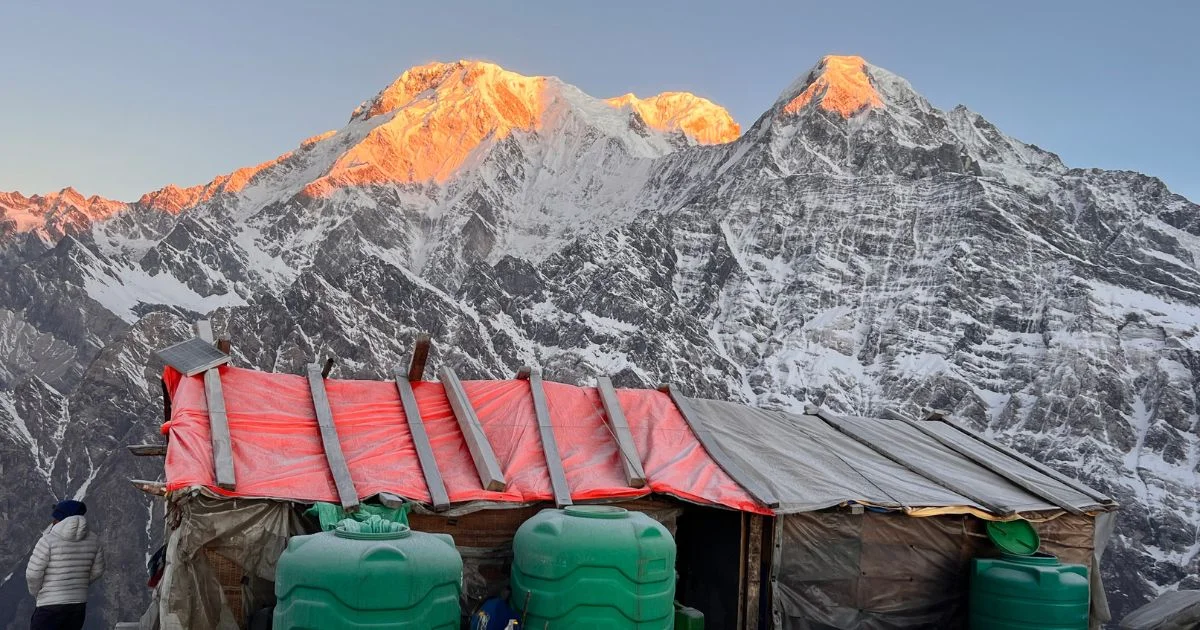
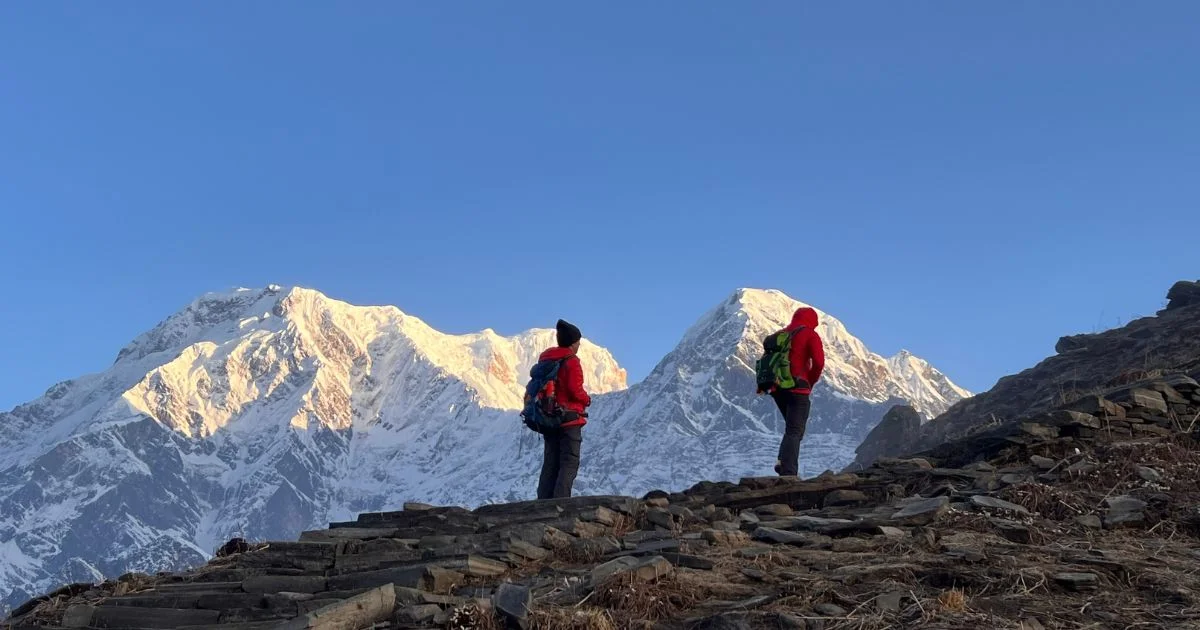
Mountain views extend across the full Annapurna range, from Annapurna South to Dhaulagiri. The best time to visit Mardi Himal for panoramic views at Mardi High Camp occurs in October when moisture clears and altitude delivers absolutely crisp air. This is the ideal time to visit Mardi Himal for those prioritising visual experience on the Mardi Himal base camp trek.
Spring Alternative: Late March through April provides a spring alternative with similar clarity and marginally fewer crowds than peak October. Spring offers the bonus of rhododendron blooms, adding colour to the landscape, though afternoon clouds increase in May.
Spring trekkers should depart early and plan to trek to reach high camp by 2 PM to avoid cloud buildup. The best time to visit Mardi Himal is during spring, which requires discipline but rewards with excellent mountain view opportunities. The trek offers stunning views of the Annapurna massif.
For Fewer Crowds
Solitude Priority Matrix:
November: 60% fewer crowds than October
December-February: 85% fewer crowds than October
June-August: 90% fewer crowds
March: 40% fewer crowds than peak April
November offers the sweet spot. Post-peak autumn crowds disperse by early November, reducing trekker density by 60 percent compared to October. Clear weather conditions persist, trails remain firm and dry, and teahouses maintain full operations.
December through February deliver genuine solitude, though at the cost of cold nights and possible snow. This time to visit Mardi Himal for trekking appeals to trekkers comfortable with physical challenge and willing to accept reduced comfort for isolation. The Mardi Himal trek route becomes your personal domain during these months.
November: Very good (clear but cooler, sharp contrast, fewer people in shots)
May: Good (warm light, flowers fading, increasing clouds)
October stands unrivalled for photography on the Mardi Himal trek route. Golden morning light illuminates the Annapurna peaks before crowds arrive, and afternoon shadows create dramatic ridge definition. The ultra-clear visibility means no washed-out distant peaks and perfect contrast for landscape shots.
Photography Best Practices by Season:
October: Arrive high camp by 4 PM to capture sunset
April: Use filters to manage wildflower exposure
November: Pack extra batteries; cold reduces battery life
Winter: Bring hand warmers for camera batteries
Spring photography in April competes with October, particularly for rhododendron subjects, though less consistent clarity and afternoon haze reduce overall image sharpness. The best views for photography occur in October, making this the best trekking window for photo-focused expeditions.
For New Trekkers vs. Experienced Walkers
Trekker Skill Matching:
Experience Level
Best Season
Key Reasons
First-time
April-May
Guides available, warm, teahouses ready
Novice
October
Established infrastructure, high success rate
Intermediate
November
Good conditions, manageable solitude
Advanced
February
Challenge, remote conditions, snow skills
New trekkers thrive during spring and autumn peak season when abundant guides are available, teahouses operate at full capacity, and crowds provide reassurance. Spring (April-May) offers the gentlest entry because daytime temperatures feel genuinely warm, making acclimatisation to high altitude easier.
New Trekker Advantages in Spring:
Comfortable daytime warmth
Abundant guide availability
Established trekking gear rental systems
Crowd psychology provides confidence
Teahouses staffed to full capacity
Experienced trekkers confident in self-navigation can embrace November or early December for solitude or February for a winter trekking challenge. The Mardi Himal trek is one of Nepal's more moderate trek options, suitable for most fitness levels with proper acclimatisation.
Permit Requirements and Seasonal Planning
ACAP and TIMS Essentials
Permit System Overview:
Permit
Cost
Validity
Seasonal
TIMS
3000 NPR
Full trek
No variation
ACAP
3,000 NPR
Full trek
No variation
Two permits are required to trek the Mardi Himal route: TIMS (Trekking Information Management System) and ACAP (Annapurna Conservation Area Permit).
Permit Details:
TIMS costs 3000 Nepalese rupees for foreign trekkers and is valid for the duration of the trek
ACAP costs 3,000 rupees and serves as a safety and registration document
Both permits are obtained in Pokhara or Kathmandu before starting the trek
Neither permit has seasonal variations in cost or availability
Practical Tips for a Smooth Start
Permit Acquisition Strategy:
Secure permits at least two weeks before the trek starts.
Arrange online pre-registration to reduce office time.
Visit permit offices in Pokhara early morning (6-8 AM) for the shortest queues.
Bring two passport photos and copies of passport identification pages.
Budget one to two hours for permit acquisition.
Company Advantage: Trekking companies typically handle permits as part of your booking, removing this administrative burden. If trekking independently, budget one to two hours for permit acquisition in Pokhara.
Seasonal Safety Guide
Common Hazards in Monsoon and Winter
Monsoon Season Hazards
Monsoon Safety Matrix:
Hazard
Mechanism
Prevention
Landslides
Water saturation above 2,500m
Avoid zone during/after heavy rain
Lightning
Afternoon thunderstorms
Descend exposed ridges by 2 PM
Water crossings
Runoff volume increases
Check levels; confirm viability
Trail slippage
Mud and wet rock
Use poles; wear proper footwear
The primary monsoon hazard is water, which manifests as slippery terrain, overflowing water crossings, and landslide risk.
Some sections of the Mardi Himal trek route have experienced temporary closures in August due to sustained landslide activity.
Winter Season Hazards
Winter Hazard Profile:
Hazard
Risk Level
Management
Hypothermia
Extreme
4-season sleeping bag mandatory
Avalanche
Moderate
Avoid steep slopes; use guides
Snow blindness
Moderate
Glacier glasses essential
Frostbite
High
Proper insulation, careful monitoring
Route loss
Moderate-High
GPS, maps, experienced guide
Snow and cold present the dual winter challenge. Snow accumulation above 3,500 metres increases exposure hazard if you slip on icy sections. Avalanche risk is present but manageable on the Mardi Himal trek route compared to steeper Himalayan peaks.
Cold Injury Prevention:
Four-season sleeping bags rated to minus 10°C non-negotiable
Proper sleep systems, including base layers
Hypothermia can develop quickly if clothing becomes wet
Many winter trekkers prefer guided expeditions with experienced staff
Altitude Considerations in All Seasons
Altitude Impact Across Seasons:
Spring: Gradual acclimatisation is easier with warm daytime temps
Autumn: Stable conditions aid natural acclimatisation.
Monsoon: Cloud cover makes altitude less obvious; AMS can develop unnoticed
Altitude affects all trekkers regardless of season. Mardi High Camp sits at 4,500 metres, and some individuals develop acute mountain sickness (AMS) at this altitude.
AMS Symptoms & Prevention:
Symptom
Severity
Action
Headache
Mild
Monitor; hydrate
Nausea
Moderate
Rest at current altitude
Sleep difficulty
Moderate
Descend 300-500 m
Shortness of breath
High
Descend immediately
AMS prevention is gradual ascent with proper acclimatisation. Spend at least one night at 3,000 metres before advancing to higher elevations. Descending 300-500 metres resolves most AMS cases within hours.
Simple Steps to Stay Safe on the Trail
Universal Safety Protocol:
Pre-Trek:
Consult physician for cardiovascular assessment
Verify permit acquisition
Check weather forecasts 3-5 days pre-departure
During Trek:
Start early; finish by 3 PM
Stay hydrated (2-3 liters daily minimum)
Monitor group members for AMS symptoms
Use trekking poles to reduce joint strain
Altitude Acclimatisation:
Ascend slowly (max 300m elevation gain daily above 3,000 m)
Take rest days every 2-3 days
Stay hydrated; avoid alcohol
Eat high-carbohydrate meals
Weather Response:
Check morning weather; adjust route if needed
Descend before conditions deteriorate
Turn back if visibility drops below safe limits
Trekkng trail during the mardi himal trek
Packing Advice for Each Season
Spring and Autumn Packing
Spring/Autumn Essentials List:
Category
Items
Details
Base Layers
Merino/synthetic
2-3 quick-dry shirts
Insulation
Fleece layer
Lightweight, packable
Outer
Waterproof jacket
Rated for moderate rain
Legs
2 hiking trousers
Quick-dry material
Feet
Hiking boots and socks
Ankle support, quality
Sleep
2-season bag
Sufficient for teahouse
Accessories
Hat, gloves, socks
Merino wool priority
Spring and autumn allow the most straightforward packing lists. A lightweight backpack of 12-15 kilograms suffices for most trekkers using teahouse accommodation.
Material Selection:
Never use cotton for base layers; instead, use synthetic or merino wool
Cotton retains moisture and causes rapid heat loss
A lightweight sleeping bag (two-season) works for spring and autumn teahouse sleeping arrangements
Bring trekking socks specifically designed for hiking; regular socks cause blisters
Pack blister treatment aggressively, as wet conditions accelerate formation
Include lightweight towel or microfiber cloth for persistent moisture inside teahouses
Bring waterproof bags for electronics
Pack moisture-absorbing sachets
Winter Trekking Equipment
Winter Four-Season Requirements:
Component
Requirement
Priority
Sleeping Bag
-10°C rating
Mandatory
Base Layer
Merino/synthetic
Essential
Mid Layer
Heavy fleece/down
Essential
Outer
Insulated jacket
Mandatory
Trousers
Insulated
Mandatory
Boots
Heavy winter
Mandatory
Crampons
Microspikes
Conditional
Winter demands substantially different packing. A four-season sleeping bag rated to minus 10°C is essential, not optional.
Winter Clothing Layers:
Thermal base layers (merino or synthetic)
Heavyweight fleece or down jacket
Insulated trousers designed for cold weather
Winter boots with heavy insulation and good ankle support
Microspikes or light crampons necessary if snow or ice present
Hand warmers, face protection (balaclava or buff)
Heavy insulated gloves
Winter Survival Gear:
Item
Purpose
Detail
Beanie
Head insulation
40% heat loss via head
Thermos
Hot beverages
Core temperature maintenance
Hand warmers
Circulation
Distributed throughout day
Face buff
Wind/cold
Protects nose/cheeks
Extra socks
Moisture management
Wet = rapid heat loss
Planning and Booking Timeline
When to Reserve Accommodation or Guides
Booking Timeline Matrix:
Season
Lead Time
Availability
Reason
October
8 weeks
Limited
Peak season
April
4-6 weeks
Moderate
Popular spring
November
3-4 weeks
Good
Post-peak
Monsoon
2-3 weeks
Excellent
Few trekkers
Winter
2-3 weeks
Excellent
Cold discourages
Peak seasontrekking (October) requires booking four to eight weeks in advance. Accommodation fills quickly, particularly lodges near Mardi High Camp, and popular trekking guides commit to booked trekkers.
Off-Season Advantages: Spring (April-May) and November benefit from early booking but allow somewhat more flexibility than peak October. Monsoon (June-August) and winter (December-February) offer greater availability and can often be booked two to three weeks before departure.
This flexibility allows last-minute trekking decisions for off-season months. Though some teahouses reduce staff and close for portions of winter.
Adjusting Your Itinerary by Season
Standard Itinerary Framework: Standard trekking itineraries assume autumn or spring conditions and allocate five to seven days from Pokhara to Mardi High Camp and back. If you add one more day to the schedule, and the route becomes easier to manage and offers a more comfortable pace for most trekkers.
Seasonal Itinerary Adjustments:
Season
Pace
Considerations
Spring
Standard
Add pre-trek acclimatisation.
Autumn
Flexible
Extra time for photography
Monsoon
Slower
Weather delays, water crossings
Winter
Slower
Snow sections, reduced daylight
Monsoon Modifications:
Monsoon trekking may require an extra day if water crossings are difficult
Reduced visibility necessitates slower hiking pace
Pathfinding becomes more challenging
Winter Modifications:
Winter trekking similarly demands more time as snow sections and early darkness reduce daily hiking distance
Shorter daylight hours compress hiking window
Snow navigation requires careful route assessment
Flexibility Buffer Strategy:
Build flexibility into overall Nepal itinerary by scheduling two extra days beyond core trek dates
This buffer accommodates weather-forced rest days
Route modifications recommended by guides
Unexpected acclimatization needs
Medical issues or equipment failure
Best Time for Mardi Himal Trek: Final Thoughts
The best time for Mardi Himal trek balances your personal priorities with reliable weather conditions and safe trail conditions. Autumn, particularly October and November, delivers the most predictable combination of clear views, manageable crowds (November), and excellent trail conditions. Spring offers rhododendron blooms and warming temperatures but with increasing afternoon clouds in May. Monsoon brings authentic solitude and lush landscape at the cost of weather unpredictability and slippery terrain. Winter rewards those seeking genuinely quiet trails with cold nights and snow at high altitude.
No single season in Nepal works perfectly for all trekkers. An experienced mountain walker content with cold and snow might embrace February's quiet trails and crisp visibility, while a first-time trekker prefers April's warmth and abundant guides. The Mardi Himal trek is suitable across all seasons, making your choice a matter of matching season to preference rather than seeking one objectively superior window.
The Mardi trek ranks as a premier short trek among Nepal's popular trekking destinations, comparable in appeal to the Ghorepani Poon Hill trek, the Annapurna base camp trek, the Annapurna circuit trek, and even day excursions near the Everest base camp trek. The route presents a manageable trek that generally takes five to seven days, positioning it as an accessible introduction to trekking in the Himalayas. Thattrek offers stunning views of the Annapurna massif from the valley trek approach beginning in Pokhara. Whether you approach along the Mardi Himal trail during the popular trekking season or during quiet months, the experience rewards careful planning and seasonal awareness.
When you are ready to plan to trek your expedition to the Annapurna region, Nepal Everest Base Camp Co. can arrange permits, guides, accommodation, and all logistical details. Contact us to discuss your preferred trekking dates and receive a customised itinerary matched to your fitness level and experience. Whether you choose autumn clarity or spring blooms, our experienced guides know the Mardi Himal trek route intimately and will ensure your alpine experience becomes a lasting memory.
Mardi himal viewpoint
Best Time for Mardi Himal Trek: FAQs
Is the Mardi Himal trek possible throughout the year?
Yes, the Mardi Himal trek is possible in all twelve months, though conditions vary dramatically. The best time to visit Mardi Himal remains autumn and spring, when weather conditions are stable and trekking trail conditions are safe for most fitness levels. Monsoon and winter pose genuine challenges but are manageable with proper preparation and experienced guides. The trek is a short, accessible, high-altitude option among Nepal's popular trekking choices, making it suitable for year-round trekking with appropriate seasonality considerations.
How long does the trek take on the Mardi Himal trek?
The trek generally takes three to seven days from Pokhara to Mardi High Camp and back, positioning this as one of Nepal's premier short trek options. The trek is short enough to fit within most travel schedules yet challenging enough to deliver a meaningful high-altitude experience and accomplish the trek, which offers stunning views of the Annapurna range. This duration of the trek makes the Mardi Himal trek particularly attractive for those wanting to plan to trek without committing weeks to the route, providing optimal time for trekking flexibility for busy travellers.
Can monsoon trekking be managed safely?
Monsoon trekking requires extra caution but can be conducted safely with local knowledge and flexibility. The rainy season from June through August demands modified packing, earlier daily departures, and heightened weather awareness throughout your trek. Start hikes early to avoid afternoon thunderstorms, monitor water levels before crossing rivers, and avoid exposed ridge sections during active rainfall. An experienced trekking guide familiar with monsoon conditions is essential for safe passage during this season. Additionally, many trekkers successfully complete monsoon treks by embracing dynamic weather conditions and viewing the rainy season as an opportunity for cultural experience and flora encounters rather than as an obstacle.
What makes autumn the most reliable season in Nepal for clarity on the Mardi Himal trek route?
Autumn, particularly October, offers the clearest mountain views because monsoon moisture has cleared and winter storms have not yet developed. High-pressure weather systems dominate, creating stable conditions with minimal cloud cover. Daytime temperatures of 16-20°C feel comfortable for active trekking, and nighttime lows at Mardi High Camp remain manageable at 5-8°C. This ideal time to visit Mardi Himal produces breathtaking panoramic views across the full Annapurna range, making October the best season in Nepal for visibility when meteorological patterns align perfectly for trekkers seeking panoramic vistas, the trek offers stunning views throughout the valley trek.
Do I need a guide for every trekking season in Nepal on the Mardi Himal trek?
Guides are recommended but not strictly required in autumn when well-marked trekking trail conditions and abundant teahouses facilitate independent trekking. Winter and monsoon seasons benefit substantially from experienced guides who understand seasonal hazards and can navigate route variations along the Mardi Himal. First-time trekkers at any season gain confidence and local knowledge from hiring qualified guides familiar with the Annapurna region. Additionally, an experienced guide transforms any trek into deeper cultural understanding and safety assurance, often enhancing the trek offers significantly.
How should I plan my Mardi Himal trek for the best experience?
Begin by identifying your priorities – whether clear views, solitude, comfortable weather, or photographic opportunities. For most trekkers, this means planning an Annapurna base camp comparable experience during October or November for optimal balance. Next, secure permits at least two weeks before your target trek dates, and arrange accommodation through local operators who know the Mardi Himal trek route intimately and pack seasonally appropriate gear. Consider booking guides or joining group trekking expeditions, particularly for first-time visitors, as this enhances safety, and the trek offers stunning views and interpretation along the Mardi Himal throughout your journey. Finally, build budget flexibility into your overall Nepal itinerary to accommodate weather-related adjustments and acclimatisation needs.
What is the Mardi Himal trek compared to other popular trekking routes in Nepal?
The Mardi Himal trek is a premier short trek that ranks alongside the Ghorepani Poon Hill trek and offers accessibility comparable to valley trek options near Pokhara. While the Annapurna circuit trek demands two weeks and the Annapurna base camp trek requires a similar commitment, the Mardi trek accomplishes a remarkable high-altitude experience in five to seven days. This makes the trek a short yet rewarding option for travellers unable to commit extended time for trekking, delivering trek offers stunning views of Annapurna peaks rivalling longer expeditions. Comparatively, the Everest Base Camp trek requires nearly two weeks and different trekking in the Himalayas for preparation, making the Mardi Himal trek an excellent alternative for those seeking a high-altitude Himalayan experience without an extensive trek taking a long duration.
What permits do I need to plan to trek the Mardi Himal trek?
Two permits are required for the Mardi Himal trek: TIMS (Trekking Information Management System), costing 1,700 Nepalese rupees, and ACAP (Annapurna Conservation Area Permit), costing 3,000 rupees. Neither permit has seasonal variation in cost, though obtain them at least two weeks before your trek date. Arrange permits in Pokhara or Kathmandu before departing, or engage trekking companies who handle this as part of your booking package. This removes administrative burden and ensures compliance before beginning your trekking trail adventure along the Mardi Himal.
What are the optimal months for popular trekking on the Mardi Himal trek?
October represents the single best month for popular trekking on the Mardi Himal trek, offering unparalleled visibility, moderate crowds, and comfortable temperatures. September transitions well from monsoon with clearer skies emerging, while November delivers excellent conditions with substantially fewer trekkers. April and May provide spring alternatives with rhododendron blooms, though afternoon cloud buildup increases as May progresses. Choose October for optimal experience if flexibility allows, November if solitude matters, or April if a trek offering stunning views of wildflowers appeals. December through February suits those comfortable with cold and crowd-free trekking conditions.
Blending digital strategy with mountain passion, I help adventurers find their way to the Himalayas online. With hands-on experience in Nepal’s trekking trails and a role at Nepal Everest Base Camp Trekking Co., Thamel, I combine SEO expertise with true trail insight.