Understanding Everest Base Camp Trek vs Everest Helicopter Tour
Everest Base Camp trek Vs Everest helicopter tour represents one of the most significant decisions in Himalayan travel planning. Both experiences bring you face-to-face with Mount Everest, yet they differ dramatically in duration, physical demands, and the nature of immersion. Understanding these distinctions helps you select the adventure that aligns with your fitness level, available time, and travel philosophy.
The classic Everest Base Camp trek remains one of the world's most celebrated hiking journeys, drawing thousands of adventurers annually to the Everest region. Meanwhile, the helicopter tour has emerged as a compelling alternative for those seeking the majesty of Mount Everest without the multi-day commitment. Both options grant access to landscapes that few places on Earth can rival, though the paths to reaching them couldn't be more different.
This guide from Nepal Everest Base Camp Co. examines every aspect of the trek vs helicopter ride with practical insights drawn from years of operating in the Khumbu region. Whether you're a seasoned trekker weighing your options or a first-time visitor to Nepal, the information ahead will clarify which Everest experience suits your circumstances. Consequently, you'll make an informed choice that transforms your Himalayan journey into exactly what you envision.
Overview of Everest Base Camp Trek
What Is the EBC Trek
The Everest Base Camp trek stands as the quintessential Himalayan trekking experience, guiding adventurers through Sagarmatha National Park to the foot of Mount Everest. This classic trek follows ancient Sherpa trade routes, passing through villages like Namche Bazaar, Tengboche, and Dingboche before arriving at the base camp itself. Unlike a simple hike, the base camp trek is one of those transformative journeys where you'll encounter Buddhist monasteries, prayer flags streaming in mountain winds, and the legendary hospitality of the Sherpa people.
Most trekkers combine the base camp visit with an ascent to Kala Patthar, a rocky outcrop offering superior panoramic views compared to the EBC location itself. The journey operates entirely on foot, covering approximately 130 kilometres round trip from Lukla airport. Each day brings new vistas as you gain elevation gradually, allowing your body to adapt to the thinning air while your senses absorb the unfolding drama of the world's highest peaks.
Typical Duration and Itinerary
Trek Stage
Days
Key Highlights
Kathmandu to Lukla flight + trek to Phakding
1
Dramatic mountain landing, enter Khumbu Valley.
Phakding to Namche Bazaar
1
Cross suspension bridges, first view of Mount Everest
Namche acclimatization day
1
Hike to Hotel Everest View for panoramic vistas
Namche to Tengboche via Dingboche
3
Monastery visits, alpine meadows, Ama Dablam views
Dingboche to Lobuche to Gorak Shep
2
High-altitude terrain, Mount Everest base camp approach
Breathtaking views of Mount Everest, glacier formations
Return trek to Lukla
4
Descend through familiar villages, celebration meals
Lukla to Kathmandu flight
1
Conclusion to the trek, return to city life
The standard Everest trek requires 10 to 15 days from Kathmandu, though variations exist depending on acclimatisation schedules and side trips. However, the core itinerary follows a tested pattern that ensures safety while maximising the experience of the Everest region. Furthermore, this timeline includes built-in acclimatisation days crucial for preventing altitude sickness. Rushing the schedule increases health risks significantly, which is why reputable operators never compress the itinerary below 10-11 days. Additionally, weather delays in Lukla can extend your trip by one to three days, so building buffer time into your travel plans proves essential.
Experience Highlights and Unique Views
Trekking to Everest delivers rewards that extend far beyond the destination itself:
Daily sunrise views over peaks like Ama Dablam, Lhotse, and Nuptse
Warm teahouse meals and conversations with fellow adventurers from around the globe
Potential wildlife sightings, including Himalayan tahr and monal pheasants
Cultural immersion through Sherpa village stays showcasing the beauty of Everestregion
The physical challenge creates a profound sense of accomplishment, particularly when you stand at Kala Patthar watching dawn illuminate Mount Everest's summit pyramid. Nevertheless, the experience proves as much about the journey as the destination. Walking through Sherpa villages, observing their agricultural terraces carved into impossible slopes, and sharing tea with locals provides cultural depth that no aerial tour can replicate. Consequently, many trekkers describe this as a way to experience Everest that transforms them beyond the spectacular scenery alone.
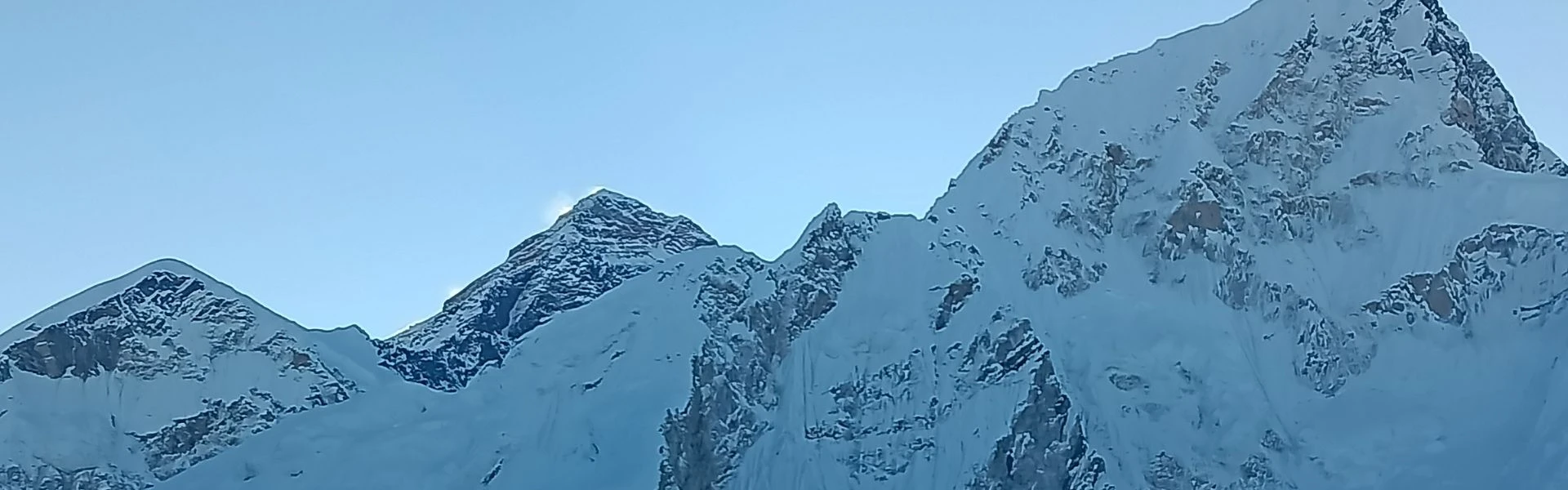
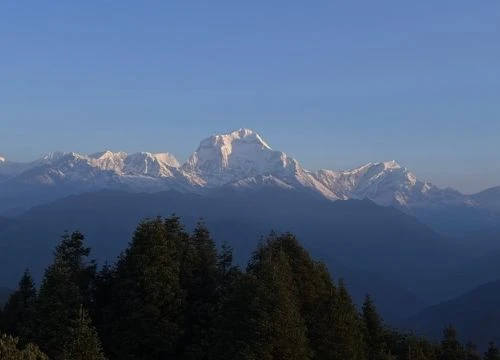
Mountain view from Kalapatther
Overview of Everest Helicopter Tour
What Is a Helicopter Tour
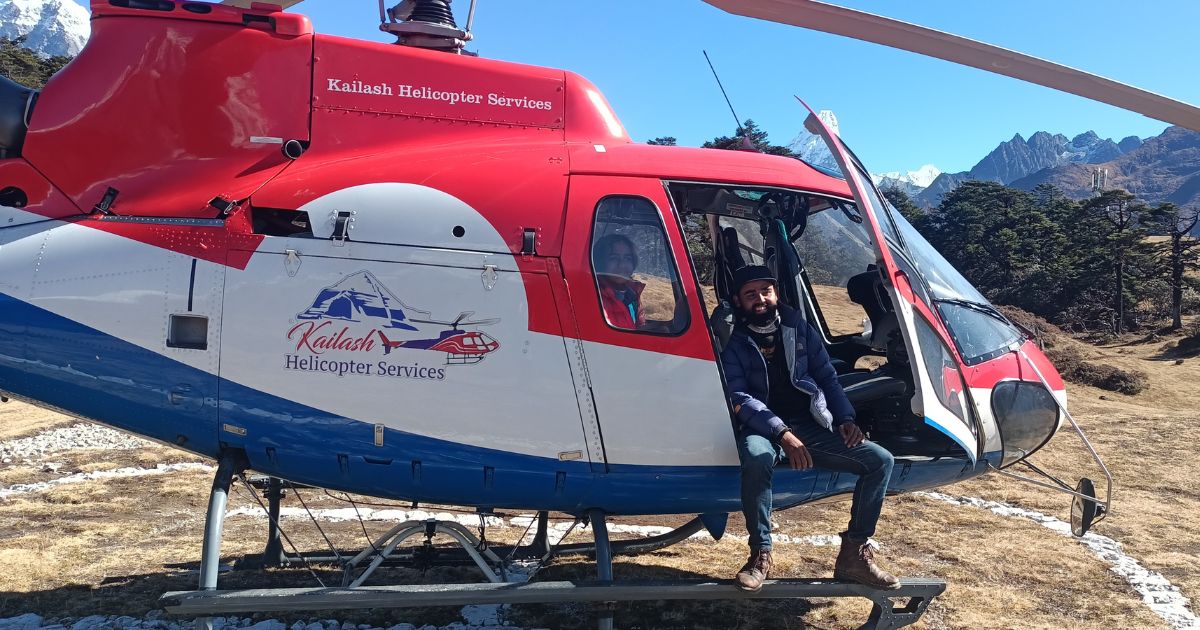
An Everest helicopter tour to Everest Base Camp delivers aerial access to the Everest region within a few hours rather than weeks, flying you directly from Kathmandu to high-altitude viewpoints. These tours typically accommodate 4–5 passengers and follow established flight paths that showcase the entire Himalayan range, including Everest, Lhotse, and Nuptse.
Helicopters overfly Everest Base Camp and Kala Patthar for aerial views and photography, as landings at Kala Patthar are not permitted under current aviation and park regulations.The base camp helicopter tour provides a bird's-eye perspective on landscapes that trekkers spend days traversing, condensing the geography into a thrilling scenic flight.
Most operators offer breakfast stops at the Everest View Hotel near Syangboche, where you can sip coffee while gazing at Mount Everest from a heated dining room. Afterward, the helicopter flight continues to higher elevations, often circling the Khumbu Icefall and providing close-up views of the Western Cwm. The entire experience emphasises efficiency and comfort, making the majesty of Everest without the multi-day commitment accessible to visitors who lack the time, fitness, or inclination for extensive trekking.
Typical Flight Duration and Route
The standard tour and the EBC visit via helicopter span 4-5 hours from takeoff to landing back in Kathmandu. However, the actual flight time varies based on weather conditions and passenger needs:
Kathmandu to Lukla. Flight follows the main eastern Himalayan corridor, crossing river valleys and mid-hill terrain.
Lukla to Pheriche. Gradual climb along the Dudh Koshi valley, with clear views of the upper Khumbu basin.
Pheriche to overfly Kala Patthar and EBC. High-altitude circuit for aerial views of Everest, Lhotse, Nuptse, and the Khumbu Icefall.
Overfly to Everest View Hotel (HEV). Descent to a lower altitude for a controlled stop, typically used for breakfast and rest.
Everest View Hotel to Lukla. Return flight retracing the Khumbu Valley.
Lukla to Kathmandu. Final leg back to the capital, completing the Himalayan circuit.
Additionally, flights depart early morning to capitalise on clear weather windows before afternoon clouds obscure mountain views. The helicopter ride maintains altitudes between 3,000 and 5,500 metres, with pilots providing commentary on peaks and villages below. Furthermore, weight restrictions and high-altitude performance limitations mean that helicopters occasionally refuel at Lukla or adjust passenger loads based on conditions.
Types of Helicopter Tours (Overfly vs Landing)
Tour Type
Duration
Landing
Altitude Exposure
Price Range
Group Joining Tour
2.5–3 hours
No ground landing. Operates on overfly only
Minimal. Aerial exposure over EBC and Kala Patthar
USD 800–1,000 per person
Private Tour
3–4 hours
Landing permitted on request, subject to seasonal and regulatory approval
Higher. Short ground exposure at high altitude if landing is approved
USD 4,000–5,000 per flight
Helicopter trips generally fall into two categories, shaped by flight permissions, group size, and cost. Most operate on an overfly basis, circling Mount Everest and the surrounding peaks without landing at high altitude. These flights focus on aerial photography and panoramic Himalayan views, including EBC and Kala Patthar, and are well suited to travellers concerned about altitude exposure or limited time in the Khumbu region.
Landing options are far more limited. Landings near Everest Base Camp or Kala Patthar are only permitted for private helicopter tours and depend on seasonal operating conditions, air traffic control, and park regulations. When approved, stops are brief, usually 10–15 minutes, and significantly increase overall cost. As a result, overfly tours over Everest Base Camp and Kala Patthar remain the standard and most reliable choice, offering clear views without the risks associated with high-altitude landings.
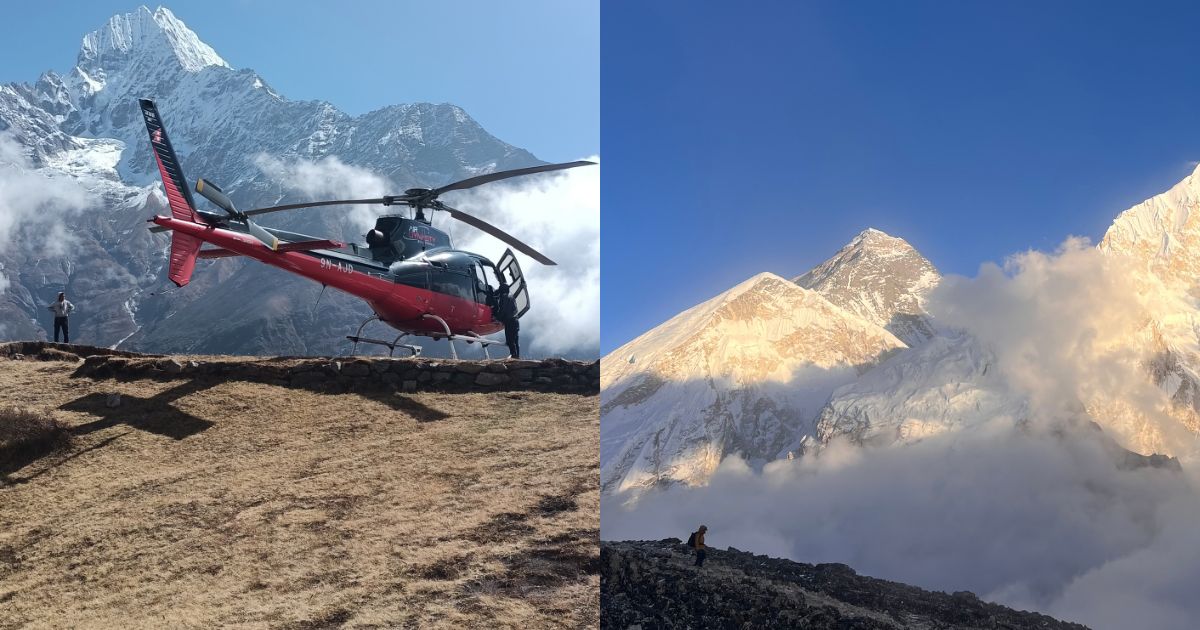
Everest Helicopter Tour
Side-by-Side Comparison: Key Differences
Time Commitment
Aspect
Trek
Helicopter Tour
Total Duration
12-14 days
4-5 hours
Travel from Kathmandu
2 days (flights + trekking)
1.5-2 hours (round-trip flight)
Flexibility
Fixed itinerary with weather buffers
Same-day completion, weather-dependent
Daily Time Investment
5-7 hours walking
None beyond flight time
Work Days Missed
10-14 days
Half day or none
The time commitment difference dominates most decision-making processes when you compare the Everest Base Camp trek and helicopter options for reaching EBC. Whereas the Everest Base Camp trek demands two full weeks away from work and home, the helicopter tour to Everest slots into a few hours. Nevertheless, the trek allows gradual acclimatisation and deeper cultural immersion, which many adventurers consider worth the extended timeline. Meanwhile, time-pressed visitors or those combining Nepal with other destinations find the helicopter tour of Everest base camp perfectly suited to their schedules. For those weighing efficiency vs EBC trekking, the time factor often proves decisive.
Physical Effort and Fitness Required
The trek is physically demanding, requiring 5-7 hours of walking daily with elevation gains reaching 600-800 metres on challenging days:
Cardiovascular fitness essential for sustained uphill hiking
Knee strength needed for steep descents on return journey
Multi-day endurance capacity more important than peak athletic ability
Previous hiking experience strongly recommended
Mental resilience for early morning starts and cold conditions
Consequently, participants should maintain good cardiovascular fitness and possess experience with multi-day hiking before attempting the EBC trek. Altitude compounds the effort, making even moderate slopes feel strenuous above 4,000 metres as oxygen levels drop to roughly 60% of sea-level concentrations.
Conversely, the helicopter tour eliminates physical exertion entirely, making it accessible to individuals of nearly any fitness level. However, the rapid altitude gain presents different challenges, as passengers jump from Kathmandu's 1,400 metres to Kala Patthar's 5,545 metres within 90 minutes. This sudden exposure can trigger altitude sickness symptoms in susceptible individuals, though the brief ground time minimises risks. Therefore, fitness matters less than altitude tolerance when evaluating helicopter tour suitability.
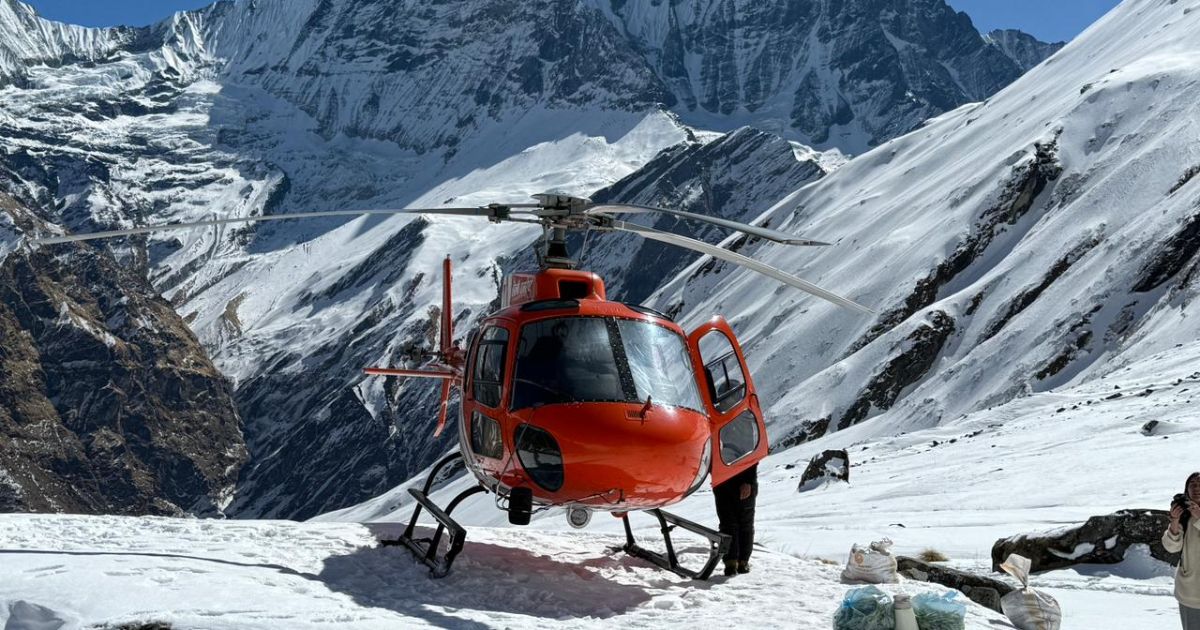
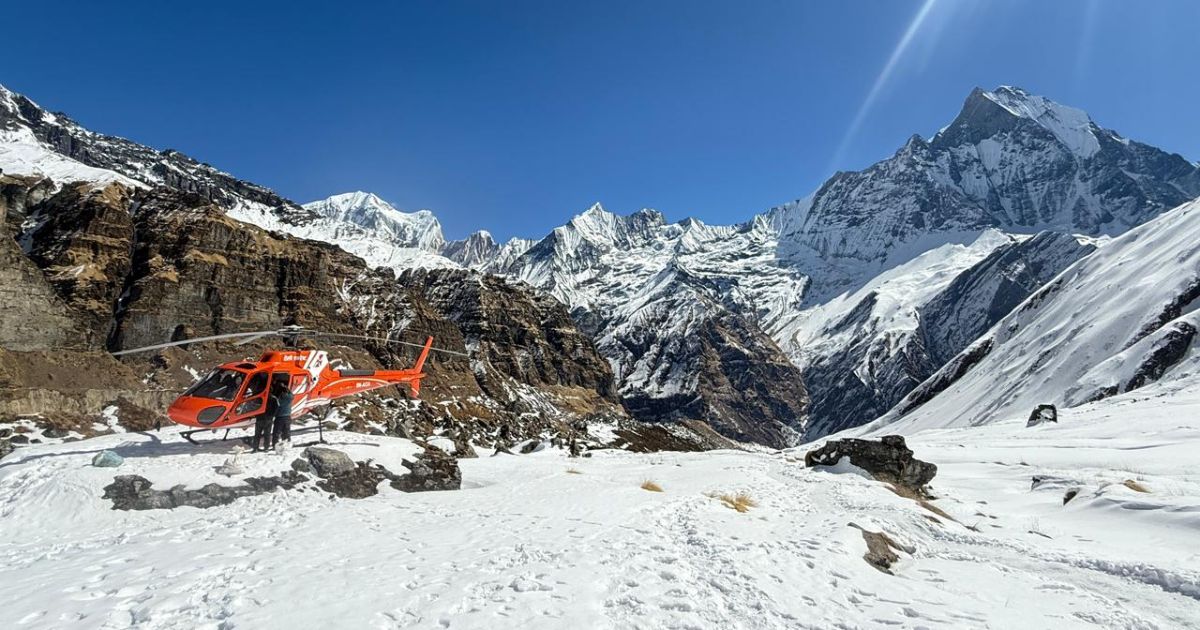
Mountain Rescue by Helicopter
Scenic and Cultural Experience
The trekking route provides intimate engagement with Sherpa culture through daily interactions in teahouses, village walks, and monastery visits. Moreover, you'll witness sunrise and sunset from multiple vantage points, observe how landscapes transform throughout the day, and develop relationships with guides and porters who share local knowledge. The trek offers sensory richness, from yak bells echoing across valleys to the aroma of Sherpa stew simmering in teahouse kitchens.
Meanwhile, the helicopter tour offers sweeping aerial perspectives impossible to achieve on foot, condensing the entire Everest and its surroundings into a single visual feast. Passengers see glacier formations, remote villages, and peak arrays from angles that reveal geographic relationships between landmarks. The helicopter tour and the Everest landscape create a unique bond that differs from ground-level immersion. However, cultural engagement remains minimal, limited to brief interactions at breakfast stops. Consequently, the heli tour vs trek debate often reduces to breadth versus depth, with aerial tours providing scope and trekking delivering immersion.
Accessibility and Age/Health Limits
The Everest Base Camp trek welcomes participants from approximately age 12 upward, provided they possess adequate fitness and no serious health conditions:
Minimum age: 12 years (with parental supervision)
Maximum recommended age: 65-70 years (case-by-case basis)
Excluded conditions: severe heart disease, respiratory disorders, recent surgeries
Pregnancy: not recommended at any trimester
Nevertheless, the journey's length and physical demands exclude those with significant mobility issues, severe respiratory conditions, or cardiovascular problems. Additionally, travelers over 65 should consult physicians and consider shorter alternatives unless they maintain exceptional fitness levels.
The helicopter tour accommodates a broader age range, including elderly visitors and families with young children, though altitude sensitivity remains a concern. Furthermore, pregnant women and individuals with severe heart conditions should avoid even the helicopter tour due to rapid elevation changes. Most operators require health declarations before booking, and pilots reserve the right to deny boarding if passengers appear unwell or intoxicated at departure time.
Costs Compared: Trek vs Helicopter Tour (Detailed Table)
Cost Component
Everest Base Camp Trek
Everest Base Camp Heli Tour
Base Package Price
$1,200-$1,800 (group), $2,500-$3,500 (private)
$1400-$1900 per person (shared), $5500-$7000 (private)
Tips ($150-$250), hot showers ($3-$5/day), charging devices ($2-$5)
Breakfast, airport tax, tips
Total Estimated
$1,700-$2,500
$1200-1900 (shared)
Price variations reflect operator quality, season timing, and included services. However, the trek spreads costs across many days, while the helicopter tour concentrates expenses into a single morning. Additionally, Everest Base Camp trek costs increase significantly for solo travellers booking private guides, whereas helicopter pricing drops sharply when sharing flights with other passengers. Therefore, budget-conscious travellers often find shared helicopter tours surprisingly competitive with trekking packages when factoring in total vacation time value.
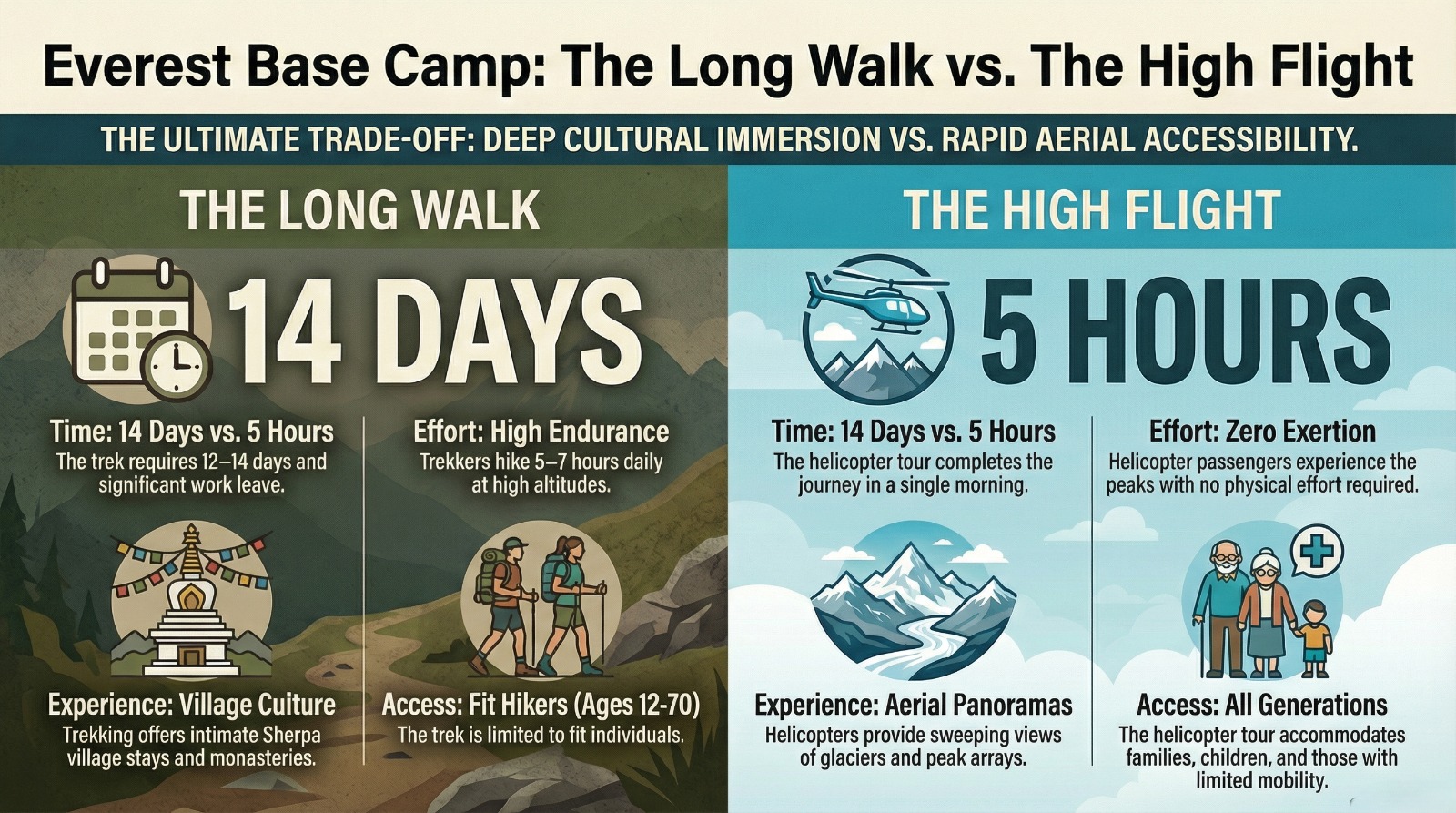
Infography: Compare Everest trek Vs Everest helicopter tour
Safety, Altitude, and Risks
Trekking Safety Factors
The Everest Base Camp trek carries inherent risks associated with remote mountain environments and high altitude. Nevertheless, proper preparation and experienced guides mitigate most dangers effectively:
Altitude sickness (mild headaches to life-threatening HAPE/HACE)
Trail accidents (slips, twisted ankles, falls)
Weather exposure (hypothermia, frostbite)
Gastrointestinal issues from food/water contamination
Lukla flight delays causing schedule disruptions
The gradual ascent profile allows acclimatisation, reducing altitude sickness incidence compared to rapid elevation gain methods. Furthermore, established teahouse infrastructure along the route ensures that help remains accessible should emergencies arise. Additionally, the Khumbu region maintains rescue helicopter services that can evacuate sick or injured trekkers to Kathmandu within hours, though comprehensive travel insurance with helicopter coverage proves essential. Most operators carry satellite phones and oxygen supplies for emergencies, while acclimatisation days reduce the likelihood of severe altitude problems. Consequently, fatalities remain rare on the EBC trek when participants follow guide recommendations and recognise warning symptoms early.
Helicopter Tour Safety Considerations
Safety Factor
Risk Level
Mitigation Strategy
Weather Changes
Moderate-High
Early morning departures, flexible scheduling
Engine Performance
Low
Regular maintenance, experienced pilots
Landing Hazards
Moderate
Pilot training, ground crew assistance
Altitude Exposure
Moderate
Brief ground time, passenger screening
Helicopter flights in the Everest region maintain strong safety records, though high-altitude aviation presents unique challenges. Pilots require specialised training for mountain flying, and reputable companies employ only experienced aviators familiar with Himalayan weather patterns. Moreover, helicopters undergo rigorous maintenance schedules to ensure reliability in demanding conditions where engine performance degrades due to thin air.
Furthermore, morning departures typically offer the safest weather windows before afternoon thermal activity creates turbulence. The helicopter tour minimises avalanche and rockfall risks that ground-based travellers face, though flight cancellations occur regularly when conditions deteriorate. Therefore, flexible schedules and backup dates prove crucial when booking helicopter tours, as pilots prioritise safety over maintaining timetables. Understanding the cons of helicopter travel, such as weather dependency and altitude sensitivity, helps set realistic expectations for this aerial adventure.
Altitude Sickness and Acclimatisation
Altitude sickness affects individuals differently regardless of fitness level, occurring when ascent outpaces the body's ability to adjust to reduced oxygen. The trek and the EBC journey build acclimatisation through gradual elevation gain and rest days, following the mountaineering principle of "climb high, sleep low". Symptoms progress from mild headaches and nausea to dangerous conditions like High Altitude Pulmonary Edema (HAPE) or High Altitude Cerebral Edema (HACE) if ignored.
In contrast, the helicopter tour bypasses acclimatisation entirely, jumping from Kathmandu to above 5,000 metres within two hours. This rapid exposure triggers symptoms in some passengers, though the brief ground time (10-15 minutes) prevents serious complications for most healthy individuals. Nevertheless, those with a history of altitude sensitivity should reconsider the landing option or choose overfly alternatives. Importantly, preventive medications like acetazolamide (Diamox) help trekkers but offer limited benefit for helicopter tour participants given the compressed timeline.
The Everest Base Camp trek operates year-round, though spring (March to May) and autumn (September to November) are widely regarded as the best seasons for Everest Base Camp trek. Spring brings warmer temperatures and blooming rhododendrons, with clear skies that follow winter stability. Autumn offers crisp air, reliable visibility, and settled weather after the monsoon. During these peak months, trails can become crowded as large numbers of trekkers move through the Khumbu at the same time.
Autumn provides the most reliable weather and crystal-clear mountain views after monsoon rains cleanse the atmosphere. Nevertheless, teahouses fill quickly during October, requiring advance bookings or flexible itinerary adjustments. Winter (December-February) attracts hardy adventurers seeking solitude, though frigid temperatures and closed high-altitude lodges present challenges. Meanwhile, monsoon season (June-August) features afternoon rains, leeches, and obscured views, making it the least popular trekking window despite lower prices and empty trails.
Helicopter Tour Weather Windows
Helicopter tours depend entirely on visibility and wind conditions, making early mornings the best time for Everest Base Camp helicopter tours throughout the year, when calmer air and clearer skies offer the highest success rates:
Spring (March-May): 85-90% success rate, excellent visibility
Spring and autumn remain preferred seasons for the same reasons that favor trekking, though helicopter flights can operate on clear winter days when trekking proves uncomfortable. Moreover, monsoon season sees frequent cancellations as afternoon clouds develop rapidly, obscuring peaks and creating turbulence. Early morning departures (6:00-8:00 AM) capitalize on stable air before thermal heating triggers wind patterns.
Additionally, pilots monitor weather forecasts continuously and may delay flights by hours or days when conditions appear marginal. Consequently, booking helicopter tours near the beginning of your Nepal visit allows rescheduling opportunities if initial attempts get weathered out. Furthermore, winter's stable high-pressure systems sometimes produce exceptional visibility, making December-February surprisingly viable despite cold temperatures at landing zones.
Who Should Choose Each Option
Ideal for Adventure Seekers
The Everest Base Camp trek suits individuals who thrive on physical challenges and seek meaningful engagement with mountain environments. Adventure seekers who value the journey as much as the destination find the multi-day trek provides adequate time to absorb the Everest region's grandeur while testing their endurance. Furthermore, the achievement of reaching EBC on foot carries deeper satisfaction for many compared to helicopter arrival.
This option appeals to:
Experienced hikers comfortable with multi-day backpacking trips
Travelers prioritizing cultural immersion alongside natural beauty
Those seeking transformative experiences through physical accomplishment
Individuals who enjoy teahouse camaraderie and trail community
Photographers wanting varied lighting conditions and intimate landscape shots
Additionally, adventure travellers often appreciate the unpredictability inherent in extended mountain journeys, where weather delays and route adjustments become part of the story. The classic Everest Base Camp trek delivers these elements in abundance, creating memories that extend beyond simple sightseeing.
Ideal for Time-Limited Travellers
The EBC helicopter tour perfectly serves professionals and visitors with constrained schedules who nonetheless want to experience Mount Everest up close. Business travelers passing through Kathmandu, cruise passengers on tight itineraries, or families combining Nepal with other Asian destinations find the tour provides maximum impact within minimal timeframes. Moreover, the helicopter tour adventure eliminates the need for extensive pre-trip training or fitness preparation.
Time-limited travellers benefit because:
Tour completion requires only one morning versus two weeks
No recovery days needed before resuming normal activities
Weather delays affect single days rather than entire vacations
Return flights same afternoon allow continued travel plans
Seeing Mount Everest becomes possible even with packed schedules
Furthermore, the helicopter tour gives visitors bragging rights and spectacular photographs without the risk of injury or altitude sickness complications that might derail subsequent travel plans. Consequently, many travelers take a helicopter tour as an efficient way to experience Everest while preserving time for other Nepal experiences like jungle safaris or cultural tours.
Ideal for Families or Less Fit Visitors
Families with children, elderly travellers, or individuals with mobility limitations find the helicopter tour opens Everest access that trekking would deny them. The tour accommodates multi-generational groups wanting shared experiences despite varying fitness levels, and parents appreciate introducing children to world-class scenery without the risks of multi-day mountain exposure. Additionally, the helicopter ride appeals to those recovering from injuries or managing chronic conditions incompatible with strenuous exercise.
This option works well for:
Families with children under 12 or elderly grandparents
Individuals with joint problems or cardiovascular concerns
Travelers seeking luxury experiences over physical challenges
Those nervous about altitude sickness but wanting Everest proximity
Honeymoon couples desiring romantic, exclusive view of the Everest peaks
Nevertheless, families should verify that all members tolerate altitude changes before booking, as children sometimes react unpredictably to rapid elevation gain. The helicopter tour might require skipping the landing portion for very young children or passengers with health concerns, though overfly alternatives still deliver impressive views. Therefore, discussing medical histories with tour operators before committing ensures appropriate expectations and safety.
Alternative Options to Consider
Trek with Helicopter Return
The EBCtrek with helicopter return combines both experiences, allowing you to enjoy the cultural immersion and acclimatisation benefits of trekking while eliminating the return journey's monotony. This hybrid approach involves trekking for 7-9 days from Lukla to Everest Base Camp, then catching a helicopter flight back to Kathmandu from Gorak Shep or Pheriche. Consequently, you save 3-4 days compared to the full trek while still achieving the accomplishment of walking to base camp.
Benefits of this base camp helicopter tour vs a full trek include:
Full acclimatization through gradual ascent
Cultural engagement maintained throughout upward journey
Knee-sparing descent via helicopter versus punishing downhill days
Dramatic perspective shift from ground level to aerial views
Extra vacation days available for other Nepal destinations
Moreover, the base camp trek with helicopter ride back costs approximately $2,200-$2,800, positioning it between the full trek and pure helicopter tour pricing. This base camp trek with helicopter option particularly appeals to trekkers with limited vacation time who refuse to sacrifice the trekking experience but can afford the premium for faster egress. Additionally, the helicopter trip back to Kathmandu provides relief for those who discover during the ascent that their knees or feet can't handle the full return journey.
Short Helicopter + Trek Packages
Package Type
Duration
Helicopter Segments
Trek Segments
Best For
Helicopter In, Trek Out
5-7 days
Kathmandu to Namche
Namche to Lukla
Time-constrained trekkers
Trek In, Helicopter Out
7-9 days
Gorak Shep to Kathmandu
Lukla to base camp
Knee-protection priority
Helicopter Tour + Day Hike
1 day
Full tour route
1-2 hours at landing zone
Maximum efficiency
Some operators offer abbreviated combinations where helicopter flights transport you to trailheads beyond Lukla, allowing 3-5 day treks to key viewpoints before flying out. These packages might land helicopters at Namche Bazaar or Tengboche, eliminating lower-elevation days while preserving the trekking experience above 3,500 metres. However, the compressed timeline reduces acclimatisation safety margins, making these options suitable only for those with previous high-altitude experience.
These creative combinations allow customisation based on interests, fitness, and budgets, though availability varies by season and operator capacity. Furthermore, combining modalities requires careful coordination regarding weather windows and helicopter availability, as companies may struggle to guarantee pickup times from remote locations. Nevertheless, for travellers seeking middle-ground solutions, these hybrid packages deserve consideration when planning your Everest adventure.
Practical Tips for Planning Your Trip
Permits and Costs
Trekking to Everest Base Camp requires two permits: the Sagarmatha National Park entry permit ($30) and the TIMS (Trekkers' Information Management System) card ($20). Most trekking agencies obtain these documents on your behalf in Kathmandu before departure, though you'll need to provide passport photos and photocopies. Additionally, these permits support conservation efforts and emergency rescue infrastructure throughout the Khumbu region.
In contrast, helicopter tours require no permits since passengers don't officially enter trekking zones on foot. However, landing fees at certain sites like Kala Patthar get included in tour pricing, and Sagarmatha National Park charges may apply if you spend extended time on the ground. Therefore, helicopter passengers enjoy simplified logistics compared to trekkers dealing with paperwork and permit checkpoints along the route.
Packing and Gear Differences
Item Category
Trek
Helicopter Tour
Clothing Layers
4-5 layers (base, fleece, down, shell)
2-3 layers (warm jacket, shell)
Footwear
Sturdy trekking boots (broken-in)
Comfortable shoes/sneakers
Sleep System
Sleeping bag (-10°C rated)
Not needed
Technical Gear
Trekking poles, headlamp, water purification
Camera, sunglasses only
Medical Kit
Comprehensive (altitude meds, first aid)
Basic (motion sickness pills)
The trek demands comprehensive gear lists, including insulated sleeping bags, layered clothing systems, sturdy trekking boots (broken in beforehand), trekking poles for knee support, headlamps with spare batteries, and personal first aid kits with altitude medication. Meanwhile, the helicopter tour requires minimal special equipment, as passengers remain in heated aircraft and spend only minutes outside at high altitude.
Nevertheless, warm jackets, sunglasses, and sun protection remain essential since temperatures at Kala Patthar hover near freezing even during midday. Additionally, camera equipment with multiple batteries proves crucial, as cold temperatures drain power rapidly during the brief ground time.
Guide and Porter Options
Licensed Sherpa guides enhance the trek through route knowledge, cultural interpretation, and safety management. Most trekking packages include guides automatically, though porter services often cost extra ($20-$25 daily) if you prefer carrying only a daypack. Furthermore, hiring porters provides employment to local communities while significantly improving your trekking comfort and enjoyment by eliminating heavy loads.
The helicopter tour includes only the pilot, who provides basic commentary but lacks the cultural expertise of trained Sherpa guides. Some premium tour packages offer ground guides who meet you at landing sites, though this remains uncommon given the brief stop duration. Consequently, trekking delivers superior educational value through sustained guide interactions, while helicopter passengers trade knowledge depth for time efficiency and aerial perspectives.
Everest Base Camp Trek vs Everest Helicopter Tour: Final Thoughts
The Everest Base Camp Trek vs Everest Helicopter Tour shows two ways to experience Everest. The Everest Base Camp trek is a gradual journey where each day's effort reveals the mountains’ mysteries and lets you connect with Sherpa communities, while the helicopter tour provides instant access to base camp and Everest experiences without the physical challenge. This trek rewards patience and perseverance with views that feel earned, whereas the tour offers efficiency and comfort for those short on time.
Pick the Everest Base Camp trek if you value physical challenge, cultural depth, and transformative multi-day adventures. Go for the Everest base camp helicopter tour if efficiency, comfort, and accessibility matter more than duration or physical accomplishment. The helicopter tour connects you to base camp instantly through aerial access, removing barriers that exclude many potential visitors from Everest experiences.
The trek and helicopter tour debate resolves most cleanly when you honestly assess what you seek from your Everest journey. Some crave bragging rights and photos, making the efficient flight to Everest perfectly adequate, while others need to test themselves against significant mountaineering challenges. What matters most is matching the experience to your current circumstances while leaving room for future adventures, as the majesty of Everest exists in both forms, waiting to be discovered on foot or by air. To plan your trip with expert guidance, contact Nepal Everest Base Camp Co. and find the Everest experience that fits you best.
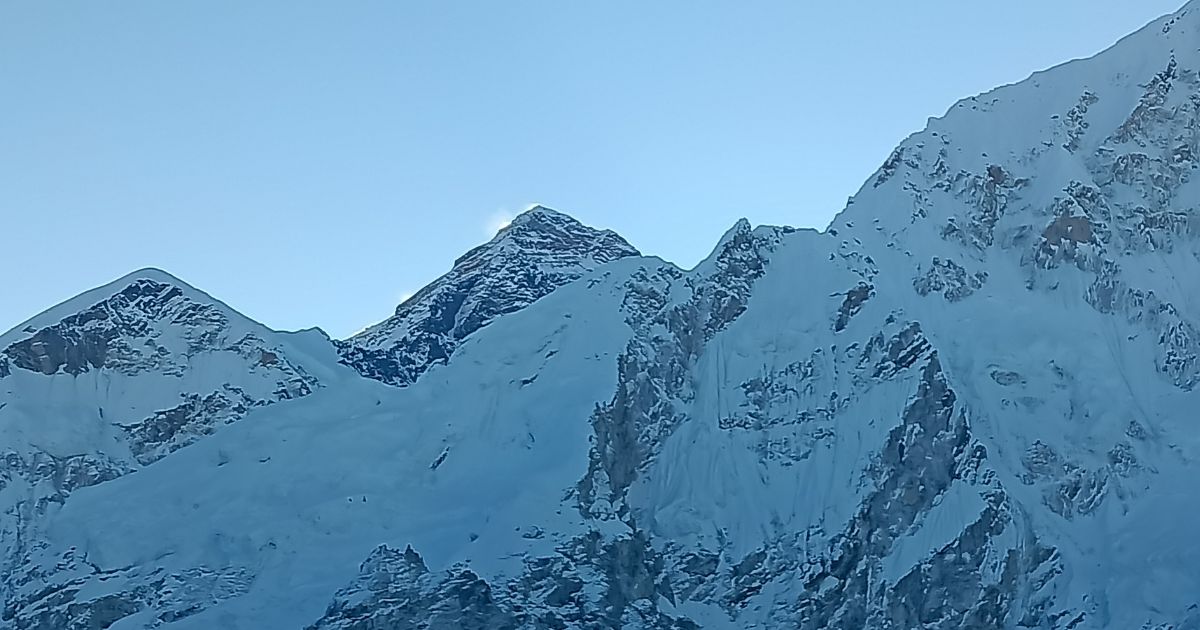
Mt Everest see from Kalapatther
Everest Base Camp Trek vs Everest Helicopter Tour: FAQs
Is the helicopter tour worth the cost?
The Everest base camp helicopter tour delivers exceptional value for time-limited travellers who want guaranteed mountain access without physical demands. When you calculate the cost per hour of actual Everest up-close viewing time and factor in convenience, the price becomes reasonable compared to two-week trek expenses, including lost wages.
Can elderly people do the trek or helicopter tour?
Elderly travellers with good fitness can complete the trek, though those over 70 should consult doctors about altitude risks. The helicopter tour accommodates seniors more easily, though rapid altitude gain affects everyone regardless of age. Medical clearance remains advisable for both options above age 65.
What if weather cancels my helicopter flight?
Most operators reschedule cancelled flights at no additional charge, though you need flexibility in your Kathmandu schedule. Premium packages may offer partial refunds if weather prevents completion, while budget options typically provide reschedule rights only. Always purchase travel insurance covering adventure activities.
How do I prepare for altitude sickness?
For the trek, gradual ascent over 10+ days allows natural acclimatization, supplemented by staying hydrated and considering Diamox medication. Helicopter tour participants have limited prevention options beyond avoiding alcohol beforehand and recognising that brief exposure minimises serious risk. Listen to your body and descend immediately if severe symptoms develop.
Blending digital strategy with mountain passion, I help adventurers find their way to the Himalayas online. With hands-on experience in Nepal’s trekking trails and a role at Nepal Everest Base Camp Trekking Co., Thamel, I combine SEO expertise with true trail insight.