Imagine soaring above Nepal's majestic Himalayas through helicopter services in Nepal, watching snow-capped peaks, lush valleys, and glacial rivers unfold beneath you. Naturally, the wind brushes past, the earth seems distant, and every view feels like a scene from a dream. For travellers seeking breathtaking views of the Himalayas, nothing compares to experiencing Mount Everest and the Annapurna region from above.
For many travelers, reaching remote corners of Nepal or fitting multiple destinations into a short trip can be challenging. Indeed, limited flight options, long treks, and unpredictable weather often leave adventurers frustrated or exhausted. Consequently, conventional travel methods may not suit those with time constraints or physical limitations.
Welcome to Nepal's helicopter services, offering fast, safe, and flexible ways to explore the country's breathtaking landscape. In this guide, I'll walk you through the types of helicopter flights available, popular routes, costs, safety tips, and everything you need to plan your aerial adventure. Whether you're considering an Everest helicopter tour or need charter services, Nepal Everest Base Camp Co. has you covered.
Overview of Helicopter Services in Nepal
Helicopter services in Nepal have transformed how travellers experience the Himalayan terrain. These services range from sightseeing tours to emergency rescue services, offering unmatched flexibility and efficiency. Furthermore, Nepal helicopter service providers cater to diverse needs, from luxury travellers to trekkers requiring urgent assistance.
Uses of Helicopter Services
Sightseeing Tours: Experience breathtaking panoramic views of Everest, Annapurna, and other peaks
Trekking Transfers: Quick helicopter pickup and dropoff services in Nepal for trekkers
Emergency Evacuation: Critical helicopter rescue and medical transport
VIP Transport: Private charter flights for business executives and celebrities
Aerial Photography: Professional filming and photography projects
Religious Pilgrimages: Pilgrimage tours flights to Muktinath and other sacred sites
Why Choose Helicopters in Nepal
The Nepal helicopter option saves valuable time compared to traditional trekking. Notably, a journey that typically takes 10-12 days on foot can be completed in hours via heli. Furthermore, helicopter flight services provide access to remote areas unreachable by road, especially during monsoon season. Additionally, the exceptional service offered by helicopter companies ensures comfort and safety throughout your journey.
Helicopter tour packages in Nepal offer unique perspectives that ground-based travel cannot match. Therefore, travellers seeking the best experience often opt for charter arrangements. Indeed, the helicopter tour is one of the most efficient ways to explore multiple regions within limited timeframes.
Types of Helicopter Services
Helicopter Tour in Nepal
Helicopter tours remain the most popular option for experiencing Nepal's natural beauty. These tours provide breathtaking views of the world's highest peaks while ensuring passenger comfort and safety. Additionally, taking a helicopter tour eliminates the physical demands of high-altitude trekking.
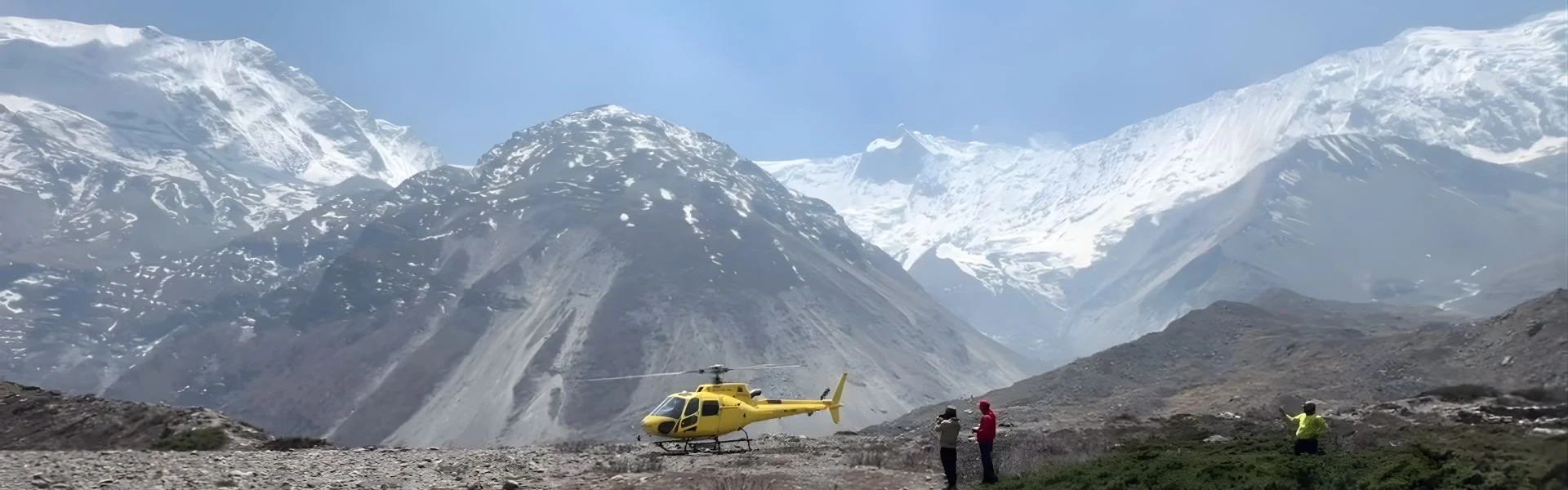
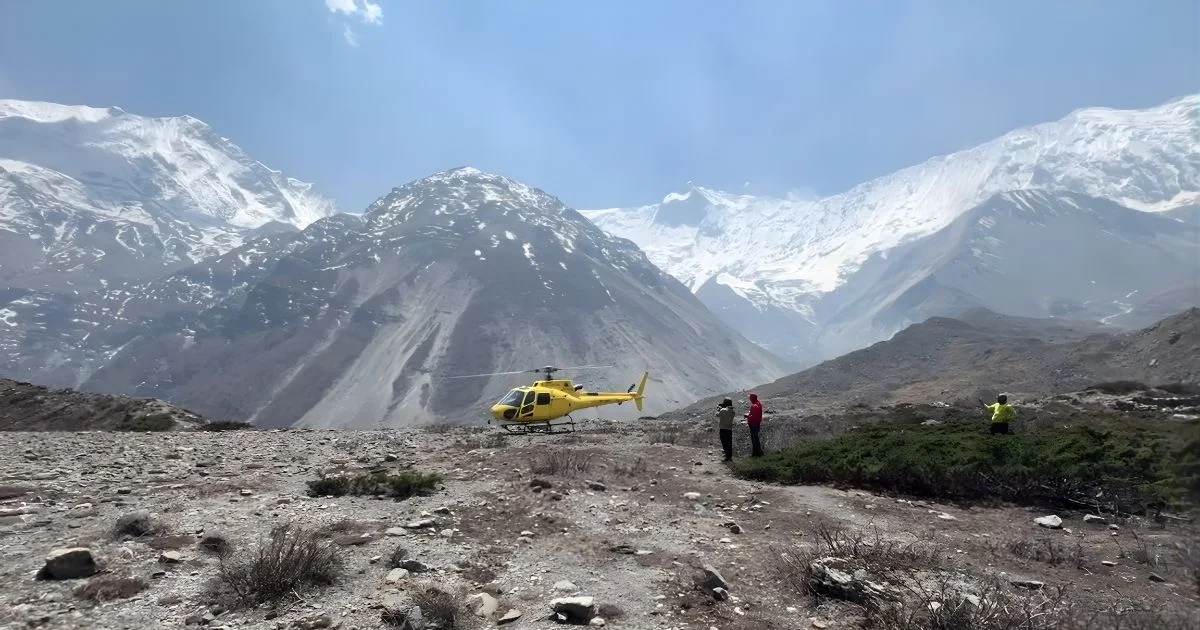
Religious pilgrimage site in an arid landscape, accessible via mountain helicopter services
Year-round (weather permitting)
The Everest heli tour is particularly sought after among international travellers. Similarly, the tour takes you directly to the base of the world's highest mountain, offering an unparalleled opportunity to explore and capture stunning photo opportunities. Additionally, the Annapurna base camp heli experience showcases diverse ecosystems ranging from subtropical forests to alpine terrain.
Helicopter tours from Kathmandu departures are most common, though helicopter tour options from Pokhara provide convenient access to the Annapurna region. Moreover, most tour packages include ground transportation, permits, and refreshments during landing stops, ensuring a complete experience.
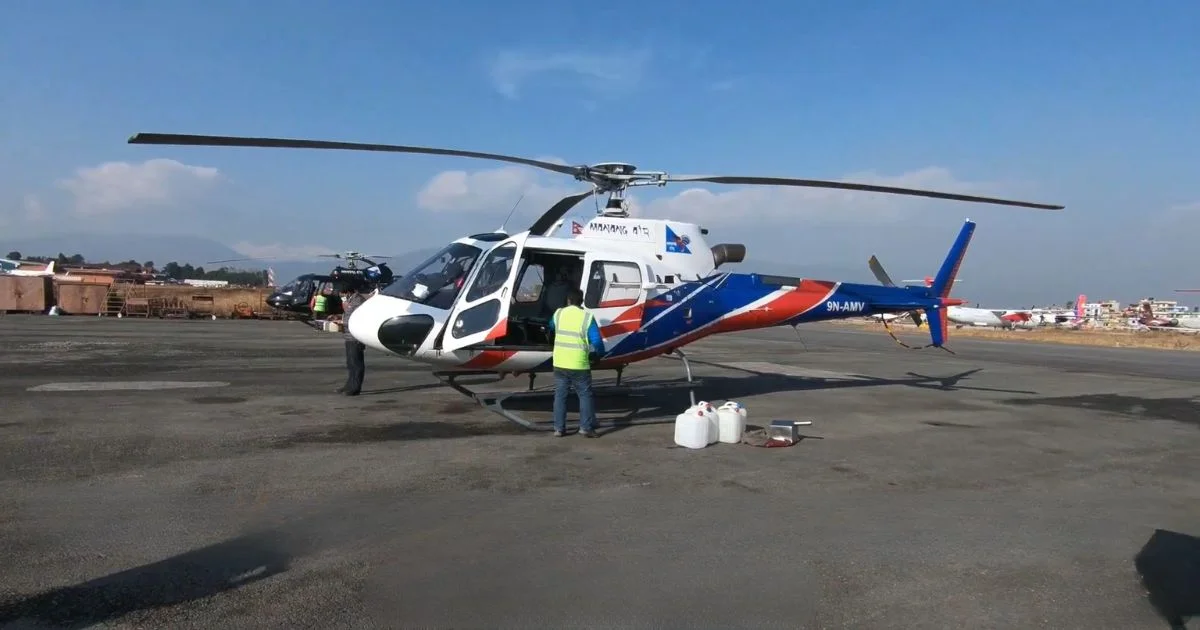
Kathmandu Airport Prepared for helicopter services in mountain area
Helicopter Pickup Services
Helicopter pickup services provide crucial support for trekkers who need to exit trails quickly. These services operate from various points across Nepal, including remote trekking routes and high-altitude locations. Consequently, trekkers experiencing altitude sickness or injury can receive prompt assistance.
Emergency locations: Any accessible terrain during rescue operations
The Gorakshep to Lukla helicopter flight is particularly common for trekkers completing the Everest Base Camp trek. In fact, this alternative flight from Kathmandu reduces return journey time significantly. Moreover, the Lukla helicopter flight is an alternative way to avoid the challenging landing at Lukla Airport, known for its difficult approach.
Single helicopter pickups can accommodate 4-5 passengers depending on weight and altitude considerations. Furthermore, the helicopter transfer process includes coordination with local authorities and weather monitoring to ensure safe operations.
Personal insight: From my direct experience coordinating hundreds of helicopter evacuations in Nepal and high-altitude helicopter pickups, the most critical factor is early decision-making. Weather windows in the Himalayas can close within ten minutes, so operational flexibility and a rapid response time are what separate successful mountain helicopter operations from cancelled flights.
Helicopter Dropoff Services in Nepal
Helicopter dropoff services in Nepal facilitate efficient travel to trekking starting points and remote destinations. These mountain helicopter services eliminate long drives on rough roads and provide direct access to adventure zones. Therefore, travellers can maximise their time exploring rather than commuting.
Popular Drop-off Destinations
Trek starting points: Lukla, Jomsom, Syabrubesi
Scenic viewpoints: Everest View Hotel, Hotel Everest View
Remote villages: Upper Mustang, Manang, Humla
Mountain resorts and lodges throughout the Himalayas
The Kathmandu to Lukla helicopter flight saves travellers from the sometimes nerve-wracking fixed-wing flight on small aircraft. Additionally, chartering a helicopter for drop-off ensures flexible scheduling without depending on commercial airline timetables.
Helicopters from Kathmandu to various destinations operate throughout the year, though weather conditions affect scheduling. Indeed, the Lukla and Kathmandu connection remains one of the busiest helicopter routes in Nepal, especially during peak trekking seasons.
Helicopter Evacuation in Nepal
Helicopter evacuation in Nepal provides life-saving services for trekkers and mountaineers facing medical emergencies. These operations require specialised equipment and experienced pilots familiar with high-altitude rescue procedures. Furthermore, rescue services operate 24/7 during trekking seasons to ensure rapid response.
Most helicopter rescue operations in Nepal are covered by travel insurance policies that include high-altitude trekking coverage. Importantly, the helicopter service provider coordinates directly with insurance companies to authorise emergency flights. Therefore, travellers should verify their coverage includes helicopter evacuation before beginning treks.
The Lukla to Kathmandu helicopter evacuation route is frequently used for medical evacuation emergencies. Additionally, professional medical staff sometimes accompany critical cases, ensuring patients receive care during transport. The Nepal helicopter service offers some of the most experienced high-altitude rescue capabilities globally.
Hands-on insight: I've personally flown on multiple evacuation missions. One case near Dingbiche involved early HAPE symptoms. We lifted within 40 minutes of the call, the client reached Kathmandu hospital within three hours, and that timing made the difference between controlled recovery and a life-threatening situation. The lesson is clear: never wait for symptoms to worsen.
Annapurna Emergency Rescue
VIP, Private Charters & Special Flights
Private charter services cater to travellers seeking exclusive experiences or custom itineraries. These charter services provide flexibility in scheduling, routing, and onboard amenities. Moreover, corporate clients and luxury travellers often prefer charter-basis arrangements for privacy and convenience.
VIP Charter Options
Executive business transport between Nepal cities
Customized sightseeing tours with flexible duration
Wedding and special event photography flights
Film production and documentary shoots
Government and diplomatic transport
Charter flight pricing varies based on helicopter type, duration, and destination. Indeed, the comfortable helicopter models available include the Robinson R44, Airbus AS350 B3e (Ecureuil), and Bell 407. Each offers different passenger capacities and performance characteristics suitable for various mission profiles.
Daily helicopter charter rates typically include pilot fees, fuel, insurance, and ground handling. Furthermore, the best helicopter choice depends on passenger count, luggage requirements, and destination altitude. Booking through reputable helicopter company operators in Nepal ensures professional service and safety standards.
Aerial Photography & Filming
Aerial photography and filming services support professional productions requiring Himalayan backdrops. These specialised flights accommodate camera equipment and provide stabilised platforms for high-quality footage. Consequently, documentaries, commercials, and feature films frequently utilise Nepal helicopter services.
Photography Flight Features
Door-off flights for unobstructed camera angles
Hovering capabilities at key locations
Multiple passes for optimal lighting and composition
Coordination with ground crews and talent
Permits and clearances for restricted areas
The Air Dynasty Heli and other helicopter companies maintain aircraft specifically configured for photography missions. Similarly, these heli services work closely with production teams to achieve desired shots while maintaining safety protocols. The region of Nepal offers infinite possibilities for stunning aerial cinematography.
From direct involvement, I've supported aerial filming projects in restricted regions where drone permits are limited. One documentary involved filming glacial retreat near Ama Dablam, requiring precision hovering at altitude with strict fuel and time planning. These projects demand operational expertise beyond standard tourism flights.
Top 5 Helicopter Service Providers in Nepal
Rank
Company Name
Est. Year
Fleet Highlights
Key Services
1
Simrik Air
2001
3x AS350 B3e, 1x Bell GXP
High-altitude rescues, mountain flights, cargo transport, proven safety record
2
Air Dynasty
1993
2x AS350B3e, 2x AS350 FX II
Medical evacuations, rescue operations, industry pioneer in high-altitude flights
3
Heli Everest
2016
3x AS350 B3e
Modern fleet, Everest Base Camp tours, charter services
4
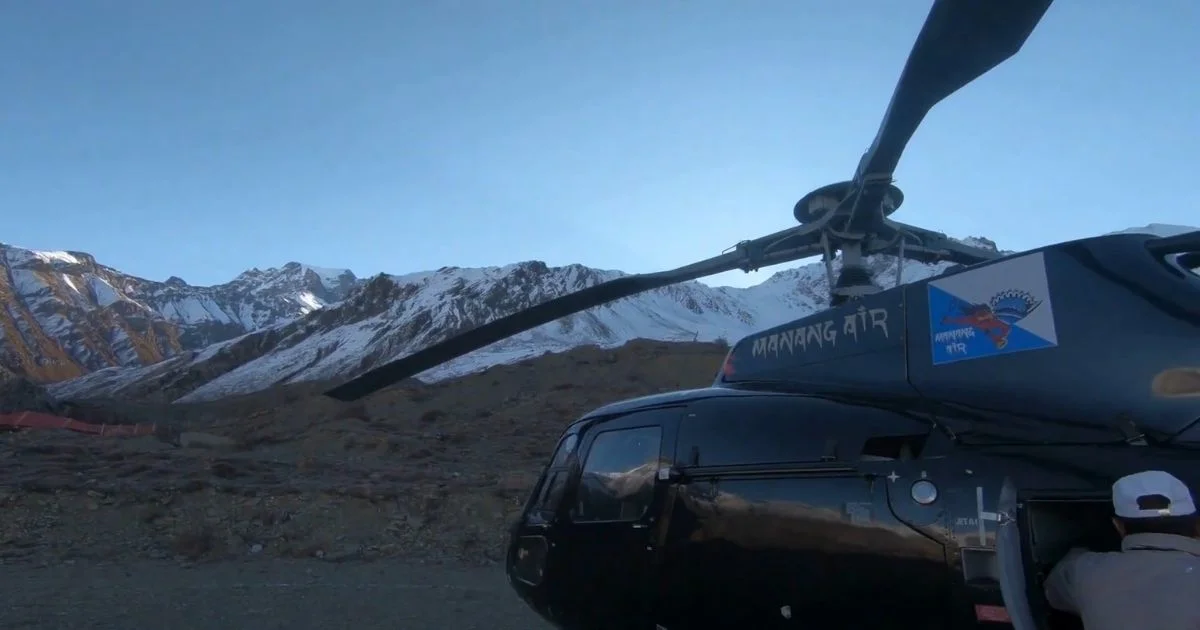
Manang Air
1997
Luxury models
Private charters, premium tours, personalized service
Additionally, other notable operators include Kailash Helicopter and Prabhu Helicopter, both offering reliable helicopter services across Nepal. The list of helicopter providers continues to grow, with each helicopter company in Nepal bringing unique strengths to the market. Furthermore, Kailash Helicopter Services and Air Dynasty Heli Service remain popular choices among travellers seeking quality and reliability.
What sets the best operators apart is pilot experience and maintenance culture, not marketing. Top companies ground aircraft without hesitation if something feels off. From my direct working relationships with these operators, this mindset separates safe operations from risky ones.
Popular Routes and Destinations
Everest Region Routes
The Everest region attracts the majority of helicopter tour bookings in Nepal. These routes showcase the world's highest peaks and provide access to iconic Everest Base Camp. Furthermore, taking the Everest Base Camp helicopter tour allows travellers to experience legendary terrain without weeks of trekking.
The helicopter ride to Everest Base Camp (EBC) includes a breakfast stop at Everest View Hotel, situated at 3,880 metres. Notably, this popular heli route provides stunning views of Everest, Lhotse, Nuptse, and Ama Dablam. Additionally, the Gorakshep to Lukla helicopter flight serves trekkers completing their journey.
Popular helicopter services ensure passengers receive adequate time at landing sites for photography and acclimatization. Indeed, the best views occur during morning flights when mountain visibility typically peaks. Therefore, most helicopter tours from Kathmandu departing for the Everest region happen between 6:00 AM and 8:00 AM.
Everest helicopter ride
Annapurna & Pokhara Scenic Flights
The Annapurna region offers diverse helicopter tour options showcasing varied terrain and cultural landscapes. Moreover, Pokharahelicopter services provide convenient access to this popular trekking area. Additionally, the Pokhara base reduces overall flight time and costs compared to Kathmandu departures.
Annapurna Flight Highlights
Annapurna Base Camp: Amphitheater of peaks including Annapurna I and Machhapuchhre
Ghandruk Village: Traditional Gurung settlements with mountain backdrop
Mardi Himal: Less-crowded alternative with spectacular views
Jomsom and Muktinath: Religious sites in rain-shadow desert terrain
The Annapurna Base Camp Helicopter Tour typically lasts 2-3 hours when you fly from Pokhara. Furthermore, this heli tour includes landing at base camp for 15-20 minutes, allowing passengers to explore the serene sanctuary and enjoy the stunning views. The charter option provides flexibility for extended stays or additional landing points.
Muktinath helicopter services serve both tourists and Hindu and Buddhist pilgrims. Indeed, the Muktinath helicopter tour combines religious significance with natural beauty, visiting sacred temples at 3,710 metres elevation. This popular heli destination operates year-round, though winter months require careful weather monitoring.
Langtang Valley & Gosaikunda
Langtang Valley and Gosainkunda Lake helicopter tours offer pristine mountain scenery closer to Kathmandu. These destinations receive fewer tourists than Everest and Annapurna, providing peaceful wilderness experiences. Consequently, the Langtang heli route suits travellers seeking less crowded alternatives and a unique opportunity to explore remote regions.
Langtang Tour Features
Langtang Valley: U-shaped glacial valley with traditional Tamang villages
Kyanjin Gompa: Monastery at 3,870 meters with cheese factory
Laurebina Pass: High viewpoint connecting Langtang and Helambu regions
Langtang National Park: Protected area with diverse wildlife and flora
The Gosaikunda helicopter tour is particularly popular during the August full moon festival when thousands of pilgrims visit. However, the helicopter ride in Nepal to this destination operates throughout favourable weather windows. Moreover, the heli can land near the lake, allowing passengers to explore the sacred site and enjoy the stunning views of the surrounding peaks.
One memorable charter involved elderly pilgrims flying to Gosaikunda after being unable to complete the final ascent on foot. It was deeply personal, carrying emotional weight far beyond standard tourism. These flights demonstrate how helicopters serve communities beyond adventure travel.
Mustang, Muktinath & Remote Lakes
Upper Mustang and surrounding areas offer dramatic desert-mountain landscapes distinct from other Nepal regions. These helicopter routes traverse areas with Tibetan Buddhist culture and ancient cave dwellings. Furthermore, the restricted area status of Upper Mustang adds exclusivity to these flights.
Remote Destination Options
Upper Mustang: Walled city of Lo Manthang, ancient monasteries
Rara Lake: Nepal's largest lake in remote western region
Charter arrangements work best for these remote destinations due to limited regular services. Indeed, the single helicopter capacity means groups must coordinate carefully for multi-passenger trips. Additionally, fuel stops may be required for longer routes, adding time to overall journey duration. These mountain heli adventures provide access to areas rarely seen by traditional trekkers.
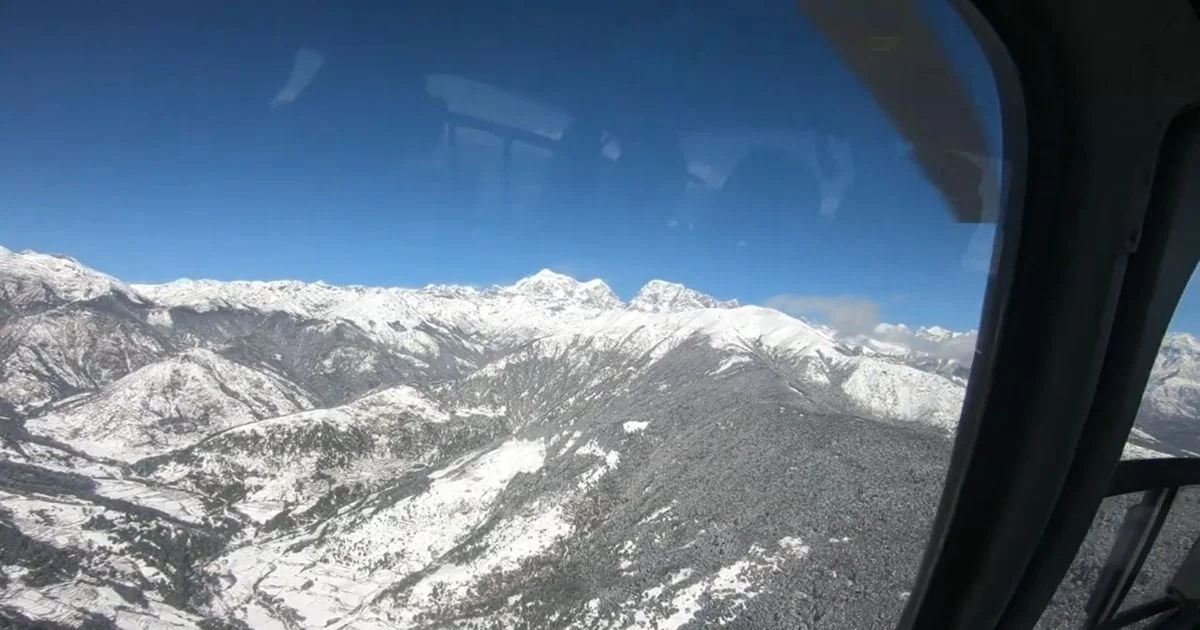
Mountain view from Helicopter flight in everest region
Cost Guide and Booking Tips
Average Costs & Factors Affecting Price
Helicopter charter service pricing in Nepal varies significantly based on multiple factors. Understanding cost structures helps travellers budget appropriately and identify fair market rates. Therefore, comparing quotes from multiple helicopter service provider companies is advisable.
Typical Price Ranges
Service Type
Cost (USD)
Notes
Everest Base Camp Helicopter Tour (shared)
$1,200-1,500 per person
4-5 passengers
Everest Tour (private charter)
$4,500-5,500 total
Up to 5 passengers
Annapurna Base Camp Tour (shared)
$1200 - 1,500 per person
4-5 passengers
Kathmandu to Lukla Transfer
$500-700 per person
One-way, shared
Emergency Evacuation
$3,500-8,000+
Distance and urgency dependent
Muktinath Day Tour
$2,500-3,500
Private charter, full day
Factors Affecting Helicopter Costs
Destination altitude and distance from base
Helicopter type and passenger capacity
Fuel prices and operational expenses
Landing fees and permit costs
Seasonal demand fluctuations
Weather-related delays or cancellations
The holiday tour season (October-November and March-April) sees higher prices due to increased demand. Booking well in advance often secures better rates from the tour company. Additionally, helicopter promotion offers and heli offers appear during shoulder seasons, providing opportunities for savings.
Note: By late 2025, helicopter costs in Nepal have increased noticeably due to fuel price volatility, insurance premiums, and stricter maintenance requirements. Weight calculations and passenger limits are now enforced more tightly than before. This reflects industry-wide changes I've observed directly through our operational partnerships.
Private vs Shared Flights
Private charter and shared flight options each offer distinct advantages. Private arrangements provide schedule flexibility and route customisation, while shared flights reduce per-person costs. Consequently, travel group size and budget often determine the best choice.
Private Charter Benefits
Complete schedule control and route customization
No sharing with unknown passengers
Flexible landing duration and photo opportunities
Privacy for special occasions or business travel
Ability to modify plans based on weather windows
Shared Flight Advantages
Significantly lower per-person costs
Opportunity to meet fellow travelers
Regularly scheduled departures during peak seasons
No minimum passenger requirement for booking
Suitable for solo travelers and couples
When you book your helicopter for private use, expect to pay the full charter rate regardless of passenger count. However, maximising occupancy by filling available seats reduces individual costs. Indeed, the comfortable helicopter models accommodate 4-5 passengers plus the pilot, depending on weight restrictions and altitude.
Helicopter tour packages sometimes combine shared and private elements. For example, the Nepal helicopter serviceoffers helicopter shared flights to base destinations with private extensions to additional points. This hybrid approach balances cost efficiency with personalised experiences.
Best Time to Book & How to Save
Strategic booking timing significantly impacts helicopter costs and availability. Understanding seasonal patterns helps travellers secure optimal rates while ensuring favourable weather conditions. Moreover, advance planning allows comparison shopping among various helicopter companies.
Optimal Booking Timeline
3-6 months ahead: Peak season bookings (Everest and Annapurna routes)
1-3 months ahead: Shoulder season and less-popular routes
2-4 weeks ahead: Monsoon season and last-minute deals
Immediate booking: Emergency evacuations and weather-dependent opportunities
Money-Saving Strategies
Book shared flights instead of private charters when possible
Travel during shoulder seasons (early March, late November)
Form groups to fill helicopter capacity and split costs
Monitor tour company websites for promotional offers
Combine helicopter with traditional trekking for partial journeys
Avoid peak holiday periods when prices surge
The best helicopter deals often appear when operators have repositioning flights or cancelled bookings. Flexible travellers can capitalise on these last-minute opportunities through Nepal helicopter booking platforms. However, popular routes like the Everest Base Camp helicopter tour rarely see significant discounts during peak season.
Safety and Regulations
The Nepal Civil Aviation Authority (CAAN) regulates all commercial helicopter operations. These regulations ensure minimum safety standards and operational protocols. Furthermore, international aviation standards guide helicopter service providers in maintaining equipment and training personnel.
Key Safety Regulations
Mandatory pilot licensing and recurrent training requirements
Aircraft maintenance schedules per manufacturer specifications
Weather minimums for visual flight operations
Weight and balance calculations for each flight
Emergency equipment and communication systems
Insurance coverage for passengers and third-party liability
Weather Considerations & Flight Cancellations
Mountain weather in Nepal changes rapidly, affecting helicopter operations significantly. Morning flights typically encounter better conditions than afternoon departures when cloud buildup occurs. Consequently, most Everest helicopter tour departures happen early morning, ensuring optimal visibility.
Common Weather Factors
Monsoon season (June-August): Heavy rain, low visibility, frequent cancellations
Winter months (December-February): Extreme cold, strong winds at altitude
Daily patterns: Morning clarity, afternoon cloud development
When weather forces cancellations, reputable helicopter companies reschedule flights at no additional cost. Travel insurance covering trip interruptions proves valuable during extended weather delays. Indeed, the Nepal travel industry understands these challenges and builds flexibility into itineraries.
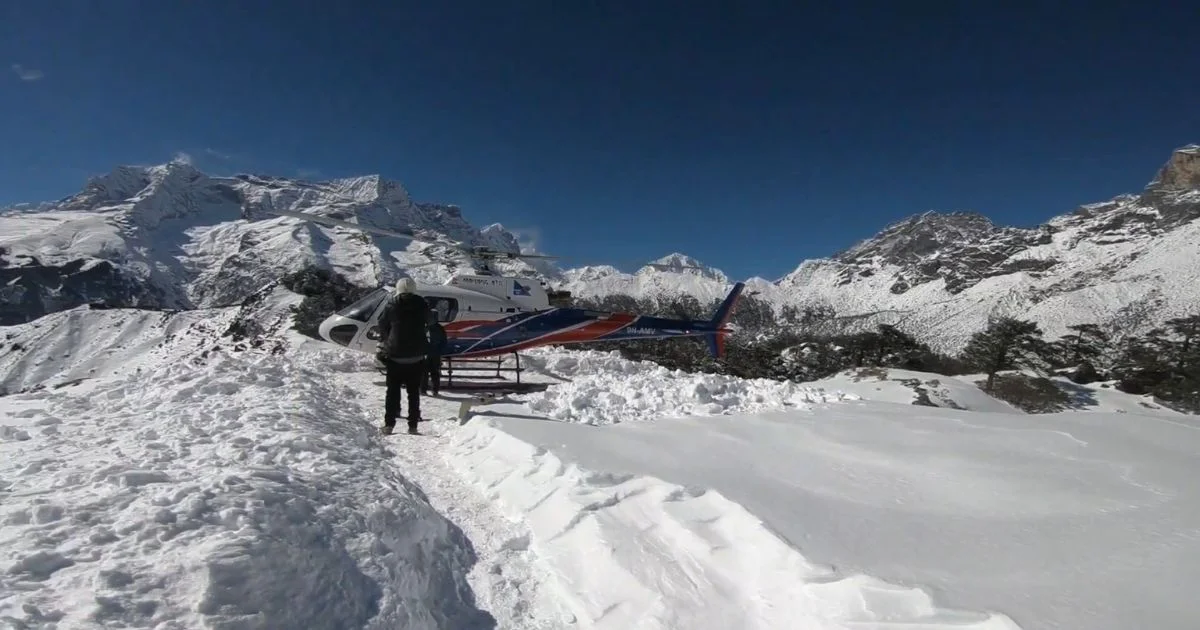
Winter Helicopter service in everest region
Safety Standards & What to Expect
Modern helicopter fleets in Nepal meet international safety standards. Operators maintain comprehensive safety management systems addressing risk factors. Additionally, pilot experience levels typically exceed minimum regulatory requirements, especially for high-altitude operations.
Passenger Safety Briefings Include
Seat belt and door operation instructions
Emergency exit procedures and equipment locations
Weight distribution and movement restrictions during flight
Communication with pilot using intercom systems
Photography guidelines and safety considerations
The great service provided by professional operators includes thorough pre-flight briefings. Passengers receive clear instructions about boarding procedures, luggage handling, and in-flight protocols. Therefore, even first-time helicopter passengers feel comfortable and informed.
Practical Travel Tips
What to Wear & Luggage Limits
Proper clothing and minimal luggage ensure comfortable and safe helicopter experiences. High-altitude destinations require warm layers, while luggage restrictions reflect aircraft capacity limitations. Consequently, travellers must pack strategically for helicopter tour adventures.
Recommended Clothing
Layers for temperature variation (warm jacket, fleece, base layers)
Comfortable closed-toe shoes with good grip
Sunglasses and sun protection (UV intensity increases with altitude)
Hat or cap that won't blow off during boarding
Gloves for high-altitude landings
Luggage Restrictions
Typical limit: 10-15 kg (22-33 lbs) per passenger
Soft bags preferred over hard-shell luggage
Camera equipment and personal items count toward the limit
Excess baggage may require additional charter arrangements
Weight restrictions stricter for high-altitude destinations
When taking a helicopter tour, wearing appropriate footwear is essential for safely navigating landing zones. The helicopter ride involves rotor wash that can disturb loose items, so secure all belongings. Additionally, large camera lenses and tripods should be discussed with operators beforehand.
Altitude & Health Considerations
High-altitude helicopter destinations present physiological challenges despite rapid ascent. Understanding altitude effects helps passengers prepare appropriately and recognise potential problems. Moreover, medical clearance is advisable for individuals with pre-existing health conditions.
Altitude Awareness
Rapid altitude gain via helicopter doesn't allow gradual acclimatization
Symptoms may include headache, dizziness, shortness of breath
Hydration before and during flight helps minimize effects
Avoid alcohol 24 hours before high-altitude flights
Limit physical exertion at landing sites
Most Everest helicopter tour destinations exceed 5,000 metres in elevation, where oxygen levels drop significantly. Indeed, the helicopter cabin is not pressurised, meaning passengers experience full altitude effects. Therefore, spending limited time at extreme elevations reduces health risks.
Another common mistake is hiding symptoms to avoid evacuation costs. This often leads to more serious emergencies later. One case involved a solo trekker in the Manaslu region with severe gastrointestinal infection combined with dehydration. We lifted within 90 minutes, and he reached the hospital in under four hours. That timing saved his life.
Photography Tips
Helicopter flights in Nepal offer unparalleled photography opportunities. Proper preparation and technique maximise results while respecting safety requirements. Furthermore, understanding optimal camera settings for aerial photography improves image quality dramatically.
Photography Best Practices
Fast shutter speeds (1/500 s or faster) to minimize motion blur
Shoot through open windows when possible, avoiding Plexiglas distortion
Morning light provides best conditions for mountain photography
Wide-angle lenses capture expansive landscapes
Communicate photo priorities with pilot for positioning
The breathtaking scenery visible during flights rewards photographers with world-class opportunities. However, changing light conditions and aircraft vibration present technical challenges. Therefore, practising with camera settings before the flight helps capture optimal images.
User Stories & Testimonials
Traveller Experiences
Real experiences from passengers illustrate what makes helicopter tours in Nepal memorable. These testimonials highlight both the spectacular aspects and practical considerations of helicopter service.
"Our Everest Base Camp helicopter tour was better than we could have imagined. The pilot was incredibly knowledgeable, sharing insights about peaks and terrain throughout the flight. Landing at Everest View Hotel for breakfast with Everest in full view was surreal. Absolutely worth every dollar." - Lindy M., Australia
"I needed helicopter evacuation from Gokyo after severe altitude sickness. The rescue service response was immediate and professional. Within three hours of our distress call, I was safely in Kathmandu receiving medical treatment. My insurance covered everything. This exceptional service literally saved my trip." - Thomas R., Germany
"The Annapurna Base Camp heli tour from Pokhara was the highlight of our Nepal visit. We had attempted the trek years earlier but couldn't complete it due to time constraints. The helicopter let us finally reach our goal and still have time for other adventures. The best possible experience." - Jennifer and Mark L., USA
Common Issues & How They Were Resolved
Weather delays affect many helicopter bookings in Nepal. Responsible operators prioritise safety over schedule adherence, sometimes disappointing passengers with postponements. However, most issues resolve satisfactorily with proper communication and flexibility.
Issue: Weather cancellation on scheduled Everest tour day
Resolution: Operator rescheduled for next available clear day at no extra cost, providing hotel accommodation for extended stay
Resolution: The helicopter company arranged two flights at a discounted rate, ensuring all passengers completed the tour
Issue: Altitude sickness symptoms during high-elevation landing
Resolution: Pilot immediately returned to lower elevation, demonstrating proper safety protocols and passenger care
These experiences reflect the professional standards maintained by reputable Nepal helicopter service providers. The luxury tour atmosphere combines with practical safety considerations, creating optimal adventure travel experiences.
Helicopter Services in Nepal: Final Thoughts
Helicopter services in Nepal offer an unparalleled way to experience the Himalayas, whether for sightseeing, trekking support, or emergency travel. They save time, enhance safety, and offer breathtaking aerial perspectives that few other modes of travel can match. Indeed, the diversity of available services in Nepal means every traveller can find suitable options.
Flying over Nepal's mountains, rivers, and valleys creates unforgettable memories. Each flight connects travellers with the grandeur of the Himalayas in a way that trekking alone cannot. Moreover, the efficiency of helicopter travel allows exploration of multiple regions that would otherwise require weeks of conventional travel. With a direct flight, you can reach remote destinations quickly and comfortably.
Plan your helicopter journey in Nepal today. Explore multiple regions effortlessly, share your experiences, or book your helicopter flight that turns your adventure into a once-in-a-lifetime experience. Contact reputable helicopter service providers to discuss your specific needs and preferences, and take advantage of the heli ride that opens up endless possibilities with Nepal Everest Base Camp Co. Contact us to start planning your aerial adventure.
Muktinath Helicopter Tour
Helicopter Services in Nepal: FAQs
Can Anyone Book a Helicopter Flight in Nepal?
Yes, anyone can book helicopter services in Nepal regardless of nationality or trekking experience. You'll need valid identification, travel insurance, and payment arrangements through authorised operators or travel agencies.
What Happens If Weather Stops Flights?
Weather cancellations are common, and operators reschedule at no additional cost. Most helicopter companies monitor conditions continuously and communicate changes promptly to maintain passenger safety.
Are Children Allowed on Helicopter Tours?
Children are welcome on helicopter tours with adult supervision. Weight restrictions apply equally to all passengers, and altitude considerations should be discussed with medical professionals beforehand.
How Many Passengers Fit in a Helicopter?
Standard helicopters in Nepal accommodate 4-5 passengers plus the pilot. Exact capacity depends on aircraft type, passenger weight, luggage, altitude, and weather conditions.
Do I Need Travel Insurance for Helicopter Tours?
Yes, comprehensive travel insurance, including helicopter evacuation coverage, is strongly recommended. Verify your policy covers high-altitude activities and emergency medical transport before travelling.
Which Season Is Ideal for Helicopter Tours?
October-November and March-May offer optimal weather conditions. These months provide clear skies, moderate temperatures, and stable weather patterns ideal for helicopter tour operations.
How Far in Advance Should I Book?
Book 3-6 months ahead for peak season Everest and Annapurna tours. Less popular routes and shoulder seasons require 1-3 months' advance booking typically.
Is It Safe to Fly Helicopters in Nepal?
Yes, when using licensed operators with modern aircraft and experienced pilots. Nepal's helicopter industry maintains international safety standards with comprehensive training and maintenance programmes.
Blending digital strategy with mountain passion, I help adventurers find their way to the Himalayas online. With hands-on experience in Nepal’s trekking trails and a role at Nepal Everest Base Camp Trekking Co., Thamel, I combine SEO expertise with true trail insight.