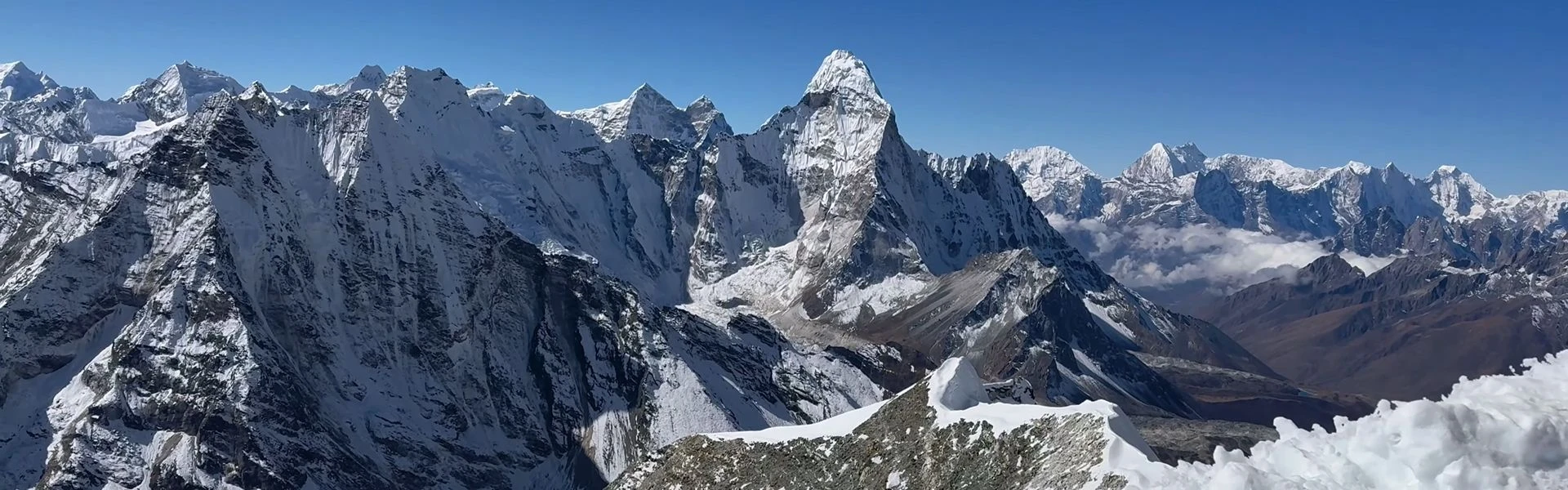
Island Peak sits at the intersection where trekking transitions into genuine mountaineering. At 6,189 metres in the Everest region, Island Peak climbing difficulty demands more than fitness alone because climbers face glacier travel, fixed rope work, and altitude stress simultaneously. What makes the mountain notably challenging is the combination of technical terrain, crevasse awareness, and endurance stress applied together on steep slopes and exposure.
Moreover, climbers often approach Island Peak with incomplete information about why the mountain proves genuinely difficult before attempting it. The alpine grade PD classification and IFAS II technical rating provide context, yet many misinterpret what these grades mean for their personal capabilities and training needs. Understanding the multiple stressors - thin air reducing oxygen to 45 percent of sea level, cold temperatures approaching minus 25 degrees Celsius, and crampon work lasting 8 to 12 hours on summit day - prevents poor decisions before booking an expedition.
Furthermore, Island Peak serves as a natural stepping stone toward larger Himalayan peaks rather than a single goal in itself. Nepal Everest Base Camp Co. uses this climb to help visitors build practical skills such as rope management, ice axe technique, and self-rescue on glaciated terrain, which later support attempts on 7000-metre peaks. In turn, anyone who reaches this summit gains a clear sense of personal altitude tolerance and technical ability before investing time and money in higher objectives in the Khumbu region.
Quick Facts and Difficulty Overview Height, Altitude Profile, and Why It Matters
Metric
Value
Peak Elevation
6,189 metres
Starting Altitude (Lukla)
2,860 metres
Chhukung Village
4,730 metres
Island Peak Base Camp
5,100 metres
High Camp
5,600 metres
Alpine Difficulty Grade
Alpine Grade PD
Technical Grade
IFAS II
Altitude creates the primary difficulty. The jump from sea level to 6,189 metres happens in roughly 12 days. Oxygen availability at the summit sits around 45% of sea-level levels, slowing thinking and reducing strength dramatically.
The days in the itinerary matter because it forces aggressive acclimatisation. The trek to Island Peak is designed to keep you relatively low initially, allowing bodies to adjust incrementally before the final ascent of Island Peak involves genuine mountaineering skills. The Island Peak climbing itinerary builds in these strategic acclimatisation windows to ensure safe progression.
Headwall section with fixed ropes guiding climbers up 200 metres of 45-degree ice and steep snow. Crampon work becomes essential with legs burning from sustained effort. Altitude makes coordination difficult and adds rope management pressure.
Most turning back occurs on summit day between High Camp and the headwall when climbers assess fitness honestly. Island Peak's summit ridge provides exposure and wind with drop-offs on both sides, where climbers must carefully manage their approach to the summit of Island Peak.
Difficulty Rating and Comparisons
Imja Tse is classified as Alpine Grade PD, or "Peu Difficile", indicating moderately difficult by alpine standards. The technical grade sits at IFAS II, representing easier ice climbing. Island Peak is classified as PD within the alpine classification system, which positions it appropriately among Himalayan peaks. How difficult Island Peak is compared to other mountains becomes clearer through this grading system.
High Himalayan scale with complex, high-risk climbing conditions
Within Nepal, Island Peak by official standards does not qualify as a true trekking peak when compared in the context of Island Peak vs Lobuche East. The classification exists largely to manage permit requirements. The climbing undertaken here constitutes genuine Himalayan climbing. Many who have completed the Everest Base Camp trek find Island Peak a natural progression.
Key distinctions emerge when comparing the two peaks. Island Peak demands serious commitment and discipline. Proper preparation separates those who summit from those who turn back. Technical demands exceed standard trekking by a considerable margin. This represents actual mountain climbing rather than high-altitude walking.
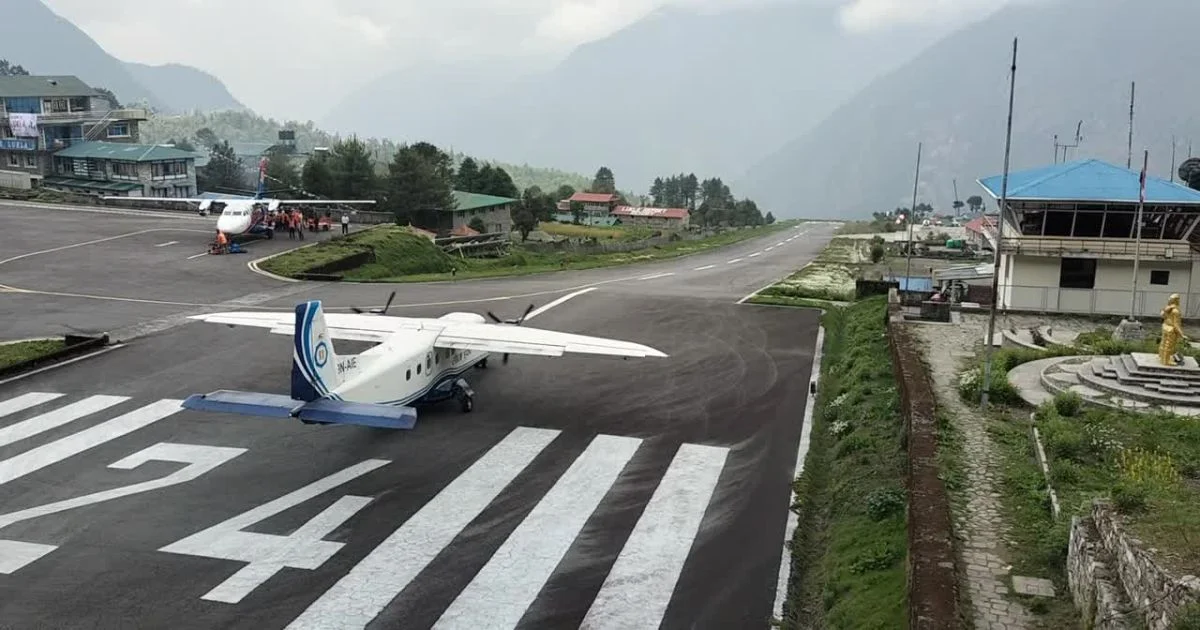
Lukla Airport
Seasonal Conditions
Optimal Climbing Windows
Season
Conditions
Characteristics
Pre-monsoon (April-May)
Stable weather, consolidated snow
Best-tracked routes, fewer crowds
Post-monsoon (Sept-Oct)
Variable conditions, less consolidated
More exploratory, fewer climbers
Winter
Extreme cold, avalanche risk
Generally avoided
Monsoon (June-Aug early)
Unpredictable conditions
Highest hazard levels
Planning Considerations
Late-season climbs risk softer snow and increased crevasse exposure. Early-season ice can be harder and more brittle. Wind patterns shift seasonally. Khumbu weather can change dramatically within hours. The best time to climb Island Peak success hinges partly on timing luck. The climbing itinerary must accommodate seasonal variations in weather patterns.
Route History and Evolution
Early mountaineers in the 1950s noted the reliable trek to Everest Base Camp connections and Island Peak climbing permit accessibility. What surprised them was altitude impact. Fit mountaineers struggled more than expected. The Island Peak climbingitinerary reveals how altitude affects even experienced climbers differently than expected.
Route Evolution Over Time
Original approaches varied more widely than current practice. Contemporary use follows the south-east route almost exclusively. Modern guides adjust based on current conditions rather than guidebook memory. Standardisation came from commercial guiding evolution, not technical discovery.
Glacier retreat affects Imja Tse meaningfully:
Crevasse zones shift and expand. Previously stable snow becomes loose debris. Overall difficulty has generally increased over two decades. Modern attempts face increased weather-related risk. Guides spend considerable time reading current conditions.
Route Variations
Standard South-East Route
Advantages: Clear marking and established camps, guide familiarity and standardised procedures, proven climbing techniques and safety systems.
Disadvantages: Potential crowds during peak season, standard fixed ropes that may feel tenuous, limited variation options when conditions prove challenging.
High Camp Variation Strategy
Camp Strategy
Summit Day Length
Altitude Stress
Best For
Lower camp
10-12 hours
Lower
Stronger climbers
Higher camp
6-8 hours
Higher
Less experienced
Middle option
8-10 hours
Moderate
Most groups
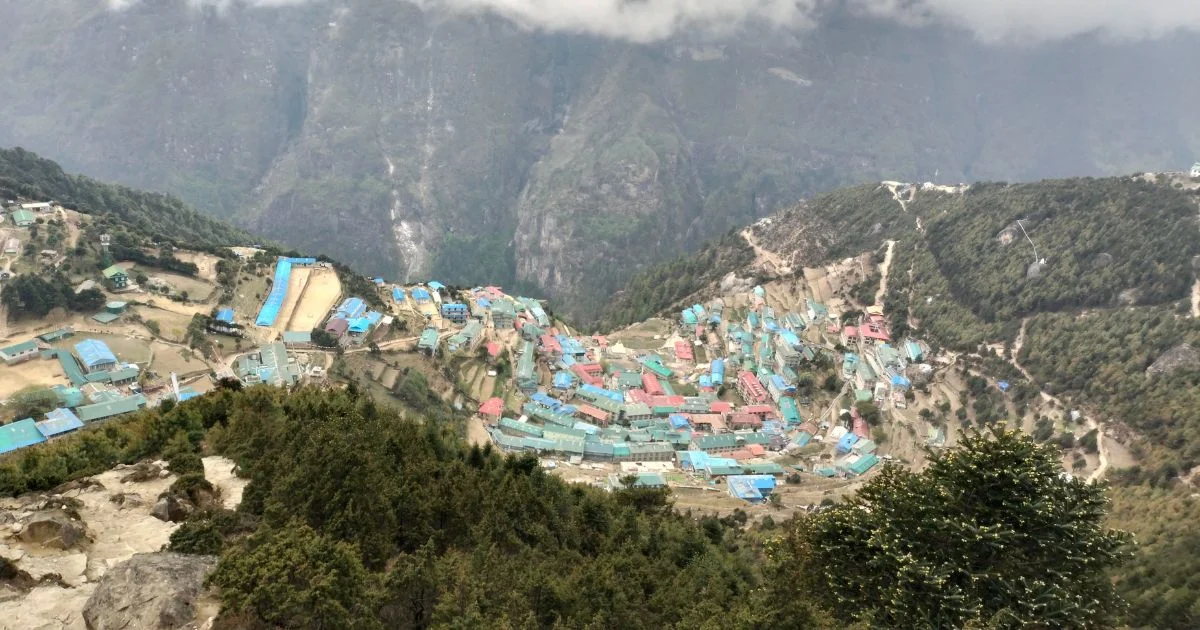
Namche Bazaar
Core Difficulty Factors
Altitude and Acclimatisation
Altitude dominates high-altitude climbing difficulty. Six thousand metres exceeds many climbers' previous experience significantly. The oxygen deficit affects thinking, coordination, and physical capability.
Critical Acclimatisation Points
The standard Island Peak expedition itinerary builds in rest days at specific elevations. Acclimatisation day strategies matter critically for summit success. Personal altitude response varies widely among climbers. Some climbers acclimatise smoothly, while others struggle despite fitness. Pre-existing physiology matters more than training programmes required to climb Island Peak.
Technical Work on Snow and Ice
The mountain teaches essential technical climbing skills:
Crampon work requires foot placement precision and ankle strength endurance. Ice-axe management demands balance and rhythm. Wrong technique wastes energy at altitude, where conservation matters desperately. Fixed ropes reduce difficulty but create congestion. Using ropes efficiently requires practice and focus.
Glacier Travel and Crevasses
Glacier travel on Imja Tse requires critical competencies:
Crevasse awareness and basic self-rescue understanding. Roped team movement becomes essential for safety. Ladder placement at major crevasses provides crossing points. Climbers must clip in, move across, and maintain three-point contact. Altitude makes movement slow and creates pressure. The progression from base camp and Island Peak high camp demands careful route assessment.
Recent Changes
Expanding crevasse zones due to glacier retreat. What represented safe passage now demands careful routing. Your climbing guide's current knowledge matters more than guidebook memory.
The Headwall and Summit Ridge
The headwall represents the technical crux with nearly vertical ice and snow:
Approximately 200 metres of demanding climbing. Fixed ropes help but do not eliminate difficulty. Crampon technique becomes crucial for safety. Ice-axe management prevents falls. Altitude makes everything harder.
The Island Peak summit section brings psychological challenges:
Exposure and wind create real hazards. Drop-offs on both sides trigger fear responses (normal reaction). Climbers often find a ridge psychologically harder than a headwall despite a lower technical grade. The mind fixates on exposure more than actual hazard. Managing this requires practice and honest self-assessment before attempting to reach the summit of Island Peak.
Weather and Endurance
Factor
Impact
Clear summit day with moderate wind
Achievable for most prepared climbers
Wind above 40 km/h
Creates disproportionate hazard
Cold approaching minus 25°C with wind
Life-threatening quickly
Visibility loss during climbing
Creates confusion and disorientation
White-out conditions
Usually result in descent (wise decision)
Summit Push Requirements
Total duration is typically 8-12 hours from High Camp. Departs around midnight to reach the peak summit in early morning. Headwall section consumes 2-3 hours. The ridge walk takes another 2-3 hours. Descent requires equal time and focus despite fatigue. Climbing days represent the most physically demanding portion of the expedition. The endurance component represents difficulty distinct from technical grade.
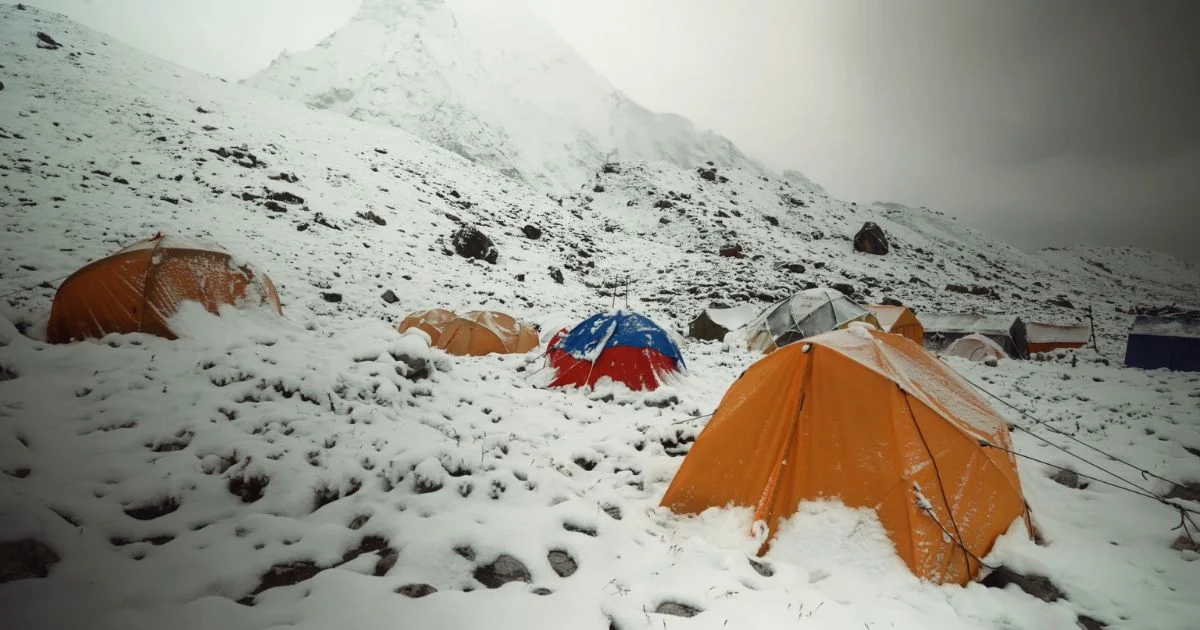
Island peak Base camp
Can Beginners Climb Island Peak
First-time climbers most commonly struggle with:
Altitude effects (no training fully replicates sea-level-to-6000-metre arrival). Lack of rope management experience. Crampon walking feels awkward initially despite appearing simple. Decision-making under altitude and fatigue. Exhaustion impairing judgement and fear assessment.
Basic Climbing Skills
Basic climbing skills represent the practical minimum:
Understanding rope team dynamics. Basic rappel use and clipping procedures. Crampon walking competence. Most guided climbs handle technical instruction. Arriving partially competent reduces on-mountain stress.
Experience that Makes a Hard Climb Easier
Experience Type
Benefit
Prior high-altitude climbing
Marked difficulty reduction
Kilimanjaro or 5,000m peak
Teaches altitude response patterns
Ice-axe and crampon use
Requires far less adjustment time
Glacier or snow climbing
Invaluable practical knowledge
Rock climbing background
Helps less than alpine experience
Mental Resilience
Climbers who have managed fear on exposure gain advantage. Prior experience pushing through fatigue improves approach. Hard climb decision-making experience builds confidence. The classic Everest Base Camp trekking background sometimes creates false confidence about summitting Island Peak's technical demands. Age matters less than experience and attitude.
Environmental Trends
Glacier Changes
Imja Glacier has retreated substantially over 30 years. Expanding crevasse fields create new routing challenges. The headwall approach crosses terrain with more bergschrund activity. Route conditions change annually and sometimes seasonally. Your guide's current season knowledge matters most.
Weather Pattern Shifts
Monsoon arrival timing varies more than historically. Pre-monsoon windows sometimes compress. Wind patterns occasionally intensify unexpectedly. Modern expeditions budget more time for waiting. Shorter stable windows require greater flexibility.
Seasonal Route Conditions
Season
Snow Condition
Route Characteristics
Crowding
Pre-monsoon
Better-consolidated
Well-established by prior expeditions
Can be crowded
Post-monsoon
Variable terrain
More exploratory feel
Fewer climbers
Both spring and autumn seasons remain viable for climbing this peak in Nepal. Pre-monsoon generally proves easier due to better conditions. The classic Everest Base Camp region experiences similar seasonal patterns to Imja Tse.
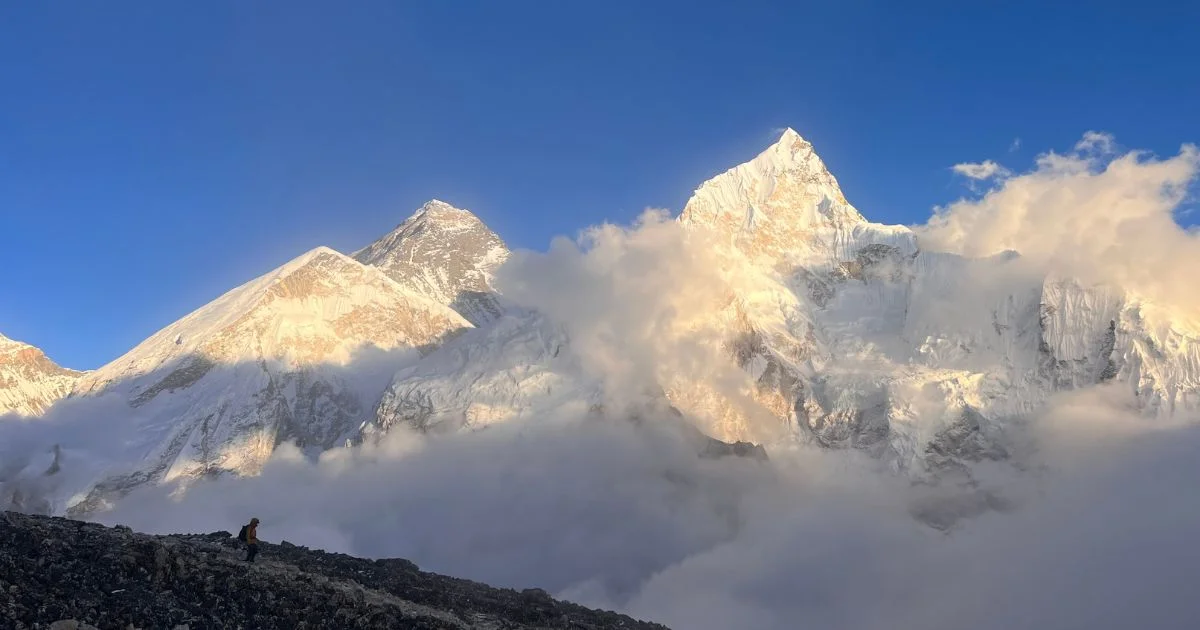
Mt Everest view from kalapatther
Safety and Risk Management
Common Mistakes
Priority Errors Climbers Make
Rushing acclimatisation represents the most frequent critical error. Skipping acclimatisation day rest to maintain pace. Dehydration often precipitates failure or serious altitude sickness. Underestimating endurance demand comes second. Poor equipment choices create additional problems. Ignoring guide advice happens regularly despite clear risk.
Conservative Approach to Success
Patience during ascent determines outcomes more than summiting speed. Fast summit days often end in turning back. A steady, slow pace often succeeds. Boots that feel fine on practice hikes become torturous at altitude. Gloves that work for winter hiking fail for constant rope clipping.
Establishing pace and managing acclimatisation. Assessing climbing conditions in real time. Making turnaround decisions based on daily experience. Managing rope teams and teaching technique. Quality variation among guides matters enormously.
Guide Expertise Considerations
Some guides follow rote routines regardless of conditions. Others assess continuously and adjust intelligently. Expeditions should enquire about Island Peak climbing expedition-specific experience. Guide presence does not eliminate all risk but reduces avoidable risk dramatically. The climbing logistics depend heavily on guide expertise and real-time decision-making. Inherent hazards of high-altitude mountaineering persist.
Turnaround Times
Designated turnaround time is typically 10 AM. Descent begins regardless of position if the summit is not reached. Summiting in the afternoon means descending in darkness. Tired climbers make mistakes at altitude where consequences are severe. Willingness to descend without reaching the summit shows wisdom, not failure.
Alpine Grade Explanation
Island Peak rates Alpine Grade PD, indicating "Peu Difficile". This classification acknowledges technical difficulty without extreme exposure or sustained technical demands.
Grade does not indicate the mountain is easy. PD mountains kill climbers regularly. Grade places Imja Tse in the moderately challenging category. This represents genuine mountain climbing rather than high-altitude trekking. The distinction between trekkers and trained climbers becomes clear here.
Training and Preparation
Fitness Standards and Training Plan
Emphasis on Sustained Effort Over Intensity
Weekend hikes of 4-6 hours carrying 8-12 kilogram packs. Better preparation than sprint workouts. Cardiovascular endurance matters more than peak power. Distance running at a conversational pace builds relevant fitness. Long hikes and stationary cycling support endurance development.
Level of Physical Fitness Focus
Legs specifically (quadriceps, glutes, calves). Hamstring strength matters for descending. Core strength assists balance on steep terrain. Plan training to begin 12 weeks before the climb. The time to climb Island Peak requires sustained aerobic capacity. Allow training phases from general fitness through specific altitude preparation. Trekking and climbing demand different physical conditioning approaches, so cross-training benefits both modalities.
Technical Skill Practice
Practice Requirements
Crampon walking on actual slopes before Imja Tse. Walking on ice with crampons feels unnatural initially. Foot placement needs adjustment through practice. Ankle strength develops through direct experience. Shoes appropriate to your crampons matter enormously.
Ice-Axe Training
Requires instruction and hands-on practice. Self-arrest technique cannot be learnt on a mountain. Proper grip and body position during movement are essential. Fall recovery benefits from prior instruction. Some guided expeditions include training, but prior experience reduces stress.
Ropework Skills
Rope team movement understanding. Clipping procedures and efficiency. Rappel basic competence. Many guided expeditions teach en route. Arriving competent accelerates improvement and reduces accident risk.
Mental Preparation
Mental Rehearsal Effectiveness
Imagine yourself moving slowly and steadily upward. Picture yourself managing fear on exposure. Envision yourself making a turnaround decision if needed. Mental practice sessions improve actual performance. These techniques build confidence systematically.
Psychological Readiness
Accept that discomfort will arrive (pain, cold, fatigue, altitude). Do not expect the climb to feel good. Expecting discomfort helps you manage it better. Confidence building through training carries forward to the mountain. Realistic assessment (trained, prepared, acknowledging unknowns) proves ideal.
Recent and Future Difficulty Developments
Guiding Standards Impact
Professional guide training standards have risen significantly. Most guides now receive formal training through mountaineering schools. Professional organisations provide standardisation. Better weather assessment and clearer turnaround decisions result. Improved technical instruction reduces preventable accidents.
Safety Improvements and Route Management
Fixed rope installation now happens with better hazard assessment. Ropes are updated seasonally based on current conditions. Dynamic ropes are sometimes used versus the static ropes of past decades. Expedition outfitters deploy teams early in the season. Early assessment creates a better foundation for later client expeditions.
Future Climbing Experience
Continued Glacier Retreat Will Likely
Increase route-finding difficulty substantially. Create more crevasse exposure and complex terrain. Keep the technical climbing grade stable but increase decision-making demand. Require more flexibility and time buffer in expeditions. Shift from precise 12-day itineraries to 14-16-day windows.
The Overall Trajectory Suggests
Future climbing expedition trips require more real-time adaptation. Decision-making skill becomes more important than technical grade escalation. What remains achievable demands different preparation emphasis. ClimbingIsland Peak offers lessons applicable beyond mountaineering. Better judgement and flexibility matter more than harder technical training.
Island Peak Climbing Difficulty: Real Case Study
James, a 42-year-old accountant from London with prior rock climbing experience but no high-altitude mountaineering background, committed to a 14-day Island Peak climbing expedition after completing Kilimanjaro three years prior. His hired climbing guide, Tenzin, assessed James on day one and immediately recognised that fitness alone would not determine success at high altitude in the Khumbu region. The structured acclimatisation schedule became James's foundation rather than his burden, as Tenzin explained that reaching 6,189 metres required patience over ambition.
Summit day revealed why Island Peak climbing is difficult when conditions deteriorate unexpectedly. James and his team departed High Camp at midnight under clear skies, but by 4 AM, cloud cover thickened and wind accelerated to 35 kilometres per hour across the headwall. Tenzin made the turnaround decision at 7 AM when the team reached only halfway through the fixed rope section, prioritising descent over the summit. James initially felt disappointment but recognised this decision would allow them to climb to Island Peak safely on a future expedition rather than become another statistic among the highest peaks claiming unprepared climbers.
Six months later, James returned to Nepal with superior ice-axe technique, enhanced leg strength, and mental clarity about his capabilities at high altitude. His second attempt during a stable pre-monsoon window succeeded, with Tenzin noting James's improved pace and decision-making throughout the expedition. Standing at the summit, James reflected that his previous turnaround represented genuine mountaineering wisdom rather than failure, a lesson applicable far beyond this single high-altitude mountain. The expedition transformed how James approached all future challenges, teaching him that acknowledging personal limits leads to greater accomplishment than ignoring them.
Island Peak Climbing Difficulty: Final Assessment
Island Peak climbing difficulty emerges from multiple factors combining to create a substantial mountaineering test. Altitude comprises the primary challenge, technical terrain represents secondary demand, and endurance tests your physical reserve. Island Peak is considered genuinely difficult in alpine standards. Success requires competence across all components and an honest assessment of personal capabilities.
Standing on the Island Peak summit at 6,189 metres proves you have managed altitude, technical climbing, fear, and fatigue together. This knowledge carries forward to future adventures and shapes how you approach climbing and challenges in years to come. The beauty of the Khumbu region combines physical challenge with environmental beauty in ways few experiences match. Reaching the summit of Island Peak represents a meaningful accomplishment in mountaineering progression.
Plan your climb with a clear understanding of why you are attempting it, and train properly with experienced guides. Make turnaround choices based on weather conditions and route safety rather than pride. This approach gives you the best chance of reaching the 6,189-metre summit and, more importantly, returning safely. A successful Island Peak climb comes from steady preparation, sound judgement, and the ability to adjust to the mountain. For support with planning, routes, and logistics, contact us at Nepal Everest Base Camp Co.
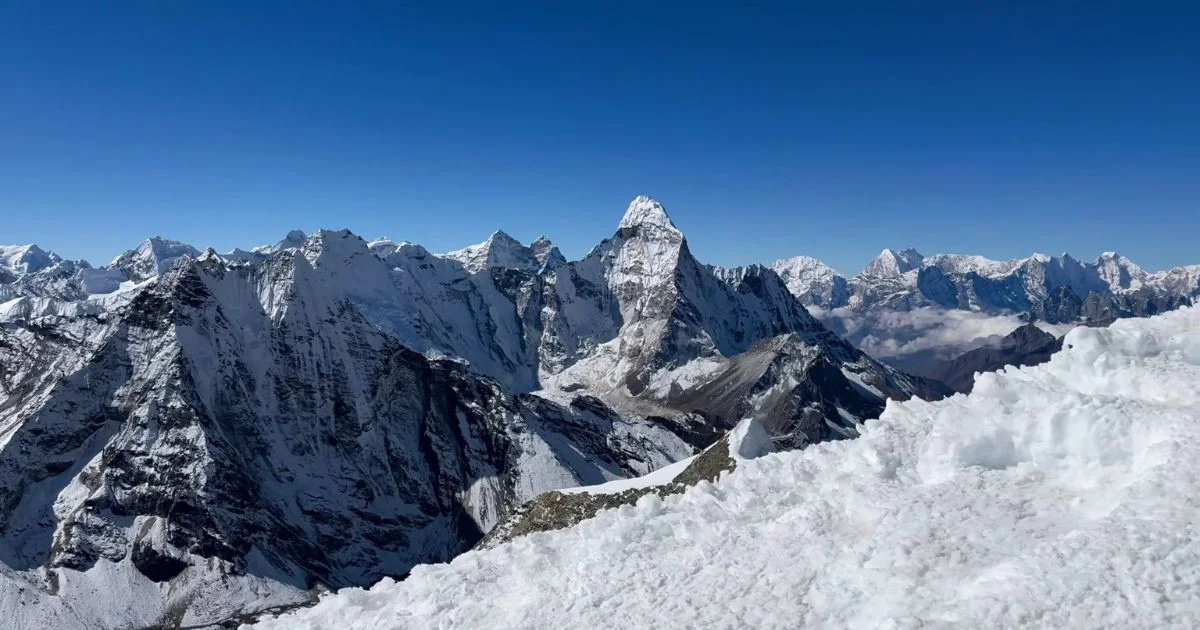
Mountain View from island peak summit
Island Peak Climbing Difficulty: FAQs
How Difficult Is the Island Peak for the Average Trekker?
Island Peak climbing difficulty exceeds standard trekking significantly and represents genuine mountaineering rather than high-altitude walking. Most successful climbers possess prior climbing or mountaineering experience, making proper training and honest self-assessment essential before booking.
Is Island Peak Harder Than Mera Peak?
Yes, Imja Tse rates slightly harder than Mera Peak because it demands essential climbing skills and ice-axe competence. Lobuche Peak climbing and Mera Peak climbing consist mostly of snow travel, making them better stepping stones before attempts to climb Island Peak. Those planning the Island Peak climbing route should understand these distinctions before committing.
How Long Is the Summit Push?
The summit push from High Camp typically requires 8-12 hours total, with the headwall section consuming 2-3 hours and descent requiring equal time. Therefore, time to climb to Island Peak successfully demands substantial endurance capacity and proper pacing. Understanding required to climb to Island Peak helps climbers prepare more effectively.
Do You Need Rope Skills to Climb Island Peak?
Yes, basic rope skills prove essential for safe climbing, including rope team movement, clipping procedures, and rappel basics. Most guided expeditions teach this, but arriving partially competent with climbing gear reduces on-mountain stress considerably.
What Increases the Difficulty During Peak Season?
Peak season crowding slows movement significantly through fixed rope queues and delays that reduce safety margins. Accordingly, climbing trips during peak season present additional psychological and logistical stress compared to shoulder seasons.
How Fit Should You Be for a 6,000-Metre Climb?
You should sustain 4-6 hour hikes carrying moderate weight comfortably with the ability to move uphill at a steady pace. Building a base level of physical fitness through climbing adventures and long training hikes matters more than peak athletic performance for the success required to climb to Island Peak success. Understanding required climbing demands prevents underpreparation.
What Is the Hardest Part of Imja Tse?
The headwall represents the technical crux, while the summit ridge causes most psychological difficulty from exposure combined with altitude effects. Therefore, attempting the climb successfully demands preparation across all three dimensions of technical, physical, and mental challenge. Summit island peak success requires integration of all three elements working together.
Can Beginners Safely Attempt It?
Yes, beginners can attempt Island Peak with proper preparation, honest skill assessment, experienced guides, and realistic expectations. Most prepared beginners summit successfully, making the journey to Island Peak achievable through committed training and disciplined decision-making.
Blending digital strategy with mountain passion, I help adventurers find their way to the Himalayas online. With hands-on experience in Nepal’s trekking trails and a role at Nepal Everest Base Camp Trekking Co., Thamel, I combine SEO expertise with true trail insight.