Imagine you have saved for two years, cleared your leave, and started browsing Himalayan climbing itineraries. Then you land on a Nepal trekking agency website and see prices ranging from USD 1,800 to USD 5,500 for what appears to be the same Lobuche Peak climb. No explanation. No breakdown. Just a number and a booking button. That gap is not a typo. It reflects real differences in service, inclusions, route choice, and season. Sorting through it before you pay is precisely what this guide helps you do.
This guide covers the full Lobuche Peak climbing cost, section by section. You will find permit fees, guide and porter rates, food and accommodation costs, gear expenses, transportation cost figures, and package comparisons. The numbers here are based on 2026 pricing from agencies operating in the Khumbu region, with seasonal context included where it matters.
Use this guide as a working reference, not a promotional brochure. Read the sections that apply to your budget type and check the tables for direct comparisons to get a realistic figure you can plan around. If you are comparing the cost of Lobuche Peak climbing vs Island Peak climbing or adding an Everest Base Camp trek to the route, those comparisons are covered as well. Nepal Everest Base Camp Co. provides support for route planning, cost breakdowns, and logistics for these options
2. What Is the Total Cost of Lobuche Peak Climbing?
2.1 Average Cost Range for 2026
The cost of Lobuche Peak climbing in 2026 typically falls between USD 2900 and USD 5,500 per person, depending on the package type, group size, season, and agency. Solo climbers on private expeditions often pay at the higher end. Trekkers joining group departures can keep costs well below USD 2900.
Private expedition, twin-share lodges, full climbing Sherpa support
2.3 Why Prices Vary Between Trekkers
Several factors push costs up or down. Group size is the biggest one. A private climb costs significantly more than joining four other trekkers on a fixed departure. Beyond that, the agency's service level, the trek route chosen, and the time of year all shift the final figure. Additionally, what one agency includes in the base price, another lists as an extra. Reading the inclusions list carefully saves a lot of surprises at base camp.
3. What Factors Affect the Cost of Lobuche Peak Climbing?
3.1 Lobuche East vs Lobuche West Cost Difference
Lobuche East and Lobuche West are two separate objectives with different technical demands. Lobuche East Peak climbing is the more popular choice. It is classified as a trekking peak and attracts a wider range of climbers. Lobuche West Peak involves more complex mixed terrain and is far less frequented. As a result, guides, fixed ropes, and logistics for the west peak cost noticeably more. Most packages you find online are for Lobuche East. Always confirm which peak your package covers.
3.2 Group Join vs Private Expedition
Option
Cost Range Per Person
Best For
Group join (4 to 8 people)
USD 1,800 to USD 2,800
Budget-conscious trekkers
Semi-private (2 to 3 people)
USD 2,800 to USD 3,800
Flexible schedule, custom pace
Private expedition
USD 4,000 to USD 5,500+
Full control, dedicated Sherpa
3.3 Trek Route Choice (With or Without Everest Base Camp)
Many climbers choose to trek and climb by combining the Everest Base Camp trek with Lobuche Peak. This route adds roughly 3 to 5 days and USD 400 to USD 800 to the total cost. It also provides better acclimatisation before the summit push. A direct approach to the peak, skipping EBC, is shorter and cheaper but leaves less margin for altitude adjustment.
3.4 Season and Demand Impact on Pricing
March to June and September to mid-December are peak seasons. Agencies charge 10 to 20% more during these windows. That said, these seasons also offer the best conditions for reaching the summit of Lobuche East. Off-season slots in winter or monsoon can cut costs, but success rates drop and some teahouses close above Namche Bazaar.
3.5 Agency Reputation and Service Level
A reputable agency that has run Lobuche Peak climbing in Nepal for many years will cost more than a newer operator. That difference usually reflects insurance coverage for Sherpas, certified guides, quality camping gear at Lobuche high camp, and reliable rescue protocols. The cheapest quote on the internet is rarely the cheapest experience on the mountain.
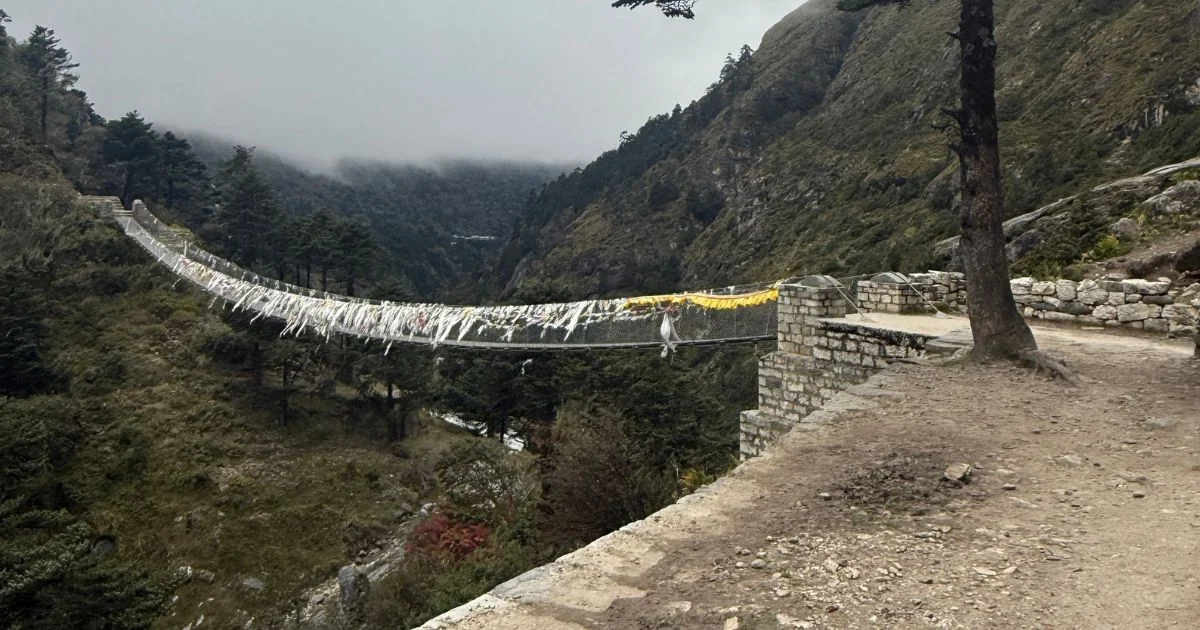
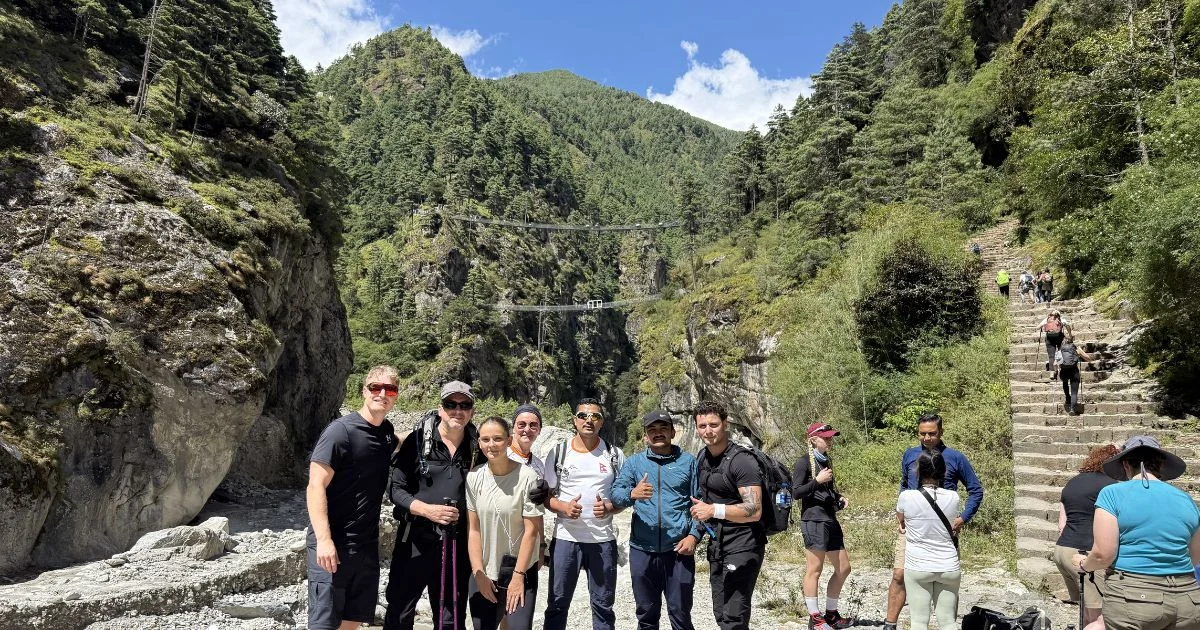
Suspension Bridge During the everest trip
4. What Is Included in Lobuche Peak Climbing Cost Packages?
4.1 Standard Inclusions from Trekking Agencies
A solid Lobuche Peak climbing package typically includes the following:
All government permits, including the climbing permit and Sagarmatha National Park fees
Domestic flights from Kathmandu-Lukla-Kathmandu
Teahouse accommodation on the trek to and from base camp
Tent accommodation at Lobuche base camp and Lobuche high camp
Meals during the expedition (breakfast, lunch, dinner)
An experienced climbing guide or Sherpa
Basic climbing equipment such as fixed ropes and safety hardware
Airport transfers in Kathmandu
Required government paperwork and liaison support
4.2 What Is Usually Not Included
The peak climbing cost excludes several things that add up quickly:
International airfare to and from Kathmandu
Nepal visa fees (approximately USD 30 to 50)
Personal climbing gear such as crampons, harness, and ice axe
Travel and rescue insurance (mandatory but purchased separately)
Tips for guides and porters
Extra meals, snacks, and drinks at teahouses
Charging fees, WiFi, and hot showers along the route
Personal expenses and souvenirs
Note: Inclusions and exclusions may vary depending on the itinerary, group size, and specific service requirements.
4.3 How to Read a Cost Package Clearly
When comparing packages, check whether the cost includes flights, whether it covers just the peak permit or also the national park fee, and whether Sherpa wages include insurance. A package priced at USD 1,800 that excludes flights and gear may end up costing more than a USD 2,800 all-in option. The line between cost includes and cost excludes gives you more information about value than the headline number does.
5. What Are the Permit Costs for Lobuche Peak Climbing?
5.1 Climbing Permit Fees
The Nepal Mountaineering Association issues the climbing permit for Lobuche. The Lobuche Peak climbing permit fee depends on the season:
Season
Climbing Permit Fee (Per Person)
Spring (March to May)
USD 250
Autumn (September to November)
USD 125
Winter/Summer (off-season)
USD 70
To obtain a climbing permit, your agency submits the application to the Nepal Mountaineering Association on your behalf. You cannot apply independently without agency support.
5.2 Sagarmatha National Park Entry Fee
Every climber and trekker entering the Khumbu region must hold a Sagarmatha National Park entry permit. The current fee is NPR 3,000 (approximately USD 22 to 25) for foreign nationals. This Sagarmatha National Park fee is non-negotiable and applies regardless of your package type.
5.3 Khumbu Pasang Lhamu Rural Municipality Fee
This local government fee is often overlooked when budgeting. The permit cost here is approximately NPR 3,000 (around USD 22-25) per person. Furthermore, trekkers sometimes encounter checkpoint queries if this permit is missing. Confirm your agency includes it before you fly to Lukla.
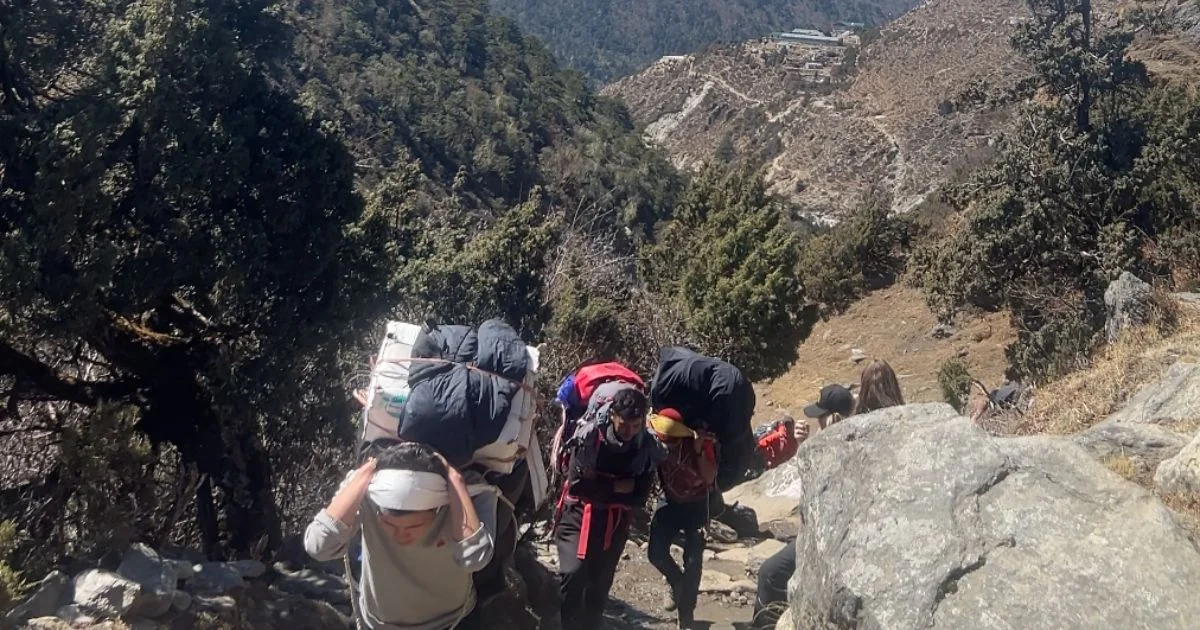
Guide and porters in the mountains
6. How Much Does a Guide and Climbing Sherpa Cost?
6.1 Difference Between Trekking Guide and Climbing Guide
A trekking guide leads you safely along the trail. A climbing guide, often a certified Sherpa, manages rope work, anchors, and high-altitude safety on the technical sections above base camp. The two roles carry different daily rates and different levels of responsibility. For the technical section of the climb, you need a certified climbing guide, not just a trail companion.
6.2 Daily Wage and Total Cost Estimate
Role
Daily Rate (USD)
Estimated Total (20-Day Trip)
Trekking guide
USD 30-40
USD 600 to 800
Climbing Sherpa
USD 40 to 60
USD 800 to 1,200
Porter
USD 20 to 30
USD 360 to 500
The cost of guides varies with experience and certification level. Senior Sherpas who have summited the Lobuche East peak multiple times charge more. That experience genuinely matters above Lobuche high camp, where conditions change fast.
6.3 Why a Certified Climbing Sherpa Matters
A certified climbing guide knows the route towards the Lobuche summit and can judge when to turn back. Moreover, they handle the technical rope sections that make the summit of Lobuche East accessible to intermediate climbers. Without one, the peak requires a level of independent technical skill that most recreational climbers do not carry. Do not cut this cost.
7. What Are the Accommodation and Food Costs During the Trek?
7.1 Teahouse Cost from Lukla to Lobuche
Teahouse rates increase with altitude. Below Namche Bazaar, a room costs USD 10-30 per night. Above Namche, expect USD 15-30. Near Lobuche base camp, rooms can run USD 20 to 30 per night, and the quality drops while the price rises.
Section
Room Cost Per Night
Lukla to Namche
USD 10-20
Namche to Dingboche
USD 15-30
Dingboche to Lobuche
USD 20-30
7.2 Food and Drink Price Range at Altitude
The accommodation cost is often manageable. Food, however, adds up steadily. A basic meal at a mid-route teahouse costs USD 5 to 10. The same meal near Lobuche costs USD 10 to 20. Hot drinks range from USD 2 to 5 depending on elevation.
Dal bhat (local meal): USD 6 to 15
Pasta or noodle dish: USD 7 to 18
Coffee or tea: USD 2 to 5
Bottled water: USD 1 to 3 (bring a filter to reduce this)
7.3 Cost Increase at Higher Elevations
Everything above 4,000 metres arrives by porter or yak. Consequently, prices reflect that reality. Trekkers who budget only for Kathmandu-level food prices are usually surprised by the first bill in Dingboche. Therefore, factor in a minimum of USD 30 to 50 per day for food and drinks once you are above Namche Bazaar.
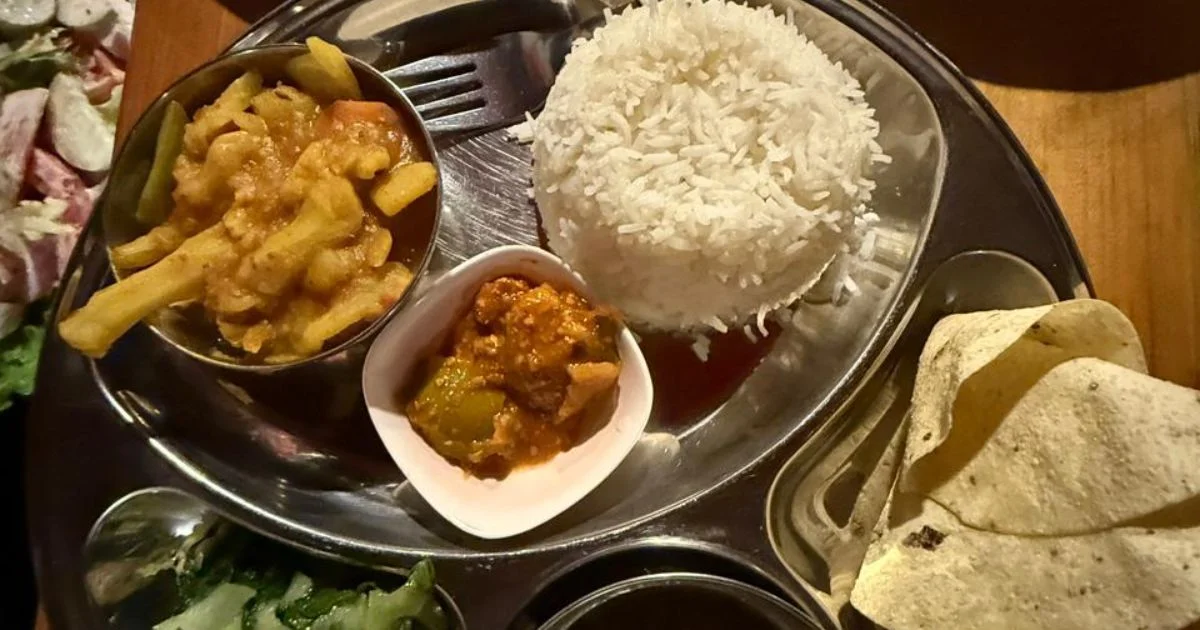
Local Food During the lobuche peak climbing
8. How Much Does Transportation Cost for Lobuche Peak Climbing?
8.1 Kathmandu to Lukla Flight Cost
The Kathmandu to Lukla flight is the standard gateway to the Everest region. A one-way ticket costs approximately USD 289 to 6000 per person, with return fares in the same range. Most packages include this transportation cost, but confirm before booking.
Transport Leg
Approx. Cost Per Person
Kathmandu to Lukla (one way)
USD 289 to 600
Lukla to Kathmandu (return)
USD 289 to 600
Airport transfer (Kathmandu)
USD 10 to 20
8.2 Helicopter Option Cost
Weather delays at Lukla are common, particularly in spring. A helicopter from Kathmandu to Lukla or directly to Phakding costs USD 600 to 800 per person. Some trekkers use helicopters on the return to save time. This is a transportation cost worth including in your contingency budget.
8.3 Local Transport and Transfers
Ground transfers within Kathmandu for permit processing, gear shopping, and hotel to airport runs cost USD 10 to 30 in total. These are minor but worth noting in a tight budget.
9. How Much Should You Budget for Climbing Gear?
9.1 Renting vs Buying Gear in Kathmandu
Thamel, Kathmandu's trekking district, has dozens of shops selling and renting climbing gear. Renting is practical for items you will not use again. Buying makes sense for items like boots that must fit precisely. Peak climbing is one area where cutting costs on gear quality can become a safety issue, so balance savings with common sense.
9.2 Essential Climbing Equipment Cost
Item
Rent (Full Trip)
Buy (New)
Crampons
USD 15 to 25
USD 60 to 150
Ice axe
USD 10 to 20
USD 50 to 120
Climbing harness
USD 10 to 20
USD 40 to 100
Down jacket
USD 25 to 50
USD 150 to 400
High-altitude boots
USD 30 to 60
USD 300 to 700
Essential climbing gear and equipment for Lobuche East Peak climbing include the above, plus a sleeping bag rated to minus 20 Celsius, trekking poles, gaiters, and a quality headlamp.
9.3 How to Reduce Gear Expenses
Renting most climbing equipment in Kathmandu is the easiest way to keep this section of the budget under control. Bring your own personal layers and base garments, which are lighter to carry and cheaper to source at home. Rent the technical items on arrival.
10. What Are the Hidden Costs of Lobuche Peak Climbing?
10.1 Tips for Guides and Porters
Tipping is customary and expected in Nepal's trekking culture. Standard tip amounts per person are:
Climbing Sherpa: USD 100 to 200 for the full expedition
Trekking guide: USD 50 to 100
Porter: USD 30 to 60
The guide's and porter's tip is separate from their daily wage and is not included in your package price. Budget for these expenses from the start.
10.2 Charging, WiFi, and Hot Showers
These small charges become noticeable over a 20-day trek:
Phone or battery charging: USD 2 to 5 per charge
WiFi access: USD 3 to 8 per day at higher elevations
Hot shower: USD 3 to 7 per use above Namche
A trekker who uses all three daily could spend USD 100 to 200 on these extras alone.
10.3 Travel Insurance and Emergency Rescue
This is the hidden cost that matters most. Helicopter rescue from high altitudes while climbing in the Khumbu region costs USD 3,000 to 6,000. Without proper insurance, that bill lands directly on the climber. A travel policy that covers high-altitude rescue and emergency evacuation will cost you around USD 100 to 250, depending on your home country and insurer. Do not skip it.
11. How Much Does Lobuche Peak Climbing Cost by Package Type?
11.1 Budget Package Cost Breakdown
A budget package for Lobuche Peak climbing typically suits trekkers joining fixed group departures with 6 to 10 members. The cost around USD 1,800 to 2,400 per person covers core logistics but leaves personal gear, tips, and extras to the individual.
Item
Budget Package Cost
Agency fee (group)
USD 1,200 to 1,600
Permits
USD 300 to 380
Flights (Kathmandu to Lukla)
USD 300 to 600
Total approx.
USD 1,800 to 2,700
11.2 Standard Package Cost Breakdown
The standard option offers a better guide-to-climber ratio, improved teahouse selection, and more flexibility on rest days. The overall cost sits between USD 2,500 and USD 3,500 per person.
Item
Standard Package Cost
Agency fee
USD 1,800 to 2,400
Permits
USD 300 to 380
Flights
USD 300 to 600
Gear rental
USD 100 to 200
Total approx.
USD 2,700 to 3,500
11.3 Luxury or Premium Climbing Cost
Premium packages include private rooms at lodges where available, dedicated climbing Sherpa support, higher-quality camp meals, and helicopter options. The cost around USD 3,800 to 5,500 per person reflects the additional staffing and logistics involved.
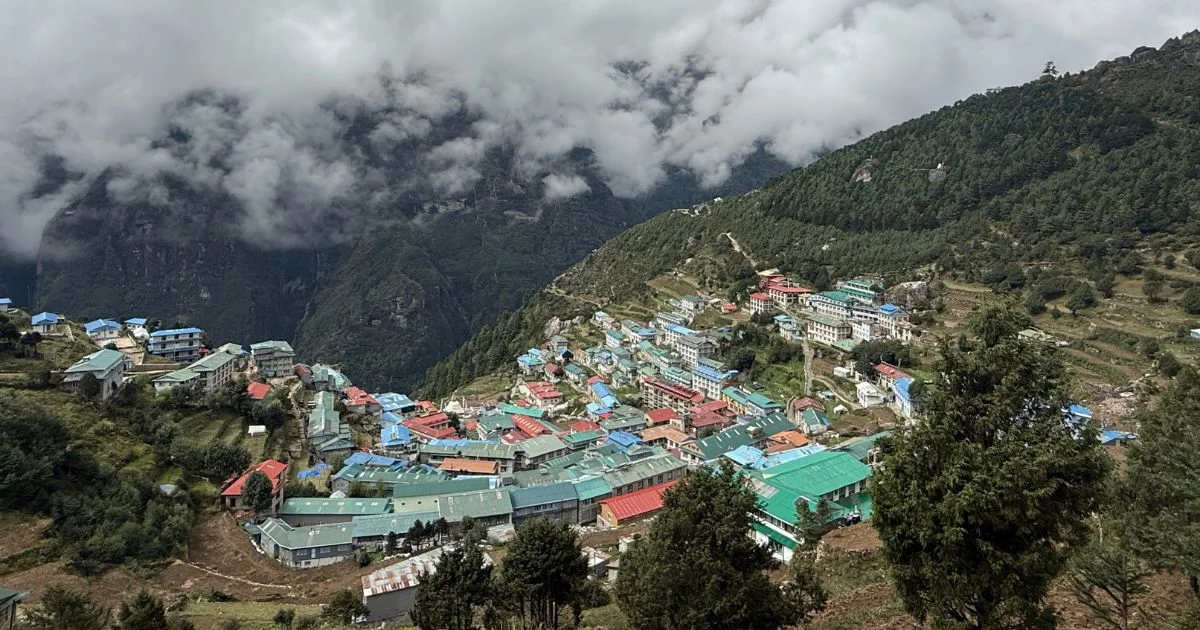
Namche Bazzar
12. Lobuche Peak Cost: Everest Base Camp Trek vs Direct Climb
12.1 Total Cost Comparison: EBC + Lobuche vs Direct Climb
Route
Duration
Approx. Cost Per Person
Direct Lobuche East climb
16 to 18 days
USD 2,700 to 3,500
EBC + Lobuche East combo
15-20 days
USD 2,700 to 4,500
East Peak climbing with Everest Base Camp adds time and cost but significantly improves acclimatisation. Peak climbing to Everest Base Camp also gives you one of the most complete experiences available in the Everest region.
12.2 Duration and Cost Difference Between Routes
The direct route to climb Lobuche East Peak shaves 4 to 6 days and roughly USD 200-400 off the total. However, a shorter acclimatisation increases the risk of altitude sickness and reduces summit success rates. The cost saving is real. The trade-off is also real.
12.3 Which Option Offers Better Value for Trekkers
Climbing to Everest Base Camp is the better option for most first-time peak climbers in Nepal. You acclimatise properly, cover more iconic terrain, and arrive at the Lobuche East Base Camp in far better physical condition. If time is the constraint, the direct route works. If budget is the constraint, the EBC combo still offers reasonable value given what you experience.
13. When Is the Best Time to Climb Lobuche Peak for Cost Efficiency?
The best time to climb Lobuche Peak is spring (April–May) and autumn (September–November) for stable weather and high success rates, while late winter and early December offer lower trekking costs, fewer crowds, and better deals on packages.
13.1 Spring vs Autumn Price Differences
Spring (March to May) is marginally more expensive than autumn. Agencies charge a 10 to 15% premium in spring due to higher demand. Autumn, particularly October, is considered by many Sherpas to offer the most stable weather for climbing in the Everest region. Both seasons carry a similar overall cost, though autumn tends to be slightly more affordable.
13.2 Off-Season Cost Advantages
Winter and early monsoon climbs cost 20 to 30% less. Permits are cheaper. Fewer teams compete for guides. However, the risks are real. Snowfall at Lobuche High Camp in December and January can close the route. Monsoon in July brings poor visibility and wet rock. The cost saving is genuine. The conditions are difficult.
13.3 Balancing Cost with Safety and Success Rate
The cost may drop significantly in off-season, but success rates drop further. For a first Lobuche Peak climb, the autumn window from early October to mid-November offers the best balance of cost, safety, and conditions.
14. How Can You Reduce the Cost of Lobuche Peak Climbing?
14.1 Joining Group Departures
Joining a group departure is the single most effective way to reduce the peak climb cost. Shared Sherpa wages, divided permit logistics, and split camp costs all lower the per person bill significantly. Moreover, group departures run year-round, so finding a slot that fits your schedule is usually straightforward.
14.2 Booking at the Right Time
Book 4 to 6 months in advance for spring and 3 to 4 months out for autumn. Early booking often comes with a 5 to 10% discount from agencies. Last-minute bookings rarely save money in the Khumbu region.
14.3 Renting Gear Instead of Buying
Buying all climbing gear new in your home country before a single Himalayan climb rarely makes financial sense. Rent crampons, an ice axe, down jacket, and harness in Kathmandu. Bring your own base layers, gloves, and trekking boots. This approach can save USD 300 to 600 compared to buying everything new.
15. Sample Cost-Based Itinerary for Lobuche Peak Climbing
15.1 18 to 20 Day Route Overview
This Lobuchepeak climbing itinerary assumes a standard package with the Everest Base Camp trek included:
Day 1 to 2: Kathmandu arrival and permit processing
Day 3: Fly from Kathmandu to Lukla, trek to Phakding
Day 4 to 6: Trek to Namche Bazaar, acclimatisation day
Day 7 to 9: Trek via Tengboche to Dingboche, rest day
Day 10 to 12: Trek to Lobuche, EBC day hike
Day 13 to 14: Move to Lobuche east base camp and acclimatise
Day 15 to 16: Lobuche high camp and summit day
Day 17 to 18: Descent to Lukla, fly to Kathmandu
15.2 Daily Spending Breakdown
Category
Daily Cost (Approx.)
Accommodation
USD 15 to 25
Food and drinks
USD 30 to 50
Extras (WiFi, charging)
USD 5 to 15
Contingency
USD 10 to 20
Daily total
USD 60 TO 120
15.3 Where Most of Your Budget Goes
For most trekkers, the agency fee and transportation cost together account for roughly 60 to 70% of the total spend. Permits add another 10 to 15%. Food and personal expenses make up the rest. Gear costs vary widely but rarely exceed 10% of the total for those who rent in Kathmandu.
Hellary Bridge
16. Is Lobuche Peak Climbing Worth the Cost?
16.1 Experience vs Investment
The climbing journey from Lukla to the summit of Lobuche Peak takes you through some of the most dramatic landscapes in the Himalayas. The technical sections are manageable for fit, prepared climbers with good guide support. The peak climbing experience is not just about the summit. The approach, the glacier, and the views of Ama Dablam on the descent. All of it forms part of what you are paying for.
Peak climbing in the Everest region is unlike anywhere else on earth. The scale, the culture, and the physical challenge combine in a way that few other objectives can match. If you want to understand why so many people return to the Khumbu year after year, climbing the Lobuche gives you a clear answer. To climb the Lobuche Peak is to see the peak of Lobuche from the inside, not just from a photograph.
16.2 Comparison with Island Peak Cost
Island Peak, the other popular trekking peak in the Khumbu region, carries a similar price tag. The peak expedition costs for Island Peak range from USD 1,800 to USD 3,500, broadly matching Lobuche East Peak's climbing cost at the standard level. Lobuche East peak is considered by many guides to be a slightly more rewarding technical climb due to its ridge line approach and glacier exposure. If you are deciding which famous peak to climb for your first Himalayan summit, both are solid choices.
When you choose the Lobuche East peak over Island Peak, you are opting for slightly more technical terrain and a longer ridge approach. The cost of peak climbing at this level is comparable, but the character of the two routes is different. Consider your experience level and what kind of climbing peak challenge you are looking for before deciding.
16.3 Long-Term Value for Trekkers
The skills you develop on a Lobuche East peak climb carry forward to bigger objectives. Crampon work, ice axe use, and rope technique all transfer directly. Many trekkers who climb Lobuche East return for Mera Peak, Island Peak, or eventually the 6,000-metre range. Seen that way, the peak climbing investment is not just for one summit. It is a foundation.
The cost of climbing a trekking peak in Nepal is also, frankly, modest compared to what equivalent altitude and technical experience cost on other continents. East Peak climbing from Lobuche base camp to the summit and back is a full alpine day. What you learn in that window stays with you long after the trek is over.
When you plan a trek to Lobuche East Peak, the cost of Lobuche East Peak at the standard package level sits between USD 2900 and USD 4200 per person. The cost for the Lobuche portion of an EBC combination adds roughly USD 400 to USD 800 on top of the base trek fee. Climbing to Lobuche Peak from Lobuche East base camp is the final stage of that investment, and it is the part most climbers say they would pay for again without hesitation. The cost of climbing Lobuche is, in the end, a question of what that kind of day is worth to you.
17. Lobuche Peak Climbing Cost: Final Verdict
The Lobuche Peak climbing cost in 2026 ranges from under USD 2900 for a budget group climb to over USD 5,000 for a fully private expedition. The honest middle ground sits around USD 2600 to USD 4200 for a well-run standard package that includes permits, flights, guide fees, and basic accommodation. That figure is realistic if you book through a reputable agency with transparent inclusions and experienced Sherpa staff.
Planning the overall cost of climbing Lobuche Peak should start with permits, flights, and the agency fee, then layer in personal gear, tips, and daily extras. Many trekkers underestimate the small daily costs that accumulate over 18 to 20 days. Budget a minimum of USD 500 as a personal spending buffer above whatever package price your agency quotes. That buffer covers delays, extra rest days, equipment gaps, and the meals not included in your package.
Lobuche Peak climbing in Nepal is a serious undertaking and a fair financial commitment. For a prepared climber with clear cost expectations, it remains one of the most accessible high-altitude climbing adventures available anywhere. Plan the budget carefully, choose the agency honestly, and arrive focused on the climb. For details or bookings, contactNepal Everest Base Camp Co.
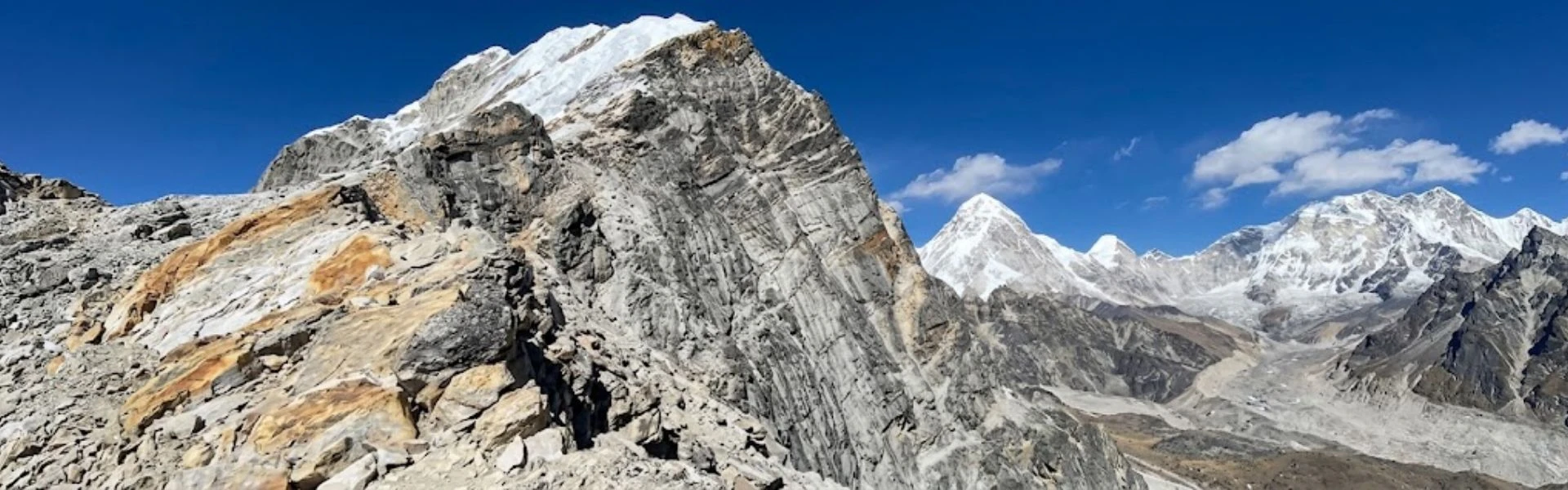
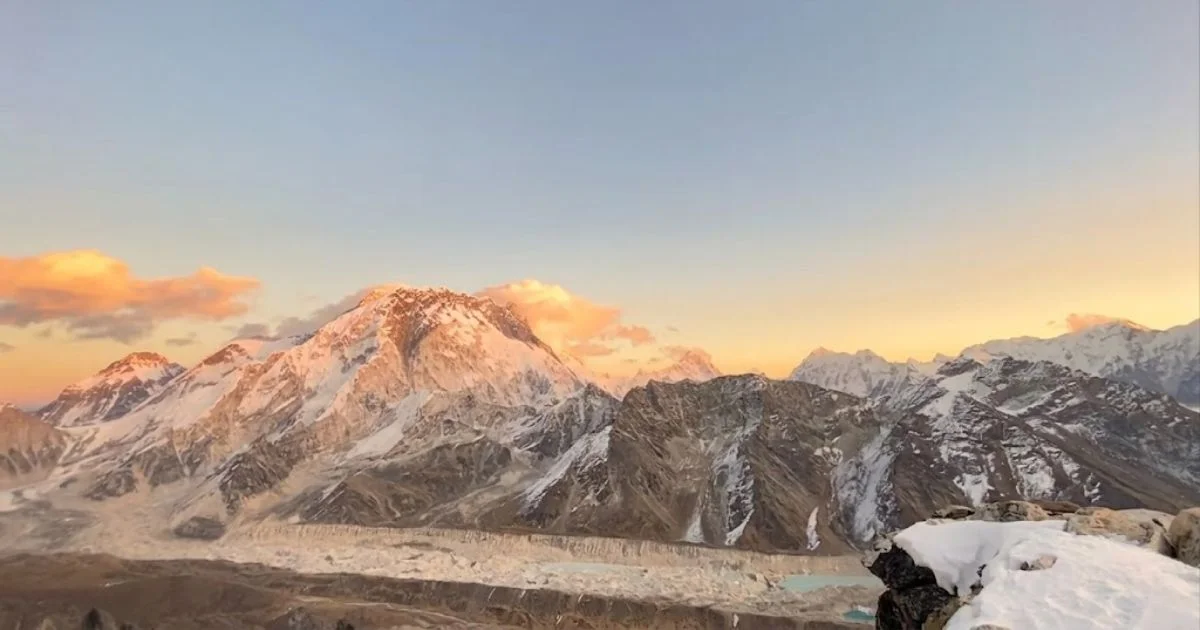
Mountain View from Lobuche Summit
18. Lobuche Peak Climbing Cost: FAQs
How much does Lobuche Peak climbing cost from Kathmandu?
Lobuche Peak climbing starts at approximately USD 2900 and can reach USD 5,500 per person, depending on package type and season. This figure covers permits, guide fees, accommodation, meals, and flights from Kathmandu to Lukla and back.
Is Lobuche Peak pricier than Island Peak?
The costs of Lobuche East and Island Peak sit at broadly similar levels for standard packages. Lobuche East Peak involves slightly more technical terrain, which may increase guide costs on private expeditions by USD 200 to 400.
Can I climb Lobuche Peak on a tight budget?
Yes. Joining a group departure and renting gear in Kathmandu makes it possible to complete the Lobucheclimb for around USD 1,800 to USD 2,200 per person. That figure assumes you carry your own personal equipment and keep daily extras to a minimum.
How much cash should I bring during the trek?
Carry at least USD 400 to 600 in Nepali rupees for personal expenses above Namche Bazaar. Card payments are not accepted at most teahouses. ATMs exist in Namche but run out of cash during peak season, so withdraw enough in Kathmandu before you fly.
Are there any refundable payments in the package?
Most permit fees and agency deposits are non-refundable once submitted. Some agencies offer partial refunds if you cancel 60 or more days before departure. Travel insurance with trip cancellation coverage is the most reliable way to protect your investment.
What is the most affordable way to climb Lobuche Peak?
To book Lobuche East Peak climbing at the lowest realistic cost, join a fixed group departure in autumn, rent all technical gear in Kathmandu, and choose an agency that includes the Sagarmatha National Park entry permit and Lobuche East Peak climbing permit in the base price. Autumn per person rates on group departures offer the best value across the full season.
Blending digital strategy with mountain passion, I help adventurers find their way to the Himalayas online. With hands-on experience in Nepal’s trekking trails and a role at Nepal Everest Base Camp Trekking Co., Thamel, I combine SEO expertise with true trail insight.