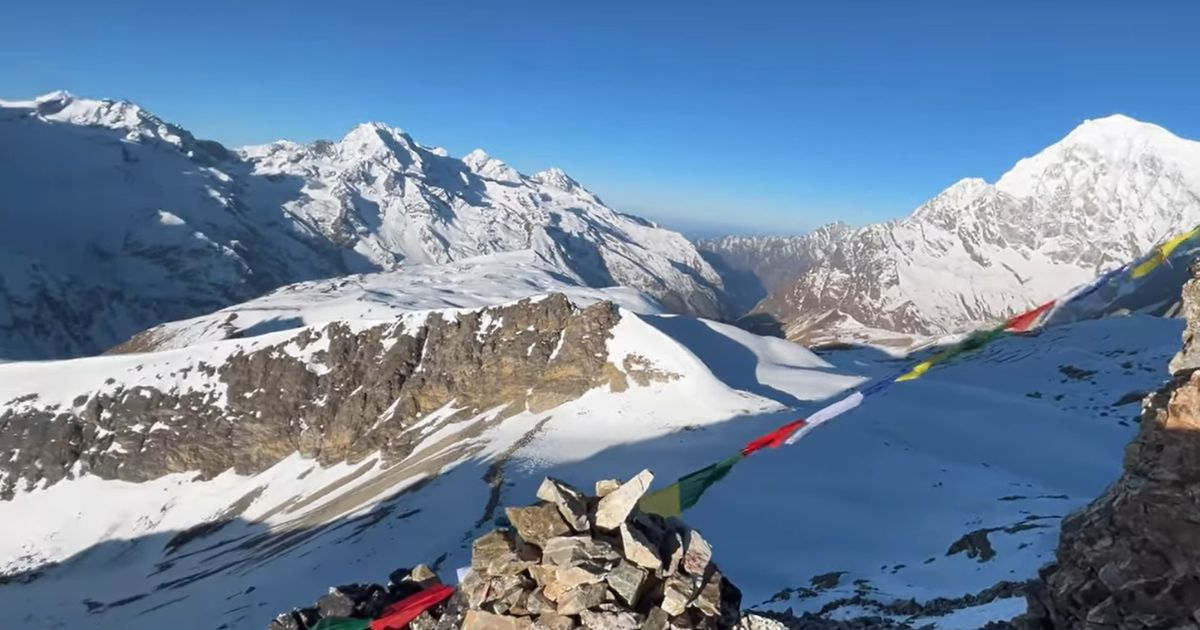
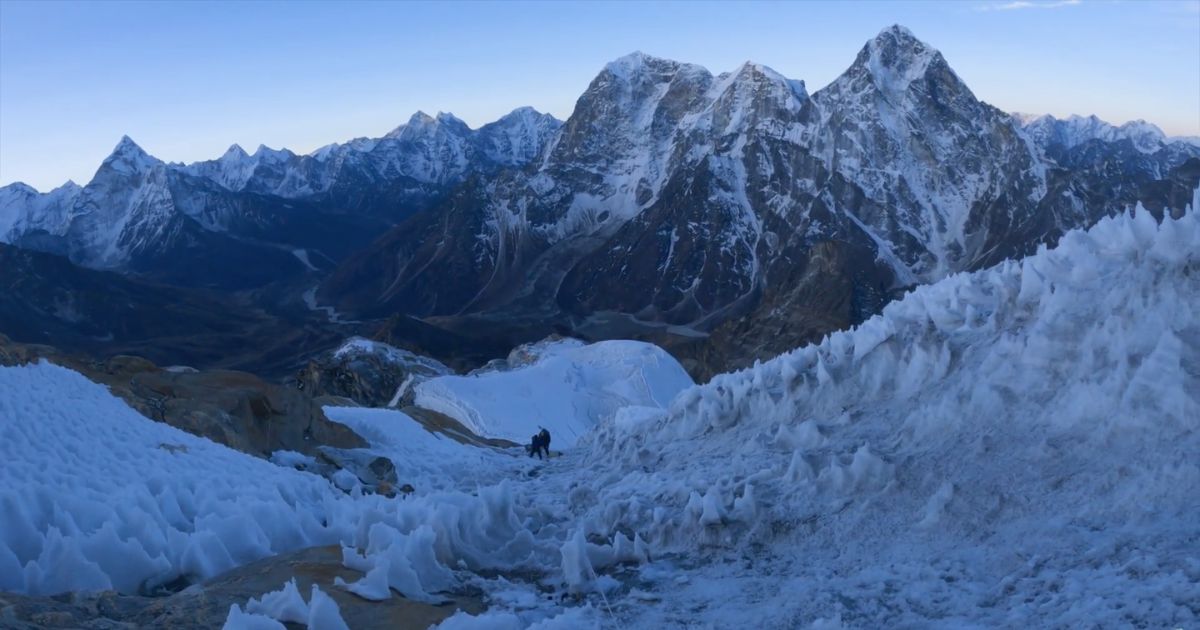
The landscapes of Nepal hold more than scenery. For climbers who want a genuine high-altitude objective without committing to an expedition that demands years of preparation, the best6000 m peaks in Nepal, including Mera Peak, Island Peak, and Lobuche East, offer real mountaineering at a scale that is demanding, accessible, and deeply rewarding. Nepal's structured peak climbing permit system, administered by the Nepal Mountaineering Association, allows international climbers to attempt these routes with the right licensed guide, climbing permit, and preparation.
Choosing the right peak in Nepal is not simply a matter of picking the tallest option or the most popular name. Each peak climb in this range carries its own acclimatisation demands, technical requirements, and success-rate profile. This guide works through all of that clearly so that when you finish reading, you have a real answer rather than a shortlist of options left for you to untangle on your own.
The sections below follow a logical progression. Start with the framework that defines technical difficulty, then move into the individual peak profiles before arriving at the climber-type recommendations. If you are already familiar with mountaineering classifications, skip ahead to the comparison table. If you are building your first route plan, read in sequence from here. This structure reflects how routes and objectives are assessed on the ground by Nepal Everest Base Camp Co., where peak selection is guided by terrain, altitude, skill level, and long-term progression rather than headline height alone.
Understanding 6000m Peaks in Nepal
Difference Between Trekking Peaks and Technical Peaks
The Nepal Mountaineering Association classifies trekking peaks of Nepal as those that can be attempted by climbers without a full technical mountaineering background, provided they have adequate fitness and basic rope skills. Peaks above 6000 metres in this category are not technically easy, but they are legally and logistically distinct from the higher climbing peaks and expedition routes that demand NMA-certified guides and advanced gear.
In practice, 6000 m trekking peaks sit at the boundary between serious trekking and proper mountain climbing. Most involve glacier travel, fixed ropes on summit sections, and genuine altitude exposure. The distinction matters when you are planning your climbing experience and deciding how much technical training to complete beforehand.
Why 6000m Peaks Are Ideal for First-Time Climbers
Meter peaks in the 6000 m range provide a calibrated challenge. They are high enough to test your acclimatisation and mental resilience, but structured enough that a well-prepared climber without a technical background can complete them safely with proper support.
Furthermore, 6000 m trekking objectives align well with the approach treks common across Nepal, meaning your ascent days build naturally on walking days. The altitude exposure is gradual rather than abrupt, which matters considerably for first-time climbers.
Physical vs Technical Difficulty at 6000 m
Not every peak at this altitude demands the same skill set. Some require sustained glacier travel and fixed rope ascent. Others add steep ice or mixed sections. Understanding which applies to your chosen peak is the starting point of honest preparation.
Difficulty Axis
What It Means for You
Physical
Cardiovascular endurance, load-carrying capacity, consistent daily output over 10–18 days
Technical
Crampon use, jumar technique, rope management, self-arrest, and exposure tolerance
Altitude
Acclimatisation days required, AMS risk profile, and summit day duration
How We Define the "Best" 6000m Peak
"Best" depends entirely on what you bring to the mountain and what you want to take away from it. Below are the five criteria used throughout this guide.
Technical Difficulty and Skill Requirements: The grade of the route, whether fixed ropes are present, and what prior technical climbing practice is expected before you arrive.
Acclimatisation Profile and Altitude Risk: How the approach trek builds altitude gain, how many rest days are built in, and how this reduces Himalayan peak altitude risks.
Success Rate and Safety Record: The historical completion rate for each peak climb, based on NMA records and operator reporting.
Route Popularity and Logistics: How well-serviced the route is, the availability of local expedition infrastructure, and how quickly rescue access can be reached.
Progression Value for Higher Peaks: How well a given peak builds the technical and psychological foundations for future 7000 m and 8000 m objectives.
Best 6000m Peaks in Nepal: Detailed Comparison
Island Peak
Height, Location and Route Overview
Island Peak, also known as Imja Tse, stands at 6,189 metres in the Everest region. It takes its name from its appearance as an island of rock above the surrounding Khumbu glacier when viewed from Dingboche. The peak is one of the most recognisable objects in the Khumbu, located within Sagarmatha National Park. Its approach follows the same trail used by Everest Base Camp trek teams before branching southeast toward the peaks in the Everest region.
Technical Sections and Climbing Skills Required
The Island Peak climbing involves a high camp at around 5,600 metres, followed by a summit push across a glacier, a short but steep headwall fixed with ropes, and a narrow summit ridge. Climbers need confident crampon technique and jumar use. The headwall is the single most technical section and is where underprepared climbers most frequently turn around.
Why Island Peak Is Ideal for Everest-Region Trekkers
For anyone completing the Everest Base Camp trek, adding Island Peak is a natural next step. The approach shares the same trail through Namche Bazaar, Tengboche, and Dingboche, so your acclimatisation is already embedded in the itinerary. Moreover, towering peaks like Ama Dablam and Lhotse visible from the summit, make it one of the best climbing experiences in the Himalayan context. Surrounding peaks provide scale and visual drama throughout the climb.
Who Should and Should Not Choose Island Peak
Suited for climbers with prior trekking to 5,000 m+ and basic crampon and rope training
Suited for those combining it with an Everest Base Camp trek for natural acclimatisation
Not suited for climbers with no prior exposure to glaciers or fixed rope technique
Not suited for those wanting a shorter expedition of under ten days total
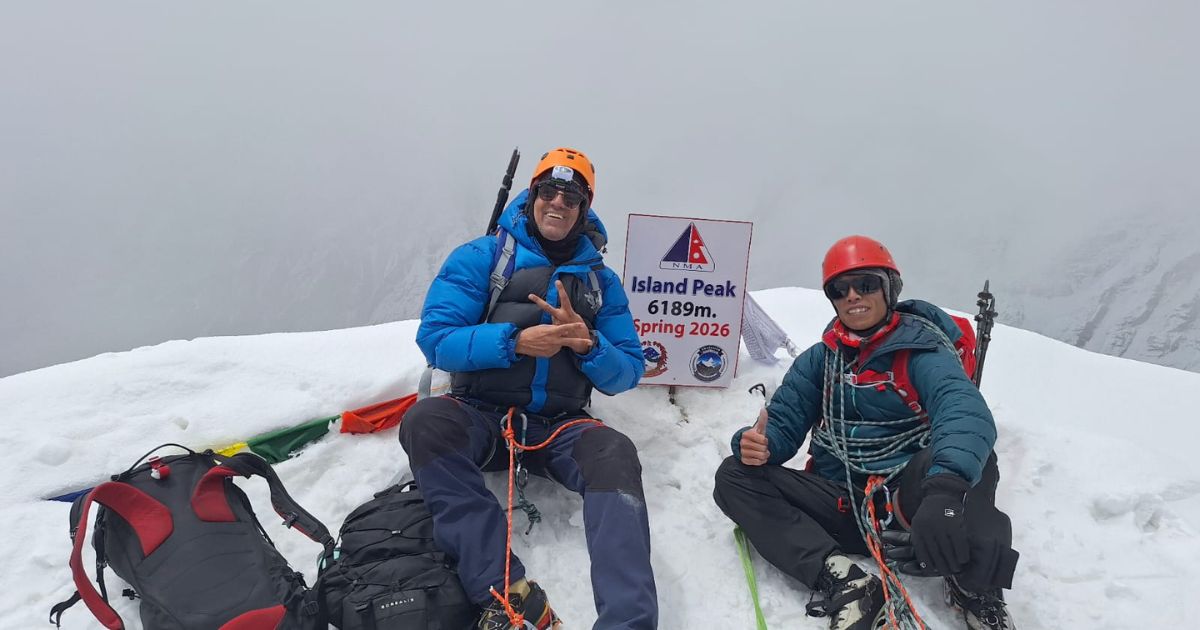
Island Peak Summit
Mera Peak
Height and Non-Technical Climbing Profile
Mera Peak is the highest trekking peak in Nepal at 6,476 metres, sitting in the eastern part of Nepal in the Hinku Valley. Despite its height, Mera Peak climbing does not require advanced technical skills. There are no fixed ropes on the main route under normal conditions, and the summit approach is predominantly a glacier walk.
Acclimatisation Advantages and Safety Margin
The approach trek through the Hinku Valley gives climbers a long, gradual altitude gain. By the time you reach the summit of Mera Peak, your body has had more consistent acclimatisation days than on almost any other 6000-metre peak in the country. This is precisely why Mera consistently records strong completion rates among first-time high-altitude climbers.
If your priority is reaching a genuine summit above 6,000 metres with the lowest technical barrier, Mera Peak is the perfect mountain to climb for that objective. It is one of the best trekking and climbing combinations available in Nepal, and the view from the top, which includes Everest, Lhotse, Mount Makalu, Mount Cho Oyu, and Mount Kanchenjunga, rewards the effort without requiring technical mastery.
Limitations of Mera Peak for Technical Progression
Although Mera Peak is exceptional for altitude exposure, it offers limited technical preparation for harder objectives. Climbers wanting to progress toward Ama Dablam, a higher expedition, or an 8000 m peak will need to supplement their Mera ascent with dedicated technical training before stepping up.
Mera Peak Summit
Lobuche East
Technical Difficulty and Steep Sections
Lobuche Peak East stands at 6,119 metres and is distinctly more technical than either Island Peak or Mera Peak. The route involves a rocky ridge approach with some exposed scrambling before the upper glacier and a steep summit headwall. Fixed ropes are generally in place during the season, but the terrain demands more composure than the two more popular trekking peak options.
Why Lobuche East Suits Intermediate Climbers
For a climber who has already completed Island Peak and wants a meaningful step up in difficulty, Lobuche Peak East is a logical choice. It is widely regarded as the next step after Island Peak for those building toward longer technical routes. The Lobuche approach also passes through Gorak Shep and offers close views of Everest's West Ridge.
Comparison with Island Peak in Skill Demand
Factor
Island Peak
Lobuche East
Technical Grade
PD (Peu Difficile)
PD+ to AD-
Fixed Ropes
Yes, on the headwall.
Yes, but longer sections
Summit Altitude
6,189 m
6,119 m
Ideal For
First technical climb
Second peak, progression
Crampons Required
Yes
Yes
Ice Axe Required
Yes
Yes
Pisang Peak
Alpine Terrain and Route Challenges
Pisang Peak stands at 6,091 metres in the Annapurna region, sitting above the village of Pisang on the Annapurna Circuit. The route involves an approach through peaks in the Annapurna region and features an alpine-style ascent with mixed rock, snow, and ice. Pisang Peak climbing demands more technical confidence than Mera or the standard Island Peak route, particularly on the upper ridge.
Nearby summits such as Chulu West Peak and the west peak climbing routes in this corridor are worth noting alongside Chulu East Peak and the more demanding Chulu Far East Peak. These sit in the same Annapurna corridor. Ri Peak climbing and routes toward Tilicho Peak also operate in this part of Nepal, making the Annapurna Circuit a rich base for climbers who want variety across a single visit.
For climbers wanting genuine alpine terrain without committing to a full 7000 m expedition, Pisang Peak provides it. The combination of rock, snow, and ice sections means that your technical climbing skills are genuinely tested. This peak is also a popular choice among European mountaineering programmes specifically because of its terrain variety.
Ideal Background and Prior Experience Needed
At least one prior peak climb above 5,000 metres
Practical experience with crampon and ice axe technique, ideally beyond a single-day course
Comfort with exposed ridge terrain and some mixed rock climbing familiarity
Physical conditioning for a peak expedition of 15 to 18 days including the Annapurna Circuit approach
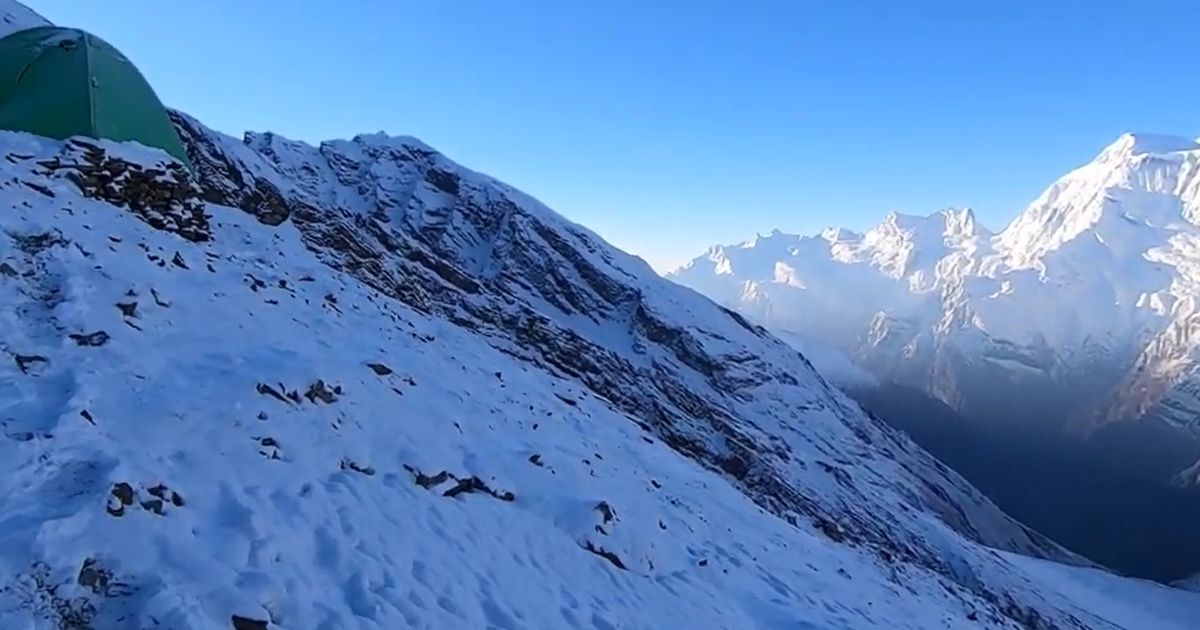
Pisang Peak Base Camp
Yala Peak
Short Expedition Profile and Accessibility
Yala Peak stands at 5,520 metres and sits among the peaks of the Langtang region north of Kathmandu. It falls slightly below the 6000 m threshold but is often included in discussions of 6000 m peaks because it serves an identical function for early-stage climbers who want a first summit experience before committing to a full 6000 m trekking peaks objective.
Best Choice for Limited Timeframes
As one of the peaks that is perfect for less committing timelines in terms of days and cost, Yala is appropriate for climbers who have a window of seven to nine days from Kathmandu. The Langtang approach is efficient, the terrain is non-technical, and the altitude gain is manageable.
Skill Limitations and Expectations
Yala does not provide meaningful preparation for harder objectives. It is better understood as a confidence-building peak climb than a technical progression step. Treat it as a first summit, then trek and climb in the Himalayas again on a proper 6000m objective the following season.
Peak climbing is a great way to experience high-altitude mountaineering in Nepal. Island Peak is another popular choice for those in the Everest region. Lobuche Peak is located near Everest Base Camp trails. Mera Peak is the best option for non-technical high altitude. The highest peak among trekking peaks remains Mera Peak. Peaks to climb in Nepal offer clear progression steps. 5 peaks stand out most frequently in planning discussions.
Yala Peak Climbing
Best 6000m Peak by Climber Type
Best 6000m Peak for Beginners
Mera Peak is the strongest recommendation for a beginner with no prior peak climbing experience. It is the highest trekking peak in the country, gives genuine 6000 m altitude exposure, and does not require technical rope skills beyond basic crampon use. Among the best trekking peaks in Nepal for beginners, Mera is consistently the safest starting point because the approach is long enough to acclimatise properly without adding logistical complexity.
Best 6000m Peak for Technical Skill Building
For a climber who already has some climbing experience and wants to develop genuine alpine technique, Pisang Peak or Lobuche East are the correct choices. Chulu Far East Peak climbing and far east peak routes in the Annapurna corridor are also worth considering for those who have already completed peaks like Island Peak and want exposure to more demanding mixed terrain.
Best 6000m Peak After Everest Base Camp Trek
If you are already committed to the Everest region and want to add a summit objective, Island Peak is the natural choice. It shares the approach infrastructure, acclimatisation timeline, and logistics of the Everest Base Camp trek. No other peak integrates as cleanly into an existing EBC itinerary. Among trekking peaks in the Everest corridor, it remains the most logical extension of an existing trek plan.
Best 6000m Peak for High Success Rate
Success rates vary by operator and season, but Mera Peak and Island Peak consistently record the highest completion rates among popular trekking peaks in Nepal. Mera's non-technical profile and long acclimatisation approach give it a structural advantage. For those who want the best balance of ambition and completion probability, Mera is the clearest answer.
Comparison Table: Top 6000m Peaks in Nepal
Peak
Height
Grade
Climb Days
Best Season
Experience Level
Mera Peak
6,476 m
F (Easy)
16–18
Oct–Nov / Apr–May
Beginner
Island Peak
6,189 m
PD
14–16
Oct–Nov / Apr–May
Beginner–Intermediate
Lobuche East
6,119 m
PD+
14–16
Oct–Nov / Apr–May
Intermediate
Pisang Peak
6,091 m
PD–AD
15–18
Oct–Nov / Apr–May
Intermediate
Yala Peak
5,520 m
F
7–9
Oct–Nov / Mar–May
True Beginner
Chulu Far East Peak
6,059 m
AD
16–18
Oct–Nov / Apr–May
Intermediate–Advanced
Saribung Peak
6,328 m
PD
18–21
Jun–Jul
Intermediate
Best Time to Climb a 6000m Peak in Nepal
Spring vs Autumn Climbing Conditions
The two primary windows for peak climbing in Nepal are October to November and April to May. Both offer stable weather and clear summit days, though they differ in snowpack, temperature, and trail conditions.
Season
Months
Conditions
Best For
Autumn
Oct–Nov
Stable, clear skies, firm snow, colder nights
Most peaks, highest success rates
Spring
Apr–May
Warmer temps, some afternoon cloud, softer snow
Longer days are good for acclimatisation
Winter
Dec–Feb
Extreme cold, limited visibility, high risk
Avoid for 6000m objectives
Monsoon
Jun–Sep
Heavy snow, avalanche risk, poor visibility
Avoid (exception: Saribung Peak, Jun–Jul)
Weather Windows and Summit Success
Autumn is generally preferred by most operators because post-monsoon snowfall consolidates trail surfaces and summit conditions are predictably stable. Spring offers slightly longer daylight hours, which benefits climbers on longer peak approaches. For most trekking peaks in Nepal, either objective works well with a competent operator.
When Beginners Should Avoid Climbing
Winter ascents of any peak above 6000 m are inappropriate for first-time climbers. Temperatures below -25°C on summit days, combined with shorter daylight windows, remove the safety margin that beginners need. Similarly, monsoon conditions create objective hazards on glaciers and mixed terrain that even experienced mountaineering teams avoid.
Training and Preparation for a 6000m Peak
Fitness Benchmarks Before Attempting a 6000m Climb
Your ability to make the climb consistently each day matters more than a single performance metric. The benchmarks below reflect what experienced operators expect before accepting clients onto a 6000 m peak in Nepal.
Aerobic baseline: Ability to hike 6 to 8 hours daily with a 10–12kg pack for five consecutive days
Load test: Comfortable carrying weight at altitude above 4,500 metres for multiple days
Hill training: Regular ascent-heavy walks of 800–1,000m vertical gain per session in the six months prior
Cardiovascular conditioning: Running, cycling, or rowing at moderate intensity three to four times weekly for at least 12 weeks before departure
Technical Skills You Must Practise in Advance
For technical peaks like Island Peak and Pisang Peak, basic mountaineering skills are not optional. Arriving without them slows your rope team, increases your risk, and burdens your guide.
Crampon technique: Front-pointing on firm snow and French technique on lower-angle slopes
Jumar and fixed rope: Ascending fixed lines correctly, clipping through anchors without losing balance
Ice axe use: Basic self-arrest position and confident walking with axe on steep terrain
Rock climbing: Useful for Pisang Peak and Lobuche, where rocky sections appear before the snow line
Mental Preparation for Altitude and Exposure
A Himalayan climb above 6000 metres tests composure as much as fitness. Summit days on peaks like Island Peak begin at midnight or 1 a.m., and the climb to the summit can take six to nine hours from high camp. Altitude affects mood, decision-making, and pain tolerance. Mental readiness, including comfort with darkness, cold, and exposure, should therefore be part of your preparation alongside physical training.
Confusion, loss of coordination, altered consciousness
Descend immediately, Dexamethasone, evacuation
How Acclimatisation Is Handled on 6000m Peaks
Every reputable expedition in Nepal builds acclimatisation rest days into the approach itinerary. The standard rule is to ascend no more than 300–500 metres in sleeping altitude per day above 3,000 metres. For Mera Peak and Island Peak, the approach treks naturally enforce this through their terrain. For shorter itineraries, the risk of rushing acclimatisation is the leading cause of failed summits and medical evacuations.
Role of Guides, Sherpa Support and Fixed Ropes
A qualified guide is mandatory under Nepal peak climbing regulations for most trekking peaks in Nepal objectives. Beyond the legal requirement, your guide carries the experience to identify altitude symptoms early, manage rope teams, and make descent decisions when summit conditions deteriorate.
Fixed ropes: Present on the technical sections of Island Peak, Lobuche East, and Pisang Peak during season; your guide will confirm current conditions
Sherpa support: Essential for load carrying, high camp setup, and summit day rope management
Rescue access: Helicopter evacuation is available from most peak base camps in Nepal but is weather-dependent; travel insurance covering high-altitude rescue is mandatory
Permits, Cost and Logistics
Climbing Permits and Peak Fees Explained
All trekking peaks of Nepal require a climbing permit issued through the Nepal Mountaineering Association. Fees vary by peak and season. As a general reference, Island Peak and Mera Peak permits run approximately USD 125–250 per climber per season. Pisang, Lobuche, and other peaks in the Himalayas follow similar structures, with higher peaks and remote routes sometimes carrying premium fees.
Typical Expedition Cost Breakdown
Cost Component
Estimated Range (USD)
Climbing Permit (NMA)
$125 – $250 per climber
Guide and Sherpa fees
$800 – $1,500 for the expedition
Porter support
$200 – $400
Accommodation and meals (approach)
$300 – $600
Gear rental (crampons, harness, etc.)
$100 – $300
Kathmandu logistics and domestic flights
$300 – $600
Insurance (mandatory)
$150 – $400
Total estimated range
$3,500 – $6,000
Why Logistics Matter More on 6000m Climbs
A peak climbing adventure at this altitude is only as safe as its planning. Flight delays into mountain airstrips, porter availability, food storage at high camps, and acclimatisation scheduling all interact. Choosing an operator with genuine expedition experience in Nepal, rather than a trekking agency that occasionally runs climbing peak trips, affects both your safety margin and your summit probability.
What to Climb After Your First 6000m Peak
Transitioning to 7000m Peaks
After completing a trekking peak in Nepal above 6000 m, a natural next step is a survey of what is available in the 6500–7000 m range. Saribung Peak at 6,328 m is often cited as a strong bridge option, combining genuine remoteness with a moderately technical route. Saribung Peak climbing via the Mustang corridor adds an experience layer that standard Everest-region peaks cannot match.
Preparing for 8000m Objectives
The Himalayas have fourteen peaks above 8000 m, and all of them demand years of progressive mountaineering experience. Your 6000 m peak climb is the correct starting point, but the gap between 6000 m and 8000 m involves additional technical training, high-altitude expedition experience at 7000 m+, and a serious assessment of commitment and resources.
For climbers aiming at Ama Dablam as an intermediate goal, an Island Peak or Lobuche ascent provides a useful first reference for climbing experience in the Khumbu region. These peaks will make more sense as objectives once you have accumulated multiple seasons of Himalayan climbing experience at progressively higher altitudes.
How 6000m Peaks Fit Into Long-Term Mountaineering Goals
Think of your first 6000 m peak as a calibration exercise. It tells you how your body responds to altitude, how your mental composure holds under summit day pressure, and what gaps exist in your technical skills. That information, in turn, shapes every peak decision that follows.
Common Mistakes First-Time 6000m Climbers Make
Choosing a Peak Based on Height Alone
Height is the least useful single variable when selecting your first peak climb. Mera Peak is 300 metres higher than Island Peak but significantly less technical. A climber who chooses Island Peak because it sounds more serious, without the technical preparation it requires, is far more likely to turn back at the headwall.
Confirm your technical skills match the specific demands of the peak you select
Speak with your guide about route conditions for your specific travel season
Underestimating Technical Sections
Even on peaks classified as non-technical, there are sections that demand competence. The headwall on Island Peak and the upper ridge on Pisang Peak turn back climbers who did not practise sufficiently before arrival. Peak climbing is a genuine test of preparation, and the magnificent mountain terrain above 6000 m rewards those who treat technical training seriously in advance.
Rushing Acclimatisation Schedules
This is the most common and most avoidable mistake in mountaineering at altitude. Shortening your itinerary by two or three days to save money or fit a tighter travel window reduces your summit probability and increases your medical risk substantially. Consequently, every day invested in proper acclimatisation on the approach is money well spent against the cost of a failed peak climb or a medical evacuation.
Best 6000 m Peaks in Nepal: Final Thoughts
The best6000 m peaks in Nepal are not defined by altitude alone. They are defined by how well they match your current skill level, your acclimatisation tolerance, and your long-term mountaineering goals. A peak that a technically advanced climber finds straightforward may be genuinely hazardous for someone without the right preparation.
Specifically, if you are a first-time climber, choose Mera Peak. If you have basic technical skills and want a fuller climbing adventure, choose Island Peak. If you have prior peak climbing experience in Nepal and want to build toward harder objectives, Lobuche East or Pisang offer the right challenge.
Your first 6000 m trekking peak is the beginning of a longer mountaineering journey, not a single checkbox. Plan it properly, prepare your technical skills, choose your climbing guide carefully, and trek and climb with the knowledge that Nepal offers a clear progression pathway as long and as demanding as you want it to be, supported by the experience and route planning approach of Nepal Everest Base Camp Co. Contact us to discuss peak selection, training routes, and a realistic progression plan built around your goals.
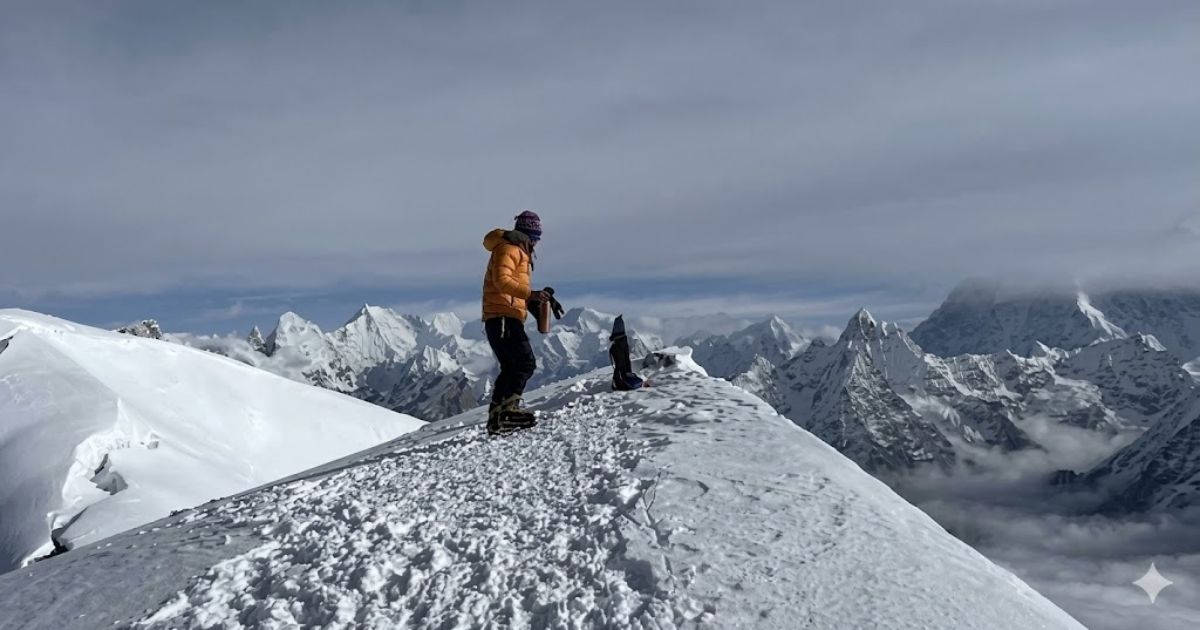
Mountain View from Summit of the peak
FAQs: Best 6000 m Peaks in Nepal
What Is the Easiest 6000 m Peak in Nepal?
Mera Peak (6,476 m) is the easiest 6,000 m peak in Nepal for most climbers due to its non-technical glacier route and well-structured acclimatisation approach. It is the highest trekking peak in Nepal and does not require fixed rope technique or prior alpine climbing experience beyond crampon proficiency.
Is Prior Mountaineering Experience Required?
For Mera Peak, basic fitness and crampon training are sufficient. For Island Peak, Pisang Peak, and Lobuche Peak, prior mountaineering exposure, including fixed rope and glacier travel, is strongly recommended. Attempting a technical peak without this background is the leading cause of summit failure and, in serious cases, a safety risk to the whole rope team.
How Long Does a 6000 m Peak Expedition Take?
A standard expedition in Nepal targeting a 6000 m peak takes between 14 and 21 days, including travel to the trailhead, the approach trek, acclimatisation days, the summit push, and descent. Shorter itineraries of 12 to 14 days are possible for some peaks but reduce your safety margin on acclimatisation and summit-day weather flexibility.
Which 6000 m Peak Has the Highest Success Rate?
Mera Peak consistently records among the highest completion rates of any trekking peak in Nepal, largely because its non-technical route means fewer turnarounds due to skill barriers. The summit of Mera Peak is reached by the majority of climbers who follow a properly structured acclimatisation itinerary and arrive in sound physical condition.
Can a 6000 m Peak Prepare You for Everest?
A 6000-metre peak provides essential high-altitude exposure and basic mountaineering skills, but it does not directly prepare you for Everest, which requires multiple 7000 m and 8000 m ascents first. That said, a climbing adventure on the best 6000 m peaks in the Everest region, such as Island Peak, builds the logistical familiarity, altitude awareness, and confidence that inform every step of a long-term Everest progression plan. Done no any comment finalize this.
Blending digital strategy with mountain passion, I help adventurers find their way to the Himalayas online. With hands-on experience in Nepal’s trekking trails and a role at Nepal Everest Base Camp Trekking Co., Thamel, I combine SEO expertise with true trail insight.