Most people who trek to Everest Base Camp pass within a short walk of Khumjung village and never stop. They push through Namche Bazaar, check their acclimatisation schedule, and move on. But the question worth asking before you leave is simple. What does a real Sherpa village actually feel like, and where do you go to find one?
Nepal draws millions of travellers every year to its high mountain trails. Most of those trails run straight through the busy hubs. But not every place in the Everest region follows that pattern. Some villages sit quietly above the main route, living by a slower rhythm that the trekker crowds rarely reach.
This guide covers everything you need to know about Khumjung Village. You will learn about its history, Khumjung Monastery, the famous Yeti scalp, the legacy of Sir Edmund Hillary, the spectacular Everest region mountain views, and how daily life in this traditional Sherpa village actually works. If you are planning your journey with Nepal Everest Base Camp Pvt. Ltd, this guide will help you decide whether Khumjung deserves a place on your Everest Base Camp trek itinerary. By the end, you will know exactly what makes this Himalayan settlement one of the most rewarding stops in the Khumbu region.
1. Where Is Khumjung Village?
1.1 Location in the Khumbu Region
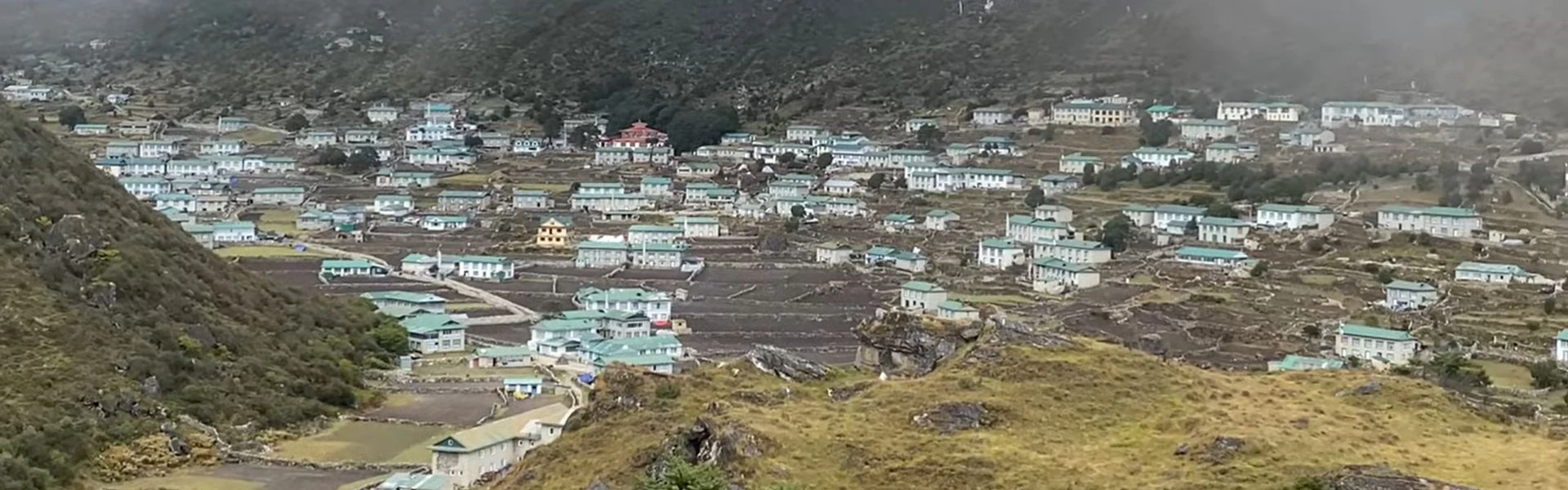
Khumjung sits above Namche Bazaar in the Khumbu region of Nepal, roughly 3,780 metres above sea level. It lies within Sagarmatha National Park, the protected zone that covers the high-altitude terrain surrounding Mount Everest. The village rests on a broad shelf of land below the sacred peak of Khumbila, which Sherpa people consider a guardian deity of the valley.
1.2 Altitude and Landscape
At high altitude, the air in Khumjung is noticeably thinner than in Kathmandu or Lukla. The landscape is open and wide. Stone walls divide potato fields, and yak pastures run along the hillside above the village houses. The sky feels closer here. On clear days, the surrounding peaks fill the horizon completely.
1.3 Distance From Namche Bazaar and Nearby Villages
Route
Approximate Walking Time
Altitude
Namche Bazaar to Khumjung
1.5 to 2 hours uphill
3,440 m → 3,790 m
Khumjung to Khunde Village
20 to 30 minutes
3,790 m → 3,840 m
Khumjung to Syangboche
45 to 60 minutes
3,790 m → 3,780 m
Walk from Khumjung to Everest View Hotel area
30 to 40 minutes
3,790 m → 3,880 m
1.4 Why Khumjung Sits in a Unique Position in the Everest Region
Khumjung is one of the largest villages in the upper Khumbu, and it is the biggest Sherpa village above Namche. Because it sits off the main Everest Base Camp trek route, it avoids the daily foot traffic that runs through busier settlements. That separation is, therefore, the reason the village still feels unhurried. You can walk its lanes on a weekday afternoon and find mostly locals going about ordinary tasks.
2. The History of Khumjung Village
2.1 Early Sherpa Settlement in the Khumbu Valley
Sherpa families have lived in the Khumbu for several centuries, having migrated from Tibet over high mountain passes. The village of Khumjung developed as a farming and trading settlement, built around the agricultural rhythms of potato cultivation and yak herding. The houses in the village were constructed from stone, following the same basic method still visible today. Khumjung is, in fact, one of the oldest Sherpa villages in the Everest region and remains a true village in Khumbu that has changed little in its core structure over the generations.
2.2 The Spiritual Importance of Khumbila
The mountain directly above Khumjung is not a climbing peak. Sherpa tradition holds Khumbila as sacred, and no expedition has ever been permitted to summit it. This belief shapes the relationship between the village and the land around it. The mountain is a presence, not a destination.
2.3 Sir Edmund Hillary's Connection to Khumjung
Sir Edmund Hillary first visited Khumjung after his 1953 Everest summit. He returned not as a climber but as someone who wanted to give back. The relationship between Hillary and the Sherpa community here became one of the more meaningful partnerships in Himalayan history. His visits led directly to construction projects that changed the village in practical, lasting ways.
2.4 How Education and Healthcare Changed the Village
The school was established in 1961, funded through the Himalayan Trust, which Sir Edmund founded with the backing of supporters in New Zealand. The school was built to serve local children who otherwise had no access to formal education.
3. What Makes Khumjung Village Special?
3.1 Traditional Stone Houses and Narrow Village Lanes
The village houses in Khumjung are built from flat stone, stacked and mortared without much ornamentation. Windows are small. Walls are thick. The lanes between them are narrow enough that two people can barely pass side by side without stepping aside. Morning light catches the stone in a particular way, and smoke from kitchen fires drifts low across the rooftops before the wind picks it away.
3.2 Potato Fields, Yak Pastures, and Mountain Farming
Potatoes are the main crop. They grow in terraced fields above and below the village.
Yaks graze on the upper pastures and are central to both farming and transport.
Farming seasons shape the rhythm of village life more than the tourist calendar does.
The government of Nepal classifies much of this land under agricultural protection within the national park boundary.
3.3 Prayer Flags, Mani Walls, and Buddhist Symbols
Khumjung is a deeply Tibitian Buddhist settlement. Mani walls run along the walking paths around the village, carved with prayers in Tibetan script. Trekkers are expected to walk to the left of these walls, keeping them on the right. Prayer flags stretch between rooftops and across high points on the surrounding ridgelines, fraying and fading as the months pass.
3.4 A Slower and Quieter Way of Life
Life in Khumjung moves at a pace that feels noticeably different from Namche Bazaar. There is no main market street. The tea houses are small. Older residents sit outside in the afternoon sun, and children walk home from school in groups. The sounds you hear most often are wind, bells on yaks, and the occasional bark of a dog from across the hill.
3.5 The Balance Between Tradition and Tourism
Khumjung attracts visitors, but not in overwhelming numbers. Because it sits off the direct line of the Everest Base Camp trek, the flow of people through the village is manageable. Most visitors come for the monastery, the Hillary School, or simply to spend a morning in a place that feels genuinely local. A kind of cultural interaction that seems earned rather than packaged is provided by Khumjung village. It is, after all, a traditional village that has never been reshaped around tourism.
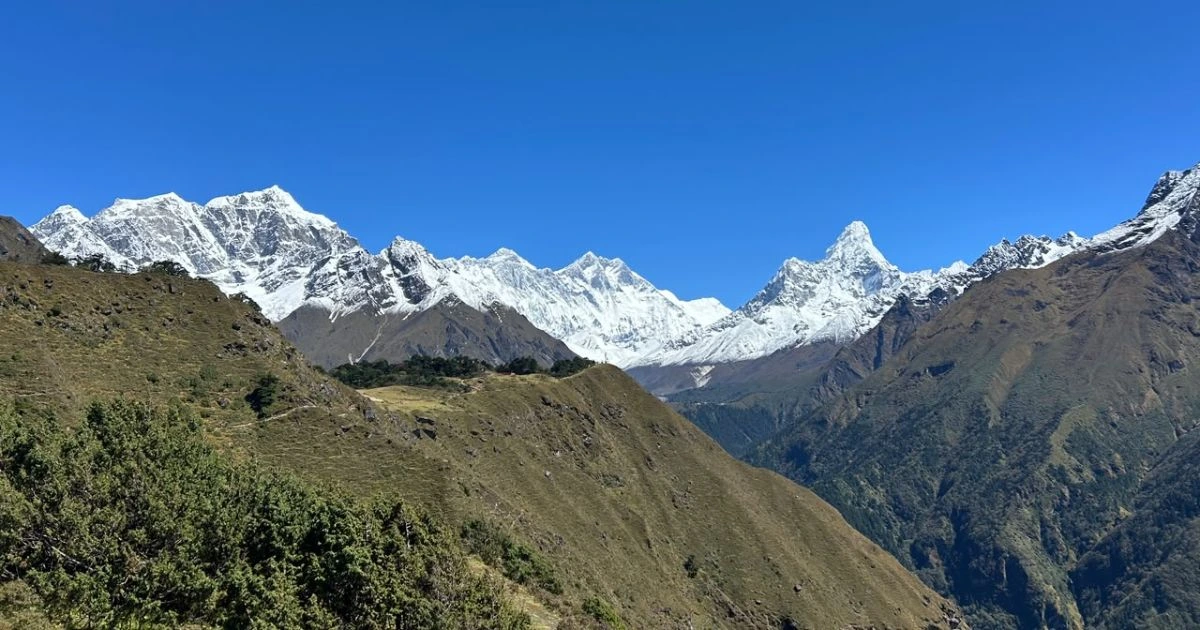
Mountain view from Hotel Everest view
4. Sherpa Culture and Daily Life in Khumjung
4.1 Daily Routine in a Himalayan Village
Life in Khumjung runs on daylight, not the clock, so the village is up well before sunrise, lighting fires and tending livestock long before trekkers stir. This early start isn't for show. It's how a Sherpa household fits school runs, fieldwork, and animal care into a short working day, so that by the time trekkers arrive and the evening settles in fast, Khumjung has already done half its work and gone quiet for the night.
4.2 Religion and Community Life
The monastery is the centre of community life. Festivals, births, deaths, and marriages all involve religious ceremonies. Local Sherpa monks maintain the Khumjung Gompa and lead rituals according to the Tibetan Buddhist calendar. Community decisions are often made collectively, and there is a strong culture of shared responsibility within the village.
4.3 Festivals and Local Celebrations
Dumje is the most important festival in the Khumbu calendar, celebrated at the monastery over several days.
Losar, the Tibetan New Year, brings families together and is marked with food, prayer, and music.
During festivals, the village takes on a different energy entirely. Visitors who time their trip well will see a side of Khumjung that most trekkers never witness.
4.4 Traditional Sherpa Food and Hospitality
Dish
What It Is
Dal Bhat
Lentil soup with rice, the daily staple
Tsampa
Roasted barley flour, mixed with butter tea
Sherpa Stew
Potato, vegetable, and noodle soup
Butter Tea
Salted tea blended with yak butter
Tongba
Fermented millet drink, served warm
Sherpa hospitality is quiet and genuine. You will not be met with a sales pitch. Tea comes first, and conversation follows if you invite it.
4.5 Family Life, Farming, and Seasonal Work
Many Khumjung families split their time across seasons. In spring and autumn, some members work as guides or porters on Everest expeditions. Others manage the farmland and livestock year-round. Younger generations increasingly attend secondary school or university in Kathmandu, though many return. The village of Khumjung holds its Sherpa community together despite the pull of lower-altitude opportunities. It remains, without question, one of the most resilient villages in the upper Khumbu.
5. Khumjung Monastery and the Famous Yeti Scalp
5.1 History of Khumjung Monastery
Khumjung Monastery, also known as Khumjung Gompa, is one of the oldest monastery sites in the Khumbu region. It sits above the main village on a slight rise, surrounded by a low stone wall and a row of prayer flags. The building is modest by Kathmandu standards, but that modesty is part of what makes it feel authentic. The interior holds thangka paintings, butter lamps, and ritual objects used in regular ceremonies.
5.2 The Story Behind the Yeti Scalp
The Khumjung Monastery yeti scalp is, without question, the most discussed object in the village. The scalp is kept inside the monastery and has been there for centuries, according to local records. Sherpa tradition holds it as a genuine relic of the yeti. The yeti scalp of Khumjung was examined in 1960 by a team that included Sir Edmund Hillary, who arranged for it to be taken to laboratories in Europe and North America for testing. The results were inconclusive. The scalp was subsequently returned to Khumjung, and it remains there today.
The story matters not because of what the yeti scalp proves scientifically but because of what it represents locally. For the Sherpa community, it is not a curiosity. It is a sacred object tied to their understanding of the natural world and the forces that inhabit the mountains around them.
5.3 Spiritual Importance of the Monastery
Khumjung Monastery is a working religious site. Monks conduct daily prayers here, and the village uses it for communal ceremonies throughout the year. The monastery in the Khumbu region serves as both a spiritual anchor and a meeting point for the surrounding settlements, including Khunde.
5.4 Visiting the Monastery Respectfully
Remove your shoes before entering the main prayer hall.
Walk clockwise around the monastery and around all religious structures.
Do not touch ritual objects or offerings without permission.
Photography inside is sometimes permitted, but always ask first.
A small entry fee is usually requested. Pay it without negotiation.
6. The Legacy of Sir Edmund Hillary in Khumjung
6.1 The Story of Khumjung Hillary School
The Khumjung Hillary School stands on the upper edge of the village and is still operating today. When Sir Edmund first asked local leaders what they needed most, the answer was education. The school in the village opened in 1961 with a small number of students and a single building. It has since grown into a full secondary institution. Khumjung Secondary School now runs from the primary level through to higher secondary, serving students from across the surrounding area.
6.2 Kunde Hospital and Community Development
Khunde Hospital, located in the neighbouring Khunde village, was another project funded through the Sir Edmund Hillary Foundation and the Himalayan Trust. It provides basic and emergency medical care for communities across the upper Khumbu. Before it opened, anyone with a serious illness faced a multi-day journey to reach a clinic. The hospital changed that entirely. Kunde village and Khumjung both benefited directly, and the surrounding Sherpa settlements have relied on it ever since.
6.3 How Hillary's Projects Still Shape Village Life Today
The infrastructure that Sir Edmund helped build is not a relic. The Khumjung School continues to educate local children. The hospital still treats patients. Roads and water systems supported by the Himalayan Trust remain in use. Hillary's work in Khumjung is a genuine case of long-term development that respected local priorities and produced lasting results.
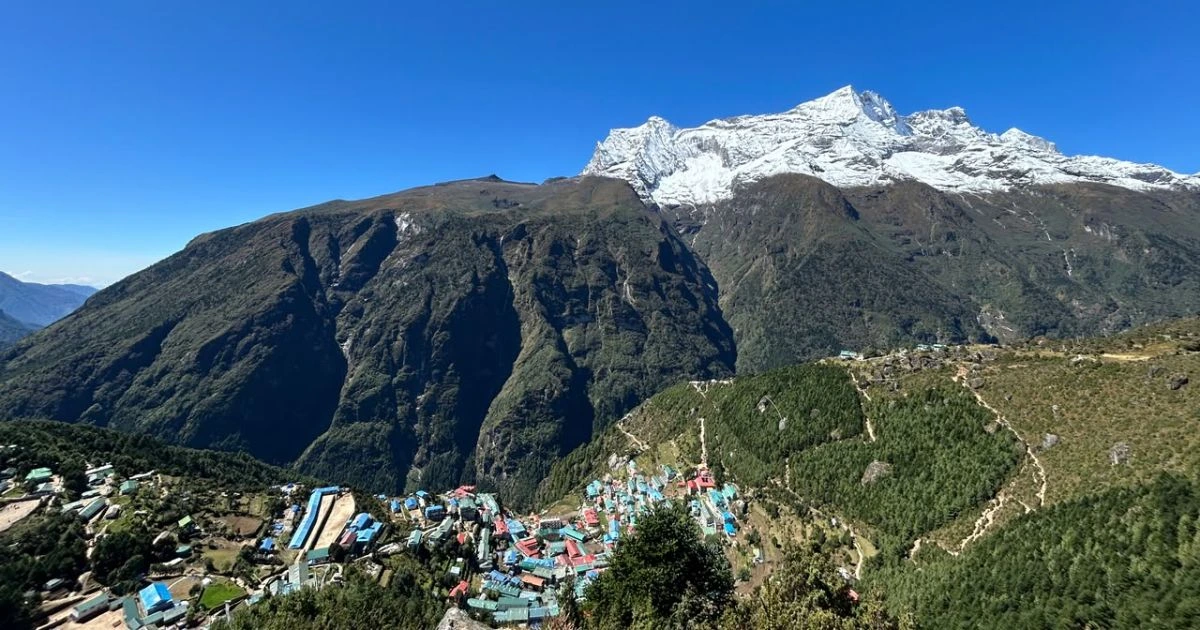
Namche Bazzar aerial View
7. Mountain Views From Khumjung Village
7.1 Everest and the Peaks Visible From the Village
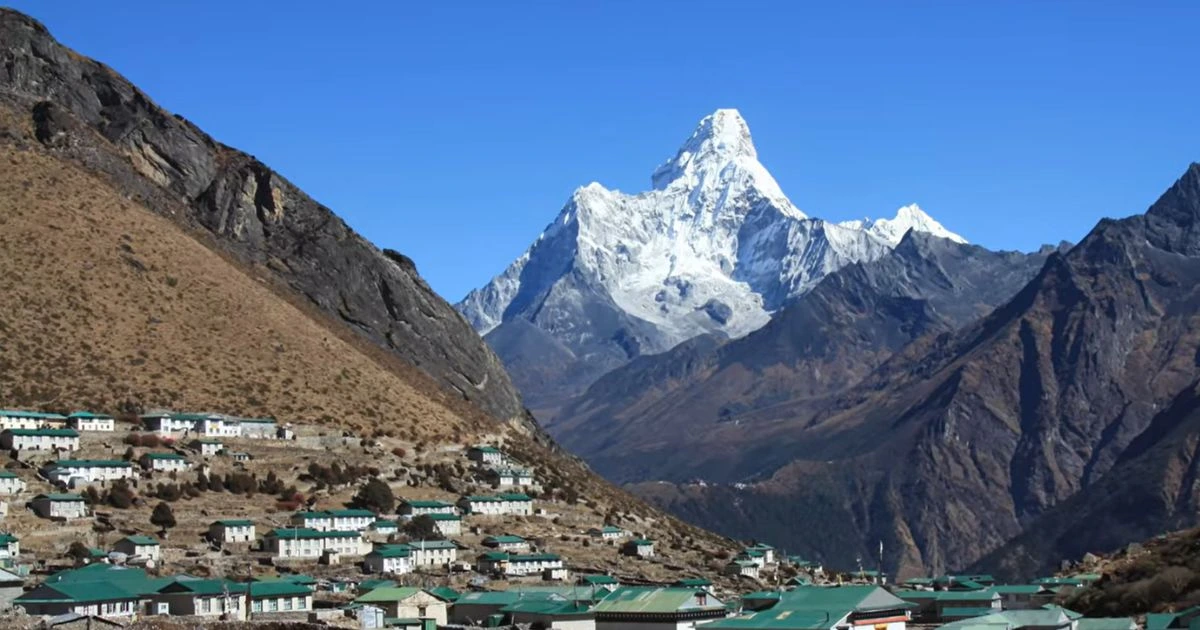
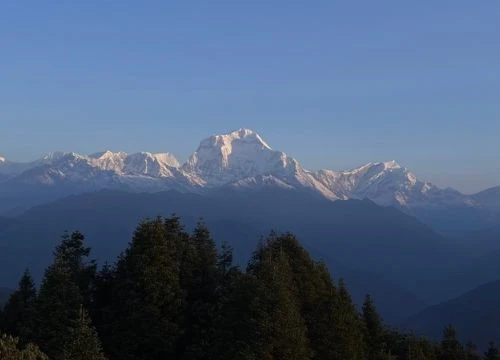
Khumjung sits at an elevation that opens up views across several major Himalayan peaks. On a clear morning, you can see the upper section of Mount Everest from the ridge just above the village. Ama Dablam is the peak that most photographers focus on from this area. Its distinctive shape is visible from multiple points around Khumjung village, and the light on its face changes dramatically between sunrise and midday.
7.2 Sunrise and Evening Light in the Khumjung Valley
The best light in Khumjung comes in two windows. Early morning brings a pink and orange wash across the eastern faces of the peaks, lasting about twenty minutes before the sky shifts to pale blue. Late afternoon brings a warmer, longer glow as the sun drops behind the ridge to the west. If you are staying in Khumjung overnight, both windows are easy to catch from the edge of the village.
7.3 Why Photographers Love Khumjung
Stone architecture and prayer flags make natural foreground subjects.
The Ama Dablam backdrop is consistent and dramatic.
Khumjung is quieter than Namche, so there are fewer people walking into frame.
Morning mist sometimes sits in the valley below, with peaks rising above it.
The Everest View Hotel area at Syangboche is within walking distance and offers an elevated panorama.
8. Things to See Around Khumjung
8.1 Khunde Village
Khunde village sits just west of Khumjung, separated by a short ridge trail. The two settlements are often referred to together as Khunde and Khumjung because of how closely linked they are historically and socially. Khunde is quieter, with fewer tea houses. Together, Khumjung and Kunde form the heart of the Khumbu region above Namche Bazaar.
8.2 Syangboche and Everest View Area
Syangboche is the small airstrip above Namche Bazaar, and the Everest View Hotel sits on the ridge beside it. From that ridge, the views of Everest, Lhotse, and Ama Dablam are some of the clearest accessible from a trail. The walk from Khumjung to this area takes about thirty to forty minutes. It is, furthermore, one of the most rewarding short walks around Khumjung village and requires no technical skill.
8.3 Local Trails, Stupas, and Hidden Corners
A stupa sits on the approach trail from Namche, marking the entry to the village area.
The ridge above Khumjung has a short trail that leads to open views and stone shrines.
Small chortens are scattered across the farmland above and below the main village path.
The trail connecting Khumjung and Kunde passes through open pasture and stone-walled fields.
8.4 Quiet Places Above the Village
The hillside above Khumjung is worth exploring on foot. There are no formal trails in every direction, but the terrain is open. You can walk upward past the school and find yourself alone on a grassy slope with a full view of the valley. No signposts, no tea stalls. Just altitude and quiet. On a weekday morning, you may not see another person for an hour.
9. Staying in Khumjung Village
9.1 Tea Houses and Local Lodges
Staying in Khumjung is straightforward. There are several small tea houses and lodges spread across the village, though the options are fewer than in Namche Bazaar. Rooms are basic. Expect a bed, a blanket, and a shared bathroom with cold water. That is the standard in the upper Khumbu, and Khumjung is no exception.
9.2 Food Available in the Village
Menu Item
Availability
Dal Bhat
Always available
Noodle soup and fried rice
Most lodges
Eggs and toast
Morning only, most places
Tibetan bread
Commonly available
Instant noodles
Available everywhere
Fresh vegetables
Seasonal and limited
Menus in Khumjung are honest and practical. Do not expect variety beyond the standards. However, the food is filling and the portions are generous.
9.3 What Nights in Khumjung Feel Like
Nights at this higher altitude are cold for most of the year. Even in October, temperatures drop well below zero after dark. The dining room in a tea house is usually the warmest place in the building. Most lodges charge extra for a heated room or a fire in the evening. Bring a good sleeping bag regardless of what the forecast says.
9.4 Internet, Electricity, and Basic Facilities
Wi-Fi is available in most tea houses but is unreliable and slow.
Electricity runs from solar panels and small hydro systems. Power cuts are common.
Charging devices is possible but takes extra time. Do not rely on it for critical needs.
There is no ATM in Khumjung. Carry enough cash from Namche Bazaar before arriving.
10. Best Time to Visit Khumjung Village
10.1 Spring Season
Spring, from March to May, is one of the two peak seasons in Khumjung. The days are warm enough to walk comfortably, the skies are often clear in the morning, and rhododendrons bloom on the lower slopes of the valley. Everest expeditions are active during this period, which adds energy to the surrounding region. The village itself is busy but not overwhelmed.
10.2 Autumn Season
October and November offer the clearest mountain views of the year. The monsoon has passed, the air is sharp, and the light is clean. Autumn is therefore the best time to visit Khumjung for photography and for seeing the peaks without cloud cover. This is also the busiest period on the Everest base camp trek, but Khumjung absorbs the crowds better than the main trail hubs.
10.3 Winter Atmosphere in the Village
Winter, from December to February, brings cold and quiet. Snow covers the fields and the upper trails. Most trekkers leave the Khumbu by late November, and the village settles into its own rhythm. If you visit in winter, you will find Khumjung in its most authentic state. The tea houses remain open. The monastery continues its daily schedule. The people are there, going about their lives without a tourist audience.
10.4 Monsoon Conditions and Cloudy Landscapes
The monsoon runs from June through August. Trails become slippery, leeches appear on the lower paths, and cloud cover is nearly constant. Mountain views are rare. Still, the village remains green and alive during this period. Some travellers enjoy the monsoon in Khumbu for exactly that reason. The landscape is lush, the crowds are gone, and the valley feels entirely local.
11. How to Reach Khumjung Village
11.1 Route From Lukla
The standard approach begins with a flight from Kathmandu to Lukla. The trail heads north from Lukla, passing past Phakding, Monjo, and Sagarmatha National Park's main gate before ascending to Namche Bazaar. Most trekkers spend at least one acclimatisation night in Namche before continuing. Khumjung is the next logical destination above Namche on the cultural circuit route, and it sits conveniently along the way to the Everest base area for those extending their itinerary further.
11.2 Walking From Namche Bazaar
The hike from Namche Bazaar to Khumjung takes between one hour and 30 minutes and two hours, depending on the pace. The trail climbs steeply out of Namche before levelling on the ridge. You pass the small airstrip at Syangboche and then descend slightly into the broad shelf where Khumjung sits. A well-marked trail connects the two villages, with many visitors choosing to explore the route alongside a local guide. Returning to Namche Bazaar from Khumjung takes roughly the same time on the descent. Returning to Namche is straightforward, and most visitors complete the round trip comfortably in a single day.
11.3 Helicopter Access and Alternative Options
Helicopter access to Syangboche Airport makes Khumjung Village reachable without completing the full Everest Base Camp Trek on foot. Several operators offer both scheduled and private charter flights from Kathmandu to Syangboche. From the airstrip, it takes around 30 to 40 minutes to walk to Khumjung.
The nearby Everest View Hotel is one of the most popular landing and breakfast stops on an Everest Base Camp with helicopter return tour. Many helicopter tours land here to give visitors panoramic views of Mount Everest, Ama Dablam, Lhotse, and the surrounding Khumbu region before returning to Kathmandu. For travellers with limited time, this is one of the easiest ways to experience the Everest region without undertaking a multi-day trek.
12. Khumjung vs Namche Bazaar
12.1 Which Village Feels More Traditional?
Khumjung is a Sherpa village in the full sense of the phrase. Namche Bazaar is a trading hub and commercial centre that has grown around tourism. Both are genuinely Sherpa in population and culture, but the physical experience of each is very different. Khumjung has no bakeries selling apple pie. No gear shops with neon signs. The traditional village structure is intact in ways that Namche simply cannot offer anymore. As a village of Nepal that has retained its agricultural identity, Khumjung stands apart from most settlements at this altitude.
12.2 Crowds, Atmosphere, and Experience
Namche Bazaar handles thousands of trekkers per week during peak season. Khumjung, however, handles a fraction of that. The lanes are clear. The tea houses are quiet. You can sit outside a lodge in the afternoon and hear nothing louder than a yak crossing the field above. For trekkers who find busy trail hubs draining, Khumjung is a direct alternative.
12.3 Which Place Is Better for Culture and Quietness?
Factor
Khumjung
Namche Bazaar
Crowd level
Low to moderate
High during peak season
Cultural authenticity
High
Moderate
Food and facilities
Basic
Wide range
Mountain views
Excellent
Good
Monastery access
Yes, active site
Nearby options
Atmosphere
Quiet, local
Busy, commercial
If your priority is culture and quiet, Khumjung wins clearly. If you need facilities, medical access, or a wider food menu, spend more nights in Namche. Most sensible itineraries include both.
13. Important Travel Tips Before Visiting Khumjung
13.1 Respecting Local Culture and Monasteries
Always walk clockwise around monastery buildings, stupas, and mani walls.
Dress modestly. Cover your shoulders and knees when visiting religious sites.
Do not photograph people without asking. Many residents prefer privacy.
Buy from local shops rather than bringing everything from Kathmandu or Namche.
13.2 Altitude and Physical Conditions
Khumjung sits at 3,780 metres. Symptoms of altitudesickness can appear at this level, especially if you have come up quickly. Headache, nausea, and fatigue are early signs. Do not push higher if you feel unwell. Acclimatise properly in Namche Bazaar before making the hike from Namche Bazaar to Khumjung. The Khunde Hospital is nearby if you need medical attention.
13.3 Responsible Travel in a Sherpa Village
Carry your rubbish out. Waste management at high altitude is a real challenge.
Use the tea house dining rooms rather than cooking your own food. It supports local income.
Respect farming land. Do not cut through planted fields.
Water is scarce at this altitude. Use it conservatively.
13.4 Simple Things Visitors Often Forget
Carry cash. There is no ATM in the village.
Bring a headlamp. Power cuts are common, and nights are dark.
Pack layers. Temperature shifts between midday and evening are dramatic.
A trekking permit and TIMS card are required before you even reach Lukla. Sort these in Kathmandu.
Khumjung Village: Final Insights
Skip Khumjung village, and you miss the fullest picture of Sherpa life left standing anywhere near the Everest Base Camp trek route. This is not a photo stop. It has a working monastery, a school built by Sir Edmund Hillary that still teaches local children, and a daily rhythm that most villages along the main trail gave up years ago. Among the charming villages in the upper Khumbu, this one asks something of you in return: slow down, and it pays you back.
The case for going is a practical one. Namche Bazaar is a short walk away, and once you're there, the place feels like nothing else on the trek. Some travellers explore Khumjung village in half a day. Others stay the night for a fuller feel of the place or use it as a launch point for Khunde, the ridge above the village, or the viewpoints near Syangboche. Khumjung takes visitors in stride without turning itself into a tourist stop.
The Yeti scalp draws the curious, the views of Ama Dablam stop people mid-stride, and Khumjung Monastery offers a quiet worth sitting in for a while. But none of that is really why the village stays with you. What it does is give the sense of an actual Sherpa village, one that has held its place at the heart of the Khumbu region for generations, largely on its own terms. Walk it with Nepal Everest Base Camp Pvt. Ltd, and you'll see why it belongs on your Everest Base Camp trek itinerary.Contact us to start planning your trip.
Khumjung village
Khumjung Village: FAQs
Is Khumjung Village Worth Visiting?
Yes, Khumjung village is worth visiting for any traveller interested in authentic Sherpa culture, history, and mountain scenery. It offers a quieter and more traditional experience than Namche Bazaar, with a working monastery, the Hillary School, and genuine village life within easy reach.
How Far Is Khumjung From Namche Bazaar?
Khumjung is roughly 1.5 to 2 hours on foot from Namche Bazaar, climbing uphill via Syangboche. It is a rewarding hiking spot from Namche Bazaar for an acclimatisation day and is easily done without a guide.
What Is Khumjung Famous For?
Khumjung is famous for three things above all: the Khumjung Monastery, which houses the famous yeti scalp; the Khumjung Hillary School, established by Sir Edmund in 1961; and its position as the biggest Sherpa village in the upper Khumbu, preserving a way of life that much of the region has moved away from.
Can You See Mount Everest From Khumjung Village?
You can see the upper section of Mount Everest from the ridge above Khumjung village, though the full face is better viewed from Everest viewpoints near Syangboche. Ama Dablam is the standout peak visible directly from the village itself.
Who Built the School in Khumjung Village?
The Khumjung Hillary School was built by Sir Edmund Hillary through the Sir Edmund Hillary Foundation and the Himalayan Trust in 1961. The school was established at the direct request of the Sherpa community, who identified education as their greatest need. It remains operational today as Khumjung Secondary School.
Blending digital strategy with mountain passion, I help adventurers find their way to the Himalayas online. With hands-on experience in Nepal’s trekking trails and a role at Nepal Everest Base Camp Trekking Co., Thamel, I combine SEO expertise with true trail insight.