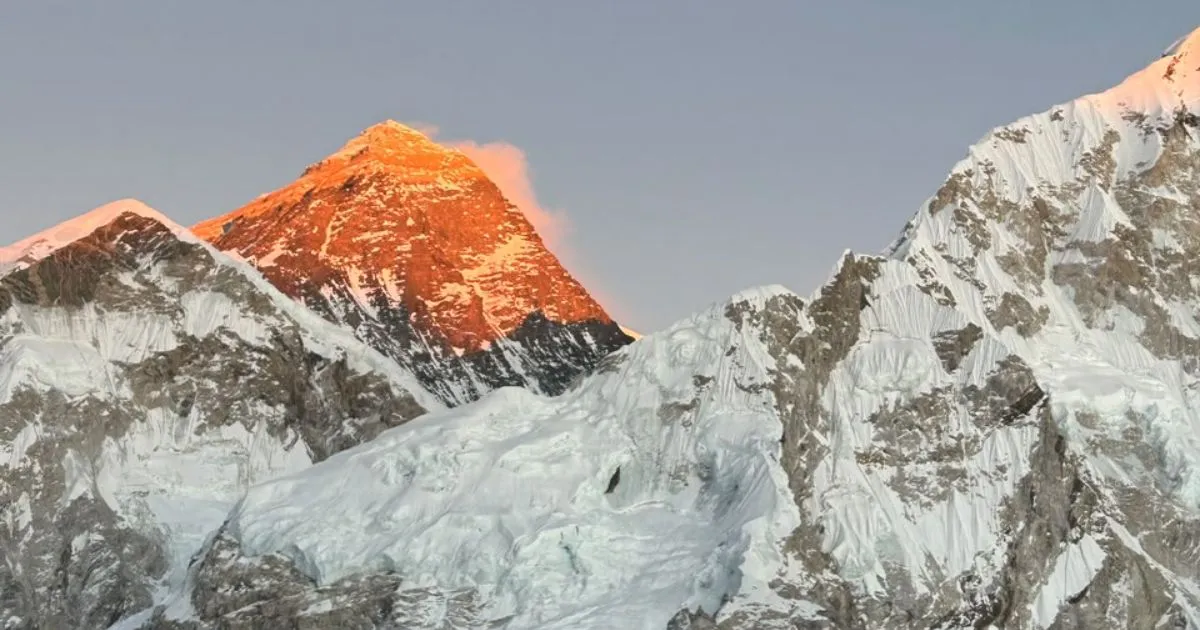
How to See Mount Everest Without Trekking | An Overview
For many travellers, Mount Everest is a dream they have carried for years. Yet not everyone can commit to a multi-week trek, and the question of how to see Mount Everest without trekking comes up again and again. Many want to know if it is truly possible to see the summit of the world’s highest peak without long days on the trail. This guide answers that question plainly, without assumptions or exaggeration.
Nepal offers more access to the world's highest peak than most people realise. You do not need to spend ten days on a trekking route across the Khumbu region to earn a view. Several well-established options exist for those who want to see Mount Everest on shorter timelines or with fewer physical demands.
What this guide covers is straightforward. Every realistic way to see Everest without a multi-day trek, from mountain flights over the Himalayas to road access via Tibet. Each option is explained honestly, including its limits, so you can decide what fits your time, budget, and expectations before you commit. This guide is brought to you by Nepal Everest Base Camp Co.
Is It Possible to See Mount Everest Without Trekking?
The short answer is yes. You do not need to climb Everest to see it. The more useful answer is that it depends on which kind of view you are after and how much control you want over the conditions.
Distance, Visibility, and Ground Reality
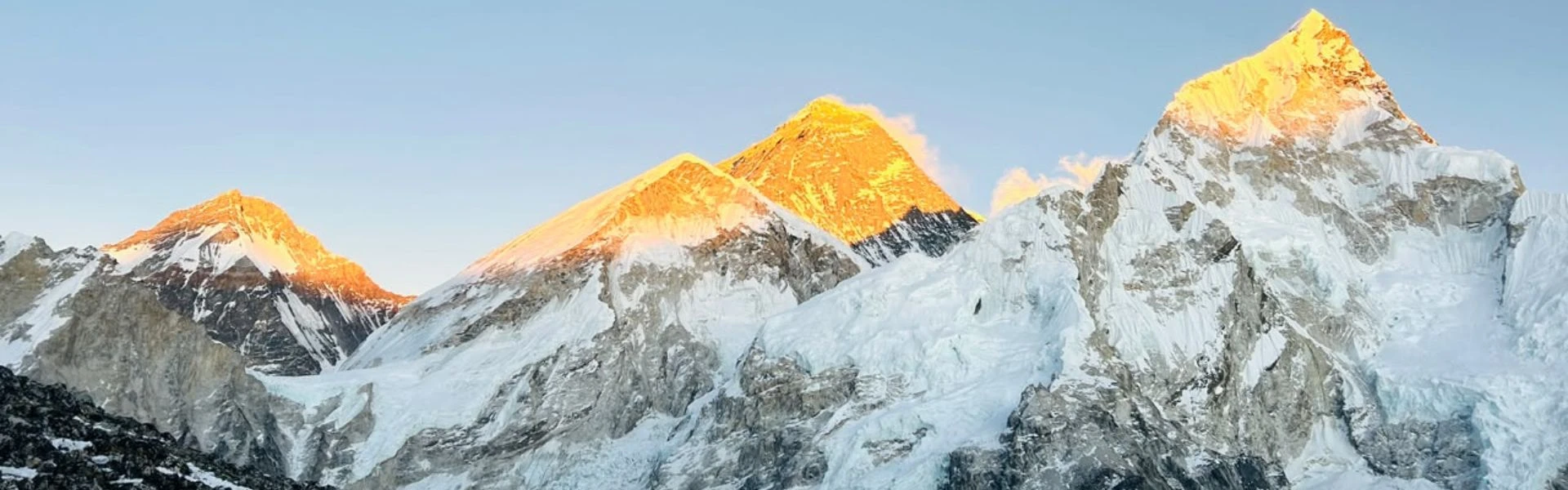
Mount Everest can be seen from several points in Nepal and Tibet without a single day of trekking, while you can access the Everest Base Camp to view the surrounding landscapes. The distance and clarity of that view, though, vary considerably depending on the method. A scenic flight from Kathmandu brings you within roughly 30 kilometres of the summit at altitude. A helicopter can bring you closer still, with some landing points sitting near the southern Everest base camp corridor.
From ground viewpoints in the lowlands, Everest sits far enough away that it often blends into the broader ridgeline. On clear days in October or November, it is identifiable. On hazy or overcast days, however, it disappears entirely.
The key variables are:
Altitude of the viewing point: higher means cleaner, less obscured views
Season: October, November, March, and April offer the best conditions
Time of day: early morning flights and visits consistently outperform afternoon attempts
Weather: cloud build-up by mid-morning is common across the everest region
Why Many Visitors Miss Clear Everest Views
A significant number of travellers who choose non-trekking Everest options return without a satisfying view. The options themselves are rarely the problem. Poor timing, the wrong Everest viewing season, and unrealistic expectations about what valley-floor viewpoints can deliver account for most of the disappointment.
Afternoon mountain flights frequently encounter cloud cover. Cloud builds over the Himalayas through the day, and operators who schedule late departures hand passengers a wall of grey.
Reputable Everest mountain flights depart in the morning only, and none leaves the ground without confirmed clear weather. That single discipline makes the difference between a rewarding flight and a wasted one.
Everest viewpoints without trekking offer distant, obstructed sightlines on most days. From the valley floor, terrain breaks what clear air alone cannot fix.
The same Himalayan weather patterns that challenge trekkers and climbers affect every visitor regardless of approach. Altitude is not optional when the mountain decides to hide.
Booking within the pre-monsoon trekking window (March to May) or the post-monsoon trekking season (October to November) makes a measurable difference. These are the periods when Himalayan visibility is most consistent and the chances of a clear Mount Everest panoramic view are at their highest.
The table below summarises what each approach realistically delivers for those looking to visit Mount Everest without climbing:
Viewing Option
Typical Distance
Weather Reliability
Physical Effort
Scenic mountain flight
~30 km aerial
Moderate
None
Helicopter tour
~5–8 km aerial
Moderate
Very low
Tibet road access
~6 km from north face
Higher (autumn)
Low
Scenic Everest Mountain Flights From Kathmandu
The Everest mountain flight is among the most popular non-trekking Everest options available and has been operating out of Kathmandu for several decades. It is straightforward, relatively affordable, and requires no physical preparation, making it a practical choice for travellers of any age or fitness level. Elderly travellers, young children, and those managing chronic health conditions or limited mobility can all join the same flight without modification or restriction.
What an Everest Scenic Flight Involves
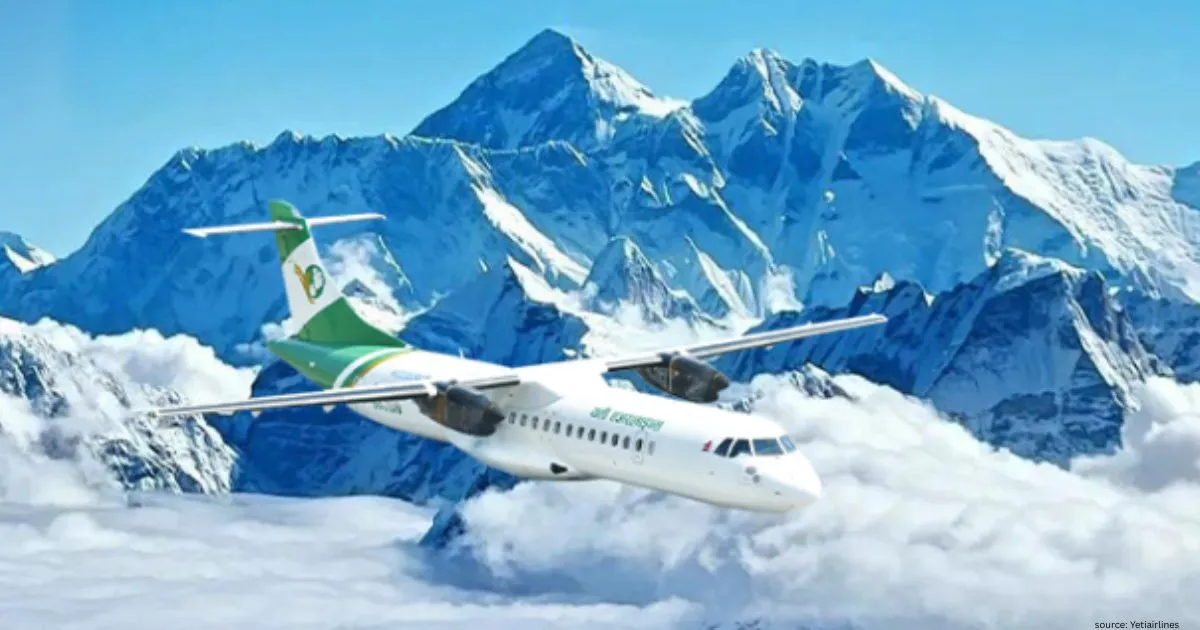
A standard scenic flight from Kathmandu departs early in the morning, typically between 6:30 and 7:30 am, to take advantage of pre-cloud windows over Everest Base Camp to view. The aircraft used are small, propeller-driven mountain planes configured so that every passenger seat sits beside a window. You are in the air for roughly one hour.
The flight does not land anywhere in the mountains. Instead, it follows a predetermined corridor at an altitude of around 7,000 to 8,000 metres, passing close enough to Everest and the surrounding Himalayan peaks that the view fills the window entirely.
Duration: approximately 60 minutes
Departure: Tribhuvan International Airport, Nepal's capital
Seats: typically 15 to 18, each with window access
No physical requirements beyond standard fitness
Typical Flight Route and Viewing Angles
The route heads northeast from Kathmandu to Lukla Airport and beyond, climbing toward the main Himalayan ridgeline. Passengers see MtEverest from the left side of the aircraft on the outward leg and the right side on the return. Flight attendants point out peaks including Lhotse, Nuptse, and Mount Cho Oyu alongside Everest itself.
The aerial views of Mount Everest from this altitude are clear on good days. Specifically, you are looking at the upper third of the mountain, including the summit and the ridges descending toward the Southern Everest Base Camp area. This is genuinely a closer view of Mount Everest than any ground viewpoint in the lowlands can provide.
Mount Everest and the surrounding peaks appear at eye level rather than as distant shapes on a horizon. Consequently, photographers find the window-facing angle well-suited to telephoto work.
Window Seating, Timing, and Weather Factors
Every seat on a dedicated Everest scenic flight is a window seat. Operators configure the aircraft specifically for sightseeing, so there is no poor position on board. Even so, light quality and cloud presence matters considerably, and no cabin configuration can substitute for a clear morning sky.
For that reason, reputable Himalayan mountain flight operators confirm weather conditions before every departure. Flights go out on clear mornings only. If conditions do not meet the required standard, the flight does not operate.
Afternoon visibility drops sharply as convective clouds develop over the high peaks
October - November and December - May offer the most reliable clear-window days
March and April are also strong, though slightly more variable
The monsoon season (June through September) effectively ends scenic flight viability
Cost, Duration, and Inclusions
Item
Typical Range (USD)
Scenic flight ticket
$170–$220 per person
Airport transfer
Often included
Certificate of flight
Usually included
Breakfast
Included with most operators
Total duration
~60–75 minutes including boarding
Prices vary by operator and season. As a result, booking in advance during October and November is advisable, as demand is high during the peak trek season.
Who Scenic Flights Are Best Suited For
The scenic mountain flight works well for the following:
Trekking tour travellers who have limited time but want an Everest sighting
Older or less physically mobile visitors
Families with children
Travellers on layovers or short stays in nepal
Anyone seeking a genuine aerial perspective without the cost of a private helicopter charter
It is not suited for travellers who want to land near the mountain, spend time at altitude, or experience the terrain around Everest Base Camp directly.
Everest Mountain Flight by Plane
Everest Helicopter tour with landing or Overflight
The Everest helicopter tour is the premium non-trekking Everest option. It delivers a more immersive experience than a scenic mountain flight because the helicopter lands at select locations along the route rather than passing at a distance. Depending on the package, landing stops include Hotel Everest View at 3,880 metres, the airstrip at Lukla, and the village of Pheriche in the upper Khumbu Valley. Each stop puts you on the ground at altitude, which no fixed-wing flight can offer. For travellers who want proximity to the Everest Base Camp region without committing to a full trek, a Khumbu helicopter tour with planned landings is the closest available alternative.
How Helicopter Tours to Everest Operate
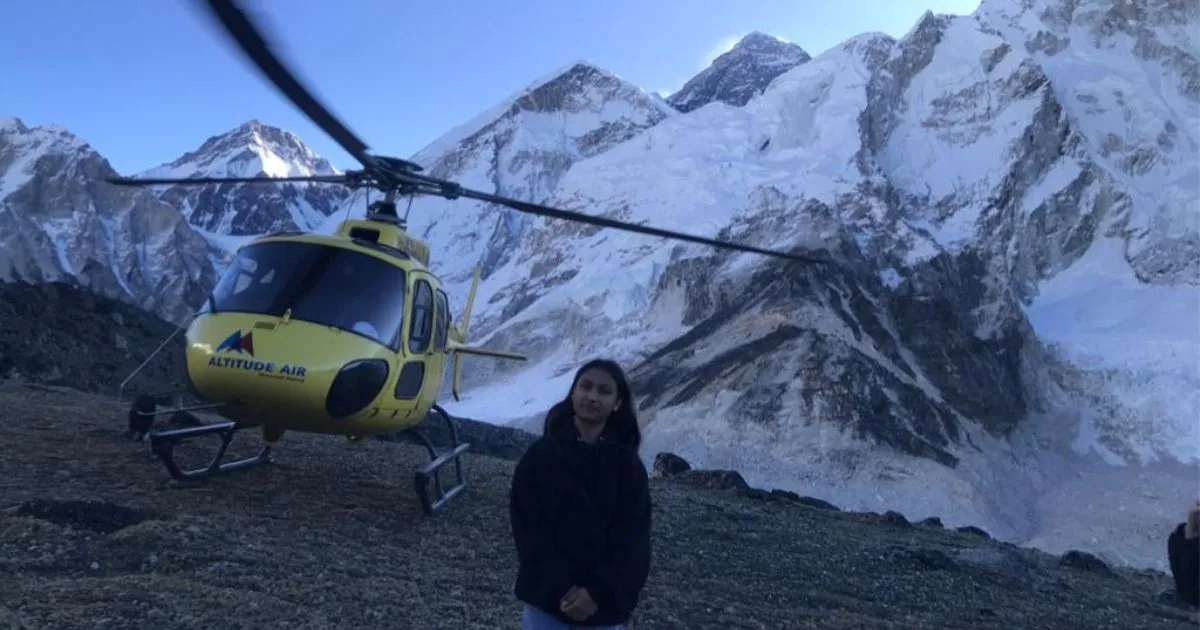
A standard Everest helicopter tour departs from Kathmandu or Lukla depending on the package. One detail worth knowing before booking: commercial helicopters are not permitted to land at Everest Base Camp itself. Most flights land instead at Kalapatthar, which sits at 5,545 meters and delivers a direct sightline to the upper mountain. A Kalapatthar helicopter landing is available on special request and carries an additional cost above the standard package rate.
The helicopter follows the Khumbu Valley northward, ascending past Namche Bazaar and Tengboche before reaching the upper elevations near the base camp corridor. Overall, the entire flight from the capital typically takes between 4 and 5 hours, including the ground stop.
No altitude acclimatisation is required for most landing points
Passengers typically spend 30 to 45 minutes on the ground
The minimum group size for shared tours is usually 4 to 5 people
Private charters are available for individuals or couples
Landing Points Near Everest and Viewing Experience
The most common landing point on an Everest helicopter tour is the Everest View Hotel area near Namche Bazaar, included in most standard packages. A Kalapatthar landing at 5,644 metres is available on special request only and carries an additional charge above the base package rate. From Kalapatthar, the position is directly opposite the west face of the mountain. the same vantage point trekkers reach after twelve days on foot, covered in under two hours from Kathmandu by air.
The view of the Everest region from this elevation includes the Khumbu Icefall, the base camp in the MountEverest approach corridor, and the full south face. On clear days, the camp in the Mount Everest area is visible below. As a result, this is the closest panoramic view of the summit available without climbing the mountain itself.
Key points about the landing experience:
Landings at Kalapatthar are available on special request only and are subject to weather clearance and Himalayan helicopter traffic on the day.
Altitude affects some visitors at this elevation. Mild headaches and breathlessness are common above 5,000 metres, and time on the ground is kept short for this reason.
The Khumbu Icefall and the Southern Everest Base Camp glacier are clearly visible from Kalapatthar at 5,644 metres, making it the most rewarding landing point on the route for close-up mountain views.
Shared tour packages typically seat 4 to 5 passengers and run between $250 and $450 per person depending on the landing point and operator. Private charters vary from $1,200 to over $2,500 for the full aircraft, making them viable for small groups splitting the cost.
This itinerary, combining a Kala Patthar landing with breakfast at the Hotel Everest View in Namche, is the most popular configuration. Specifically, it combines altitude, views, and a ground experience in a single morning.
Group tours: $250–$450 per person
Private charters: $1,200–$2,500 per aircraft
Lukla-based packages: generally cheaper than departures from the capital
Additional landing fees and park permits are usually included in quoted prices
Safety, Altitude, and Weather Considerations
Safety on this aerial tour depends on two things: operator quality and weather. Reputable operators follow Civil Aviation Authority of Nepal regulations, conduct pre-flight weather checks, and carry oxygen on board for altitude-related issues. Additionally, most operators will reschedule rather than cancel at short notice where conditions permit.
Altitude sickness is a real risk above 4,000 metres, even without trekking
Most passengers tolerate the short exposure well. Prolonged stays at high elevation increase risk
Weather cancellations are common. Most operators reschedule rather than refund
The trek to the everest base camp corridor experiences high helicopter traffic in peak season, which can affect scheduling
Who Should Choose a Helicopter Tour
This aerial option suits travellers who want to experience the grandeur of MountEverest at close range, without the physical exertion of a multi-day trek. It is the right choice for:
Photographers seeking the stunning views of Mount Everest from Kala Patthar
Travellers who have already done the Everest Base Camp trek and want to return efficiently
Older or less mobile visitors who want to visit Mount Everest without a long walk
Groups combining a trekking tour in lower elevations with a helicopter finish
It is not suited for budget travellers, those prone to altitude sickness, or anyone expecting a ground-level base camp experience equivalent to the trek.
Everest Helicopter tour landing at Kalapatthar
Seeing Mount Everest From Nepal Without Flying
Not every visitor to Nepal can budget for a flight or helicopter. Fortunately, Everest in Nepal is not exclusively accessible by air. There are ground-level options within the country that allow you to view Mount Everest, albeit from a greater distance.
Can You See Everest From Kathmandu?
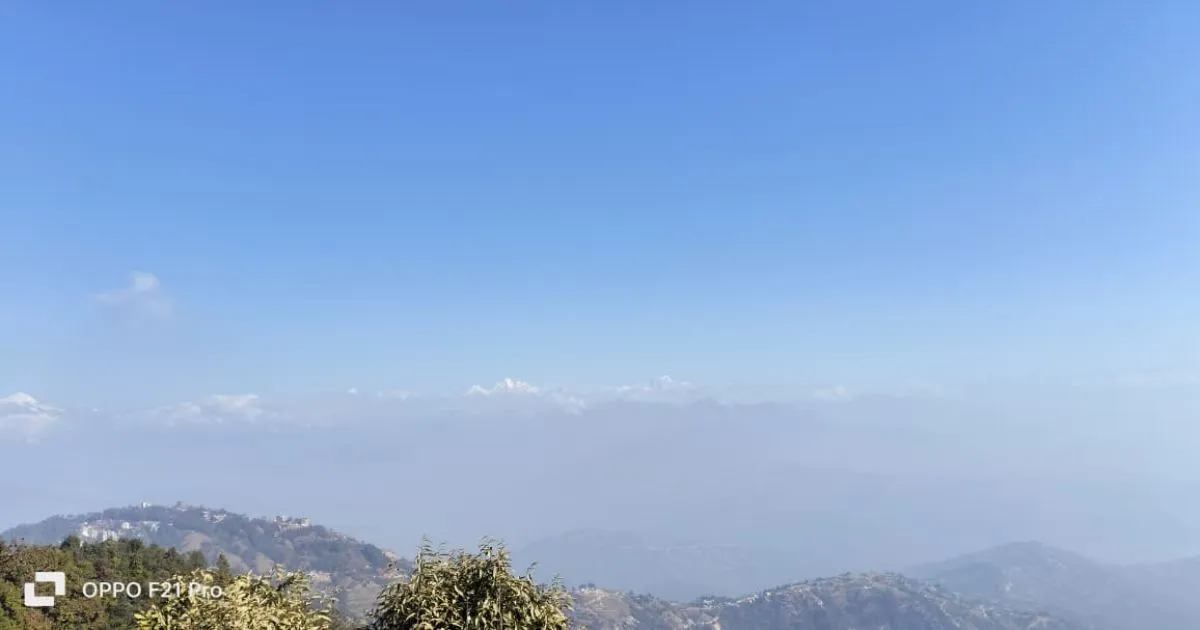
On very clear days, typically in October and November, Mount Everest can be seen from elevated points around Kathmandu Valley. The Chandragiri Hills and the Shivapuri ridge offer the widest Himalayan sightlines from the city, but Everest is not always distinguishable from the general ridgeline without guidance.
Most days in the capital, haze, pollution, and cloud cover make a definitive Everest sighting unreliable. Consequently, it is worth attempting if you are already in the city, but not worth planning a trip around.
Nagarkot (2,195 m), approximately 32 kilometres east of the city, is the most-cited viewpoint
Dhulikhel offers similar sightlines with slightly less tourism infrastructure
Neither point guarantees you will view mount everest clearly on any given day
Dawn visits have the best success rate before valley haze develops
Hill Viewpoints and Their Visual Limitations
The viewpoints around the valley place you roughly 150 to 200 kilometres from the summit. At that distance, Everest and surrounding peaks form a distant white line on the northern horizon. You can see the view of the Everest region as a whole, but the mountain does not dominate the view the way it does from altitude.
The Hotel Everest View near Namche Bazaar (3,880 m) is a different matter entirely. The Hotel Everest View in Khumjung sits at an elevation where Everest fills the frame. However, reaching it requires either a helicopter or a short trek from Namche, which itself requires flying to Lukla first.
Everest view hotel from Namche: requires Lukla flight and a 2-hour walk
Nagarkot: accessible by road from the capital, no trek required
Chandragiri Hills: cable car access, modest Himalayan views on clear days
All ground options deliver a view of mount Everest that is distant compared to aerial options
Why Everest Visibility From These Areas Is Rare
The core problem is distance combined with atmospheric interference. The views without flying are real on the right days, but they are not reliable. In practice, several factors work against clear sightings:
Valley haze builds quickly after sunrise, particularly in spring and autumn
Everest sits 150 to 200 kilometres from the nearest accessible road viewpoints
Cloud formation over the Himalayan range begins by mid-morning on most days
The mountain's position behind closer ridges makes it invisible from most low-elevation angles
When These Options Are Worth Considering
Ground viewpoints in Nepal are worth considering when you are already visiting the capital or nearby hill stations for other reasons. Adding a dawn visit to Nagarkot, for example, costs very little and occasionally delivers a remarkable panoramic view. However, it should not be the centrepiece of an Everest-focused trip.
The Everest View Hotel option via a short trek from Namche sits in a different category. It combines modest walking with exceptional altitude views and, as a result, suits travellers who are comfortable with a two-day visit to the Khumbu Valley without committing to the full base camp trek.
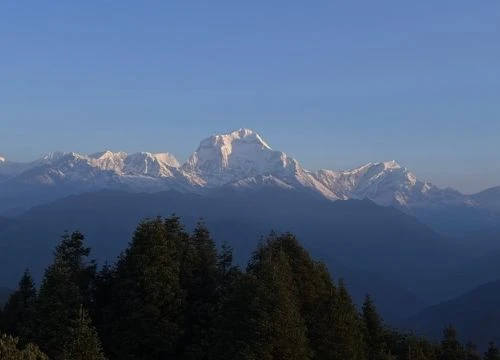
Mountain view from Nagarkot
Seeing Mount Everest From Tibet Without Trekking
The north side approach, via Tibet, offers a genuinely different way to explore the mountain. Road access on the Tibetan plateau allows vehicles to drive closer to the north face of Everest than any road on the Nepal side. As such, this makes it the most accessible ground-level option for a closer view of Mount Everest without significant walking.
North Side Road Access to Everest
Mount Everest in Tibet sits within the Mount Everest Natural Reserve, a protected area managed by Chinese authorities. The Everest Natural Reserve in Tibet covers a vast stretch of the plateau and is accessible via a paved road running south from Shigatse.
The standard trip from Lhasa to Everest takes two to three days by road, passing through Shigatse before reaching Tingri at Everest Base Camp, the last major town before the base camp area. From Tingri, the road then continues through the reserve to the north base camp at Rongbuk (5,150 m).
Lhasa to everest base camp by road: approximately 700 kilometres
Days lhasa to everest base: typically 2 to 3 driving days
Travel to everest base camp on the north side requires a Tibet Travel Permit, a Tibet Entry Permit, and an Alien Travel Permit for restricted areas
All permits must be arranged through a licensed Chinese travel agency
Independent travel to the Everest base camp in the Tibet area is not permitted
How Close You Can Get Without Hiking
The paved road from Tingri reaches the Rongbuk Monastery area, from which the north base camp in the MountEverest approach is a further 8 kilometres on a dirt track. Visitors can ride electric shuttle buses from the monastery car park to a point very close to the camp in the Mount Everest glacier tongue.
From this position, you are looking directly up the eastern slope of Mount Everest and the north face. The slope of Mount Everest above the base camp rises dramatically, with the summit visible on clear days without obstruction. This is, therefore, one of the few places where you can reach Everest Base Camp level by ground transport alone.
Trekking from Tingri to Everest takes 3 to 5 days on foot. The road option replaces this entirely
The trekking routes to the base on the Tibet side are longer and more remote than the Nepal approach, making the road alternative particularly practical
The shuttle bus drops passengers within approximately 1 kilometre of the glacier
The everest base camp to the viewpoint at Rongbuk offers an unobstructed north face sightline
Trek to Everest Base on foot is possible within the reserve but not required
Travel Permits and Entry Requirements
Everest Base Camp in Tibet has more bureaucratic demands than the southern approach. The permit system involves multiple layers:
Permit Type
Who Issues It
Required For
Tibet Travel Permit
Tibet Tourism Bureau
All Tibetan entries
Tibet Entry Permit
Tibet Tourism Bureau
Arriving by air or train
Alien Travel Permit
Public Security Bureau
Restricted area access
Military Zone Permit
Military authorities
Rongbuk / EBC area specifically
All permits are arranged through a licensed agency in China. Independent access is not possible. Furthermore, group tours of 2 or more are typically required.
Nepal Side vs Tibet Side Viewing Experience
Feature
Nepal Side
Tibet Side
Road access to base camp
No
Yes
Closest non-trekking distance
~5 km (helicopter)
~1 km (shuttle bus)
Permit complexity
Moderate
High
Scenery on approach
Alpine valleys, forest
High plateau, barren
Cost range
$650–$2,500+
$850–$2,000+
Mountain face visible
South / southwest
North
View of Everest from base
Icefall, south col
Full north face, pyramid
The Tibetan side is the better ground-level option for anyone who wants to reach the best vantage points without hiking. The southern approach, on the other hand, wins on scenery during the ascent and on access to aerial options. Neither is objectively superior. The right choice depends on your itinerary, budget, and permit tolerance.
Comparing All Non-Trekking Ways to See Mount Everest
Understanding the full range of options is the most practical way to see Mount Everest before committing to any of them. Each option sits in a different price bracket, delivers a different quality of Everest view, and, accordingly, suits a different type of traveller.
Comparison Table: Cost, Distance, Effort, and Reliability
Option
Cost (USD)
Distance to Everest
Physical Effort
View Quality
Reliability
Scenic mountain flight
$280
~30 km aerial
None
Excellent (aerial)
Moderate
Helicopter tour (shared)
$1,350–$2,500
~5–8 km
Very low
Outstanding
Moderate
Helicopter tour (private)
$5,000–$7,000
~5–8 km
Very low
Outstanding
Moderate
Tibet road access
$800–$2,000+
~1 km (north face)
Low
Excellent (ground)
Higher in autumn
A tour to EBC in Nepal via helicopter remains the most efficient option for combining proximity and ease. For context, the trekking route comparison is useful: the same views available from Kala Patthar via helicopter would take 12 days on foot.
Best Option for Short Trips
For anyone with fewer than three days in Nepal, the scenic flight is the most practical choice. It requires no special preparation, departs from Kathmandu Airport, and returns within an hour. The best way to see Everest in this window is a pre-dawn drive to the airport followed by an early flight.
A shared aerial tour is also achievable in a single long day from the capital, provided the weather cooperates. This is, indeed, genuinely the best way to see MountEverest for short-stay visitors who can stretch the budget slightly.
Scenic flight: achievable within a single-day city visit
Helicopter day trip: requires an early departure and clear weather
Tibet road access: a minimum of 4 to 5 days, including driving and permits
Everest trek: not relevant for trips under 14 days
Best Option for Older Travellers and Families
The most comfortable way to see Everest for older travellers and families is a shared Everest helicopter tour with a moderate-altitude landing. The Hotel Everest View area near Namche Bazaar at 3,880 metres is the standard landing point for most packages and sits well within a manageable altitude range for healthy adults and older travellers without prior acclimatisation.
For families with young children, elderly members, or anyone with concerns about altitude sickness in the Khumbu region, the Everest scenic mountain flight is the most accessible option available. There is no altitude exposure and no physical demand, and the entire experience is completed within the hour from Kathmandu. It carries no meaningful health risk and requires no preparation beyond showing up at the airport.
Older travellers with no altitude concern: helicopter to Kala Patthar
Families with children: scenic mountain flight
Travellers with mild altitude sensitivity: hotel everest view area via helicopter
Groups wanting flexibility: private helicopter charter
Best Option for Photography and Clear Views
Photographers consistently rate Kala Patthar as the single best vantage point for shooting Everest from the south. It sits directly opposite the west face and at an elevation that puts the summit comfortably in frame. An Everest Base Camp helicopter tour gets you there in the morning light window that professionals prioritise.
The Mount Everest view from Kala Patthar is unobstructed and includes the Khumbu Icefall directly below the South Col. To reach the best vantage points without a trek, a private helicopter charter is therefore the recommended route. It allows you to time the landing for optimal light.
Early morning landings at Kala Patthar: best for photography
Private charters: allow flexible scheduling around light and weather
Tibet side: strong for north-facing compositions, especially in autumn
The view of mount everest from a helicopter at Kala Patthar rivals anything a trekking expedition delivers, for photographers specifically
Best Time to See Mount Everest Without Trekking
Timing is the single biggest factor outside your control. Even the best-organised aerial tour or scenic flight can be cancelled or obscured by poor weather. Understanding the seasonal pattern, therefore, matters considerably.
Best Seasons for Visibility
Trekking in the Everest region follows two main windows: pre-monsoon (March to May) and post-monsoon (October to November). Non-trekking options follow the same weather logic. Accordingly, these four months offer the highest probability of clear views.
October and November: best overall. Skies are settled post-monsoon, visibility is excellent, and the Himalayas shed the cloud cover that builds through summer. The panoramic view from a flight or helicopter in October is as good as it gets
March and April: strong second choice. Pre-monsoon conditions are clear but occasionally interrupted by weather systems moving up from the Indian plains
Both windows align with peak trek season, so flights and helicopters book up quickly. Advance booking is essential
Months With Poor Viewing Conditions
June through September: the monsoon season makes flying extremely difficult and aerial Everest view conditions nearly impossible. Most scenic flight operators suspend services during this period
December and January: cold, stable, and occasionally clear, but cloud frequency is higher than in October. Fewer operators run regular trekking tour departures, and helicopter availability drops
February: transitional month. Conditions improve toward the end but remain unreliable
Best Time of Day for Scenic Flights and Helicopters
Morning departures consistently outperform afternoon options across every non-trekking method. The pattern is predictable: clear skies in the early hours, convective cloud development by mid-morning, and widespread cover by early afternoon.
Early morning scenic departures: leave before 8 am for best results
Helicopter landings: target arrival at altitude by 9 am
Tibet-side visits: similar morning pattern applies at Rongbuk
The everest view from any vantage point deteriorates rapidly after 10 am on most days
Common Mistakes to Avoid When Trying to See Everest Easily
Most disappointments on non-trekking Everest visits come from avoidable errors. Understanding these in advance, therefore, saves both money and frustration.
Unrealistic Expectations About Distance and Views
A scenic flight does not bring you to the base of the mountain. The views without hiking are aerial or distant. In other words, Everest does not fill your entire field of vision the way it might in photographs taken from close range during a trek. Managing this expectation properly means you arrive with the right frame of reference.
Scenic flights show you the upper portion of the mountain from 30 kilometres out
Even helicopter landings at Kala Patthar place you 5 to 8 kilometres from the summit
Ground viewpoints in nepal are further still, and clarity is never guaranteed
The Everest Base Camp in Nepal experience, on foot over two weeks, is genuinely different from any aerial visit. Neither is better or worse, but they are not equivalent
Choosing the Wrong Season or Time
Booking a scenic flight in July, or scheduling it for an afternoon departure, are the two most common practical mistakes. The monsoon makes seeing Everest from the air effectively impossible for four months of the year. Similarly, afternoon clouds make morning-only windows non-negotiable.
Avoid June through September entirely for flying options
Book morning flights and tours. Afternoon slots are not worth the lower price
The everest trek season and the scenic flight season align for a reason
Even in excellent months, one in four flights experiences reduced visibility. That is a realistic figure, not a worst-case estimate
Misleading Claims About Guaranteed Views
No operator can guarantee an Everest view. Weather is the controlling variable, and no booking contract changes that. Nevertheless, be cautious of any marketing that implies otherwise. Legitimate operators offer rescheduling policies rather than guaranteed-view promises.
Trekking options carry the same weather uncertainty. The difference is that trekkers have more days to wait for a clear window
A reputable everest base camp tour operator will explain cancellation and rebooking policy clearly before payment
If a company claims guaranteed views, treat that as a warning sign rather than reassurance
The honest position is that most visits in October and November succeed, while monsoon visits almost never do
How to See Mount Everest Without Trekking | Your Best Options
How to See Mount Everest Without Trekking is a question many travellers ask, and the answer is clear. Yes, seeing Mount Everest without trekking is possible, practical, and worthwhile. The available options span a wide range of budgets, physical effort levels, and viewing proximity. Each one delivers a genuine encounter with Mount Everest, allowing you to see the world’s highest peak even though the experience differs from a traditional long-distance trek in the Himalayas.
Choosing the right method means matching your timeline, budget, and comfort level to what each option actually delivers. A scenic flight suits a short visit to Nepal. A helicopter tour suits anyone who wants ground time near the mountain. Tibet road access suits travellers who prefer an overland way to experience the Himalayan approach at their own pace.
Ultimately, the grandeur of Mount Everest does not require weeks of trekking to be felt. The Everest region is accessible in ways most travellers do not realise until they look beyond the traditional Everest trekking routes. Whatever option you choose, the mountain delivers a powerful and lasting experience. If you want help choosing the right option or planning your trip, contact us at Nepal Everest Base Camp.
Mount Everest
How to See Mount Everest Without Trekking: FAQs
What Is the Easiest Way to See Mount Everest Without Trekking?
The easiest way to see Mount Everest is the scenic mountain flight from Kathmandu, which requires no physical preparation and departs and returns within an hour. By comparison, a trek to Everest Base Camp takes 12 to 16 days, making the flight the most accessible option for time-limited or less mobile visitors.
What Is the Cheapest Way to See Mount Everest?
The cheapest option is a shared scenic flight, typically priced at $280 per person, which includes the flight and usually breakfast. The Everest Base Camp trek costs more overall when accommodation, guides, and permits are factored in, though a base camp trek spread over two weeks averages out differently depending on the style of trip. In either case, a tour offers a more controlled cost structure than independent trekking.
Can Elderly Travellers See Mount Everest Without Hiking?
Yes. Both scenic flights and shared helicopter tour options are well-suited to older travellers who want to visit Mount Everest without walking long distances. The scenic flight involves no altitude exposure, while the visit to Mount Everest without the climbing option via helicopter is, similarly, manageable for most healthy adults with brief altitude awareness precautions.
How Close Do Scenic Flights Get to Mount Everest?
Scenic flights bring you within approximately 30 kilometres of the summit of Mt Everest, at an altitude of 7,000 to 8,000 metres. This means you see MountEverest at close to eye level, with the upper third of the mountain clearly in view, rather than as a distant peak on the horizon.
Is Seeing Mount Everest Guaranteed on Flights or Helicopter Tours?
No. Neither scenic flights nor aerial tours offer a guaranteed Everest view, because weather is the primary variable and no operator controls it. Reputable operators in Nepal offer rescheduling policies rather than guarantees. Most visitors who travel in October or November succeed on their first or rescheduled attempt. Nevertheless, trekking options and non-trekking options alike carry the same seasonal weather uncertainty.
Blending digital strategy with mountain passion, I help adventurers find their way to the Himalayas online. With hands-on experience in Nepal’s trekking trails and a role at Nepal Everest Base Camp Trekking Co., Thamel, I combine SEO expertise with true trail insight.