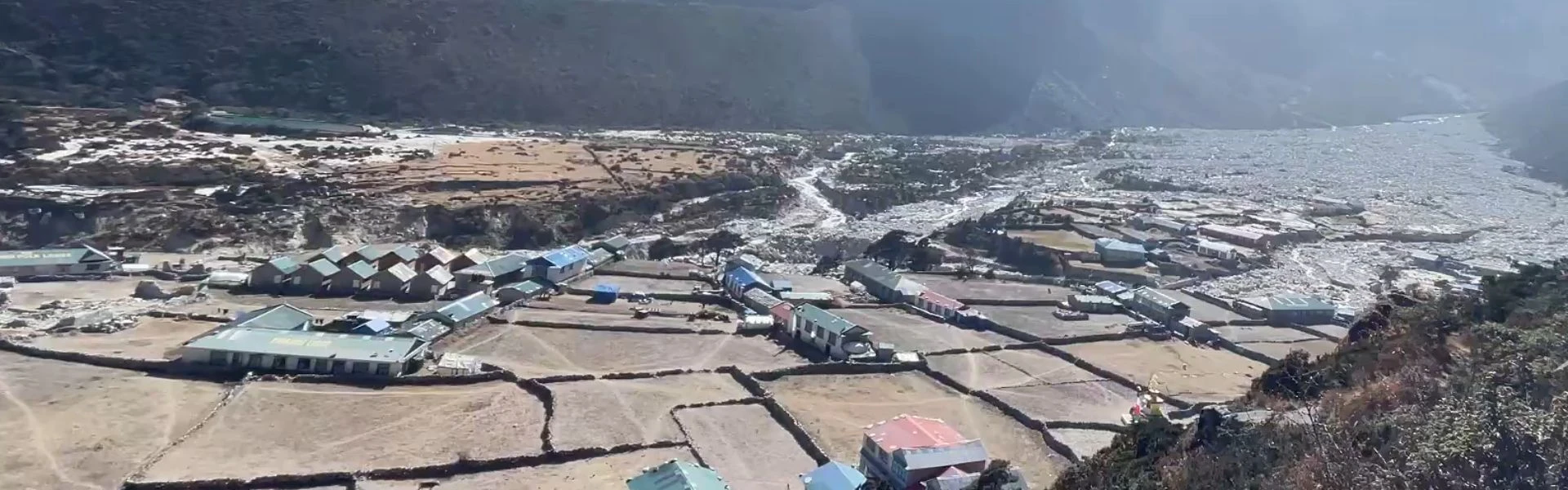
Most trekkers come to the Everest region chasing a famous trail. They follow the crowds from Lukla to Namche Bazaar, then push on toward the Everest Base Camp trek without looking sideways. But sitting quietly in the hills to the northwest of Namche is a place that rewards the ones who do look.
Thame Village is one of the most culturally intact Sherpa settlements in the entire Khumbu region. It sits off the main trekking corridor, which means fewer teahouses, fewer tourists, and far more of what most people come to Nepal hoping to find. The stone houses are old. The monastery above town has been standing for centuries. And the people here have a connection to Mount Everest that goes back long before the first foreign climber ever arrived.
Everything you need to know before visiting is covered in this guide. You will find information on geography, history, Sherpa culture, Buddhist monasteries, religion, famous residents, things to do, local food, teahouse accommodation, trekking seasons, and how to get there. Whether you are planning an Everest region trek or simply exploring the area, this guide serves as a practical and cultural reference, not a sales page. If you need personalised assistance, Nepal Everest Base Camp Pvt. Ltd is available to help with expert local advice and trekking arrangements.
1. Where Is Thame Village?
Location in the Khumbu Region of Nepal
It sits in the Solukhumbu District in Nepal, about 10 kilometres northwest of Namche Bazaar. It lies in the upper Bhote Koshi valley, inside the boundaries of Sagarmatha National Park. The village is part of the broader Khumbu landscape that stretches from Lukla Airport in the south toward the high passes bordering Tibet in the north.
Detail
Information
District
Solukhumbu District
Region
Khumbu region, Sagarmatha Zone
Altitude
Approximately 3,800m (12,467ft)
National Park
Sagarmatha National Park
Nearest hub
Namche Bazaar (10km, 3–4 hours on foot)
Distance From Namche Bazaar and Lukla
The walk from Namche Bazaar to Thame Village takes around three to four hours at a steady pace. The trail follows the Bhote Koshi river upstream, passes through a suspension bridge, and climbs gradually through pine and juniper forests before opening up into the valley above. From Lukla, most trekkers take two days to reach Namche first, then continue west.
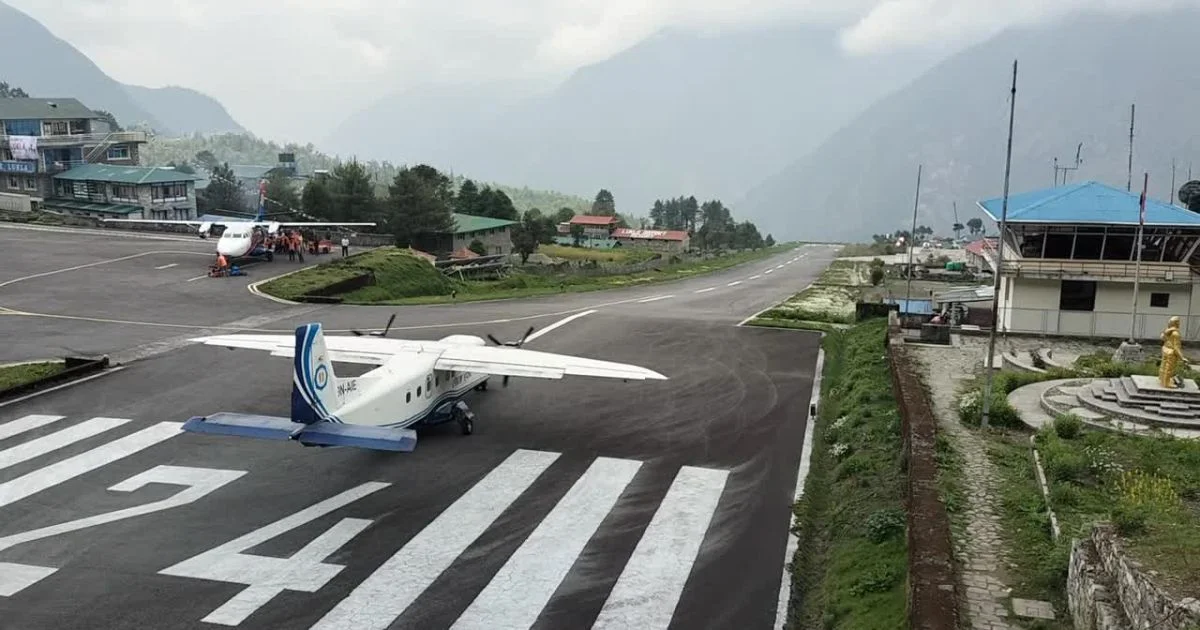
Lukla Airport
Altitude and Surrounding Landscape
The elevation of Thame sits at around 3,800 metres. That puts it well into altitude territory, where your body needs time to adjust. Most trekkers use Namche as their acclimatisation base before continuing west to Thame. The valley around the village is wide and exposed, flanked by ridges that rise steeply toward high peak terrain above 5,000 metres.
Map and Geographic Setting
Thame lies at the western edge of the settled Khumbu Valley system. To the north, the trail continues toward Renjo La pass and eventually connects to the Gokyo Lakes circuit. To the east, the path drops back down toward Namche. The village of upper Thame sits above the main settlement, closer to the high pastures where yak herders graze their animals through summer.
2. History and Origins
Ancient Sherpa Settlement in the Himalayas
Thame is one of the oldestSherpa settlements in the Khumbu. Sherpa communities migrated from eastern Tibet into this region several hundred years ago, and Thame was among the first valleys they settled. The village grew around agriculture, animal husbandry, and trade rather than tourism, and that foundation is still visible in its layout and daily routines.
Trade Routes Between Nepal and Tibet
For centuries, Thame served as a key point on the historic salt trading route between lowland Nepal and highland Tibet. Traders carrying salt, grain, and cloth would pass through on their way to and from the Nangpa La Pass, a high glacial crossing at around 5,716 metres that connects the Khumbu directly to the Tibetan plateau. The Bhote traders who used this route were frequent visitors, and their cultural influence is still present in the valley.
The Role of Thame in Khumbu History
Thame's position near the Nangpa La gave it commercial and strategic importance in the pre-tourism era. The village was not just a settlement but a gateway for goods and people moving between two very different worlds. That role shaped its architecture, its religious practices, and the outward-looking character of its people.
Traditional Life Before Modern Tourism
Before trekking groups arrived, life in here revolved around the seasons. Families planted potatoes and buckwheat in summer, grazed animals on high pastures, traded goods over the high passes, and returned to the warmth of their stone homes in winter. That pattern has not entirely disappeared. Some families still follow it, even as others have adapted to the demands of the trekking industry.
3. Sherpa Culture and Daily Life in Thame
Traditional Sherpa Homes and Architecture
The houses in Thame are built the way Sherpa homes have been built for generations. Thick stone walls, small windows, low doorways, and flat roofs that collect snow in winter. Many homes have a ground floor used for storage or animals, with the living quarters above. Inside, you will typically find a wood-burning stove, a small shrine, and hand-woven textiles hanging on the walls.
Farming, Yak Herding, and Mountain Livelihoods
Potato and buckwheat farming remain common in summer
Yak herding provides milk, meat, butter, and transport
Seasonal grazing moves animals to upper Thame pastures
Trade between valley communities continues in smaller form
Trekking-related income now supplements traditional work
Local Festivals and Religious Traditions
The annual Mani Rimdu festival is celebrated at Thame Monastery each May, just before the monsoon arrives. It draws monks, villagers, and a growing number of visitors. The festival includes masked dances, ritual music, and Buddhist ceremonies that have been performed here for generations. It is one of the most significant cultural events in the Khumbu region.
Language, Clothing, and Food Culture
Sherpapeople speak their own language, also called Sherpa, which belongs to the Tibetic language family. Traditional clothing includes heavy wool robes and colourful striped aprons worn by women. Food centres on staples like tsampa (roasted barley flour), butter tea, potato dishes, and lentil soup. Modern Sherpa kitchens in teahouses have expanded the menu considerably for visiting trekkers.
Hospitality and Community Life
Sherpa hospitality is genuine and understated. You are not greeted with performance. You are given tea, shown a seat, and treated as a sensible adult who does not need to be managed. Community decisions in Thame still happen collectively, and the village has maintained a strong sense of shared identity despite the pressures of migration and outside influence.
4. Thame Monastery and Spiritual Importance
History of Thame Monastery
One of the oldest monasteries in the Khumbu region is Thame Monastery, also called Thame Gompa. It was founded several centuries ago and belongs to the Nyingma school of Tibetan Buddhism. The monastery sits on a rocky perch high above the village, overlooking the village and the valley below. Getting up there takes about twenty minutes of uphill walking from the main settlement.
Buddhist Practices and Rituals
The Buddhist monks at Thame Gompa follow a daily schedule of prayer, meditation, and ritual practice. The monastery is active year-round, though the number of resident monks varies by season. Visitors are welcome to observe quietly. The interiors contain ancient thangka paintings, butter lamps, and a large prayer hall with mural work that dates back generations.
Mani Walls, Chortens, and Prayer Flags
Mani walls line the main trail into the village
Stone chortens mark sacred points around the settlement
Prayer flags string across rooftops, passes, and ridge lines
Prayer wheels are built into the walls near the monastery path
Each element has a specific religious meaning within Tibetan Buddhism
Spiritual Atmosphere of the Village
Thame feels different from the busier Sherpa towns. The pace is slower. The sounds are natural ones: wind, water, bells, and occasional chanting from the monastery above. That tranquility is not manufactured. It comes from a community that has kept its religious life intact even as the world around it has changed.
Important Monasteries and Sacred Sites Nearby
The monasteries in the Khumbu region that trekkers often visit include Tengboche Monastery, Pangboche, and Khumjung. Thame sits apart from those, both geographically and in character. It receives far fewer visitors, which means the spiritual atmosphere here is less interrupted. The nearby settlement of neighbouring Thameteng also has small shrines worth visiting if you have extra time.
Lama Zopa Rinpoche, one of the most respected figures in Tibetan Buddhism and a co-founder of the FPMT (Foundation for the Preservation of the Mahayana Tradition), was born near Thame. His connection to this valley gave the monastery an international profile it still carries today.
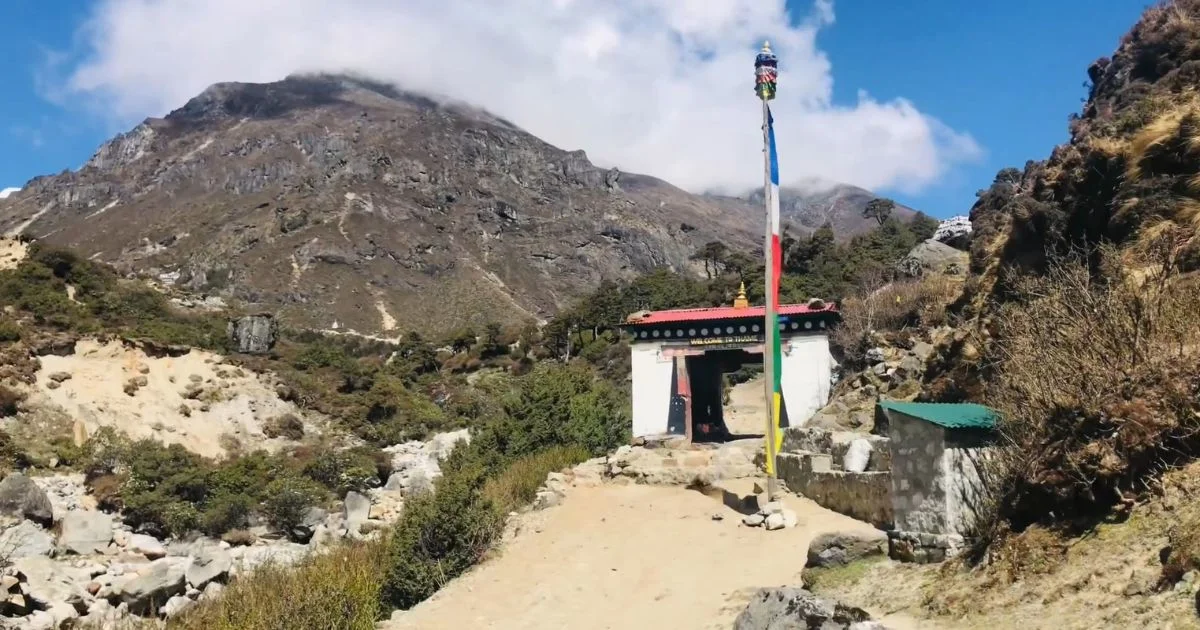
Main Entrance of thame village
5. Famous People From Thame Village
Tenzing Norgay and Everest History
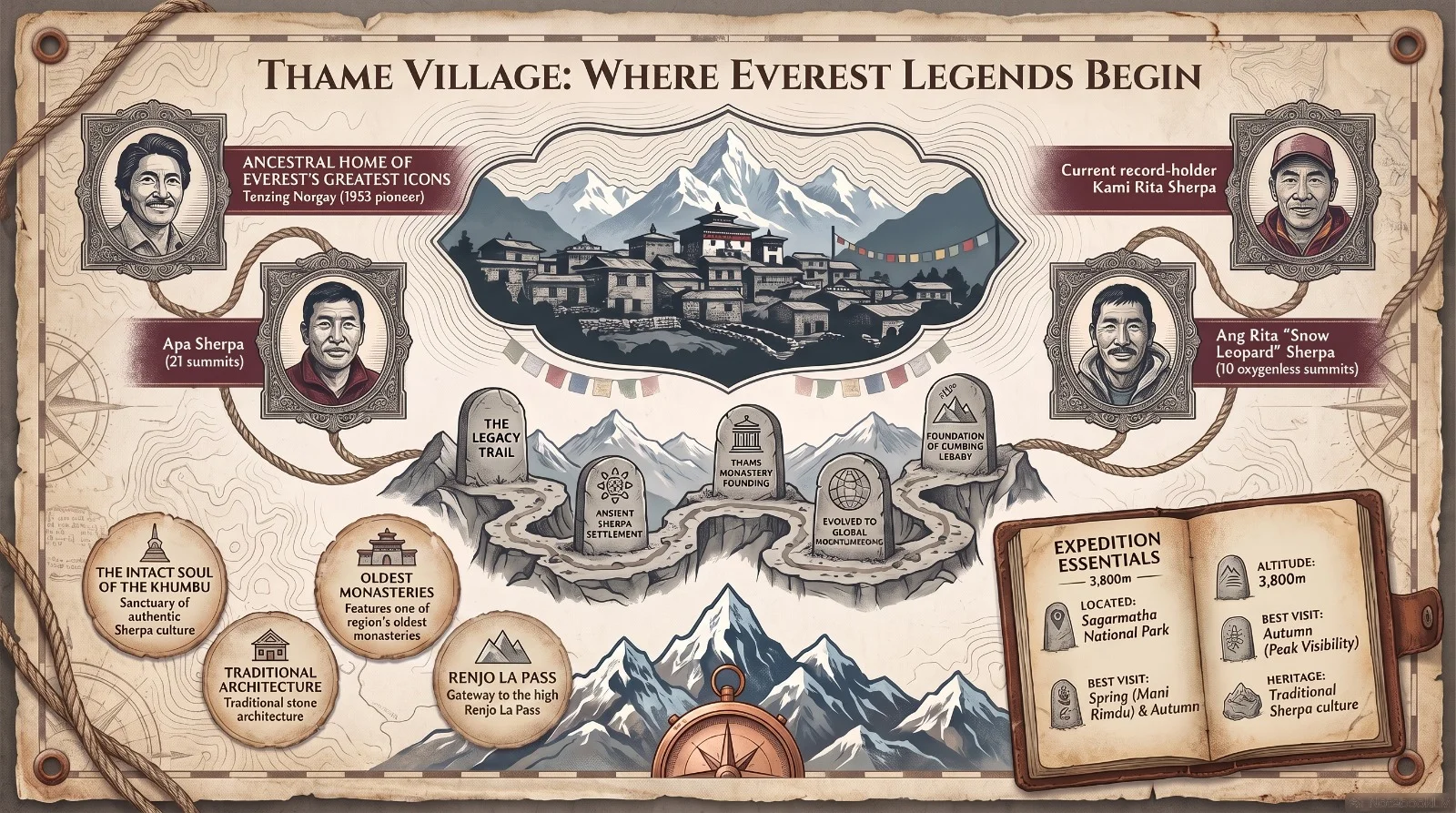
Tenzing Norgay, who reached the summit of Mount Everestalongside Sir Edmund Hillary in 1953, is closely associated with Thame. While his exact birthplace remains a matter of some historical debate, Thame was his childhood home and the place he grew up. His ascent of the world's highest mountain changed how the world understood Sherpa people, and Thame has carried that legacy ever since.
Apa Sherpa and Other Legendary Climbers
Apa Sherpa holds a record that few climbers anywhere have matched. He summitedMount Everest 21 times, a figure that stood as the world record for years. Like Apa Sherpa, Ang Rita Sherpa also came from this valley. Ang Rita made ten ascents of Everest without supplemental oxygen, a record that earned him the nickname "Snow Leopard". Both men trained not in gyms but on these same ridges and trails above Thame.
The Village's Mountaineering Legacy
The combined record of climbers from Thame is remarkable. Apa Sherpa and Kami Rita Sherpa collectively represent some of the most extraordinary high-altitude achievements in mountaineering history. Rita Sherpa and others from this valley have guided expeditions on every major peak in the region. The village has produced more record-breaking Everest climbers than almost any other settlement on earth.
Why Thame Produced So Many Everest Climbers
Thame's place in mountaineering history comes partly from geography and partly from culture. Living at 3,800 metres means growing up with reduced oxygen as a daily reality. The Sherpa people here developed exceptional physiological adaptations over generations of high-altitude life. The trade routes over the Nangpa La also gave them route-finding experience that translated directly into mountaineering skill. When foreign expeditions began hiring high-altitude workers in the 1920s, the men of Thame were among the most capable available.
Infography: Legend of Thame village
6. What to See in Thame Village
Traditional Stone Houses and Narrow Trails
Walking through Thame is a quiet experience. The paths are narrow, paved with flat stones, and lined with low walls. Picturesque Sherpa architecture surrounds you on both sides, the kind that takes generations to build and looks like it grew out of the hillside rather than being placed on it. Early morning, when the light hits the stone walls at a low angle, the village looks exactly as scenic as any photograph suggests.
Mountain Views Around Thame
The vista from Thame is wide and impressive. Thamserku, Kantega, and Kwangde rise above the surrounding ridges. On clear days, you can see far into the high Himalayan terrain above the valley. The views are not obscured by buildings or development. They open up naturally as you walk the trails above the village.
Khumbu Landscapes and River Valleys
The valley below Thame carries the Bhote Koshi River, fed by snowmelt from the glaciers above. The river is fast and cold, running a grey-green colour that signals glacial origin. The landscape shifts as you move up the valley, from pine forest near Namche to open alpine terrain near Thame and high pasture beyond that.
Wildlife and Natural Surroundings
Himalayan tahr can sometimes be spotted on the rocky slopes above the village
Musk deer occasionally appear in the forest sections lower down the trail
Lammergeier vultures and other raptors circle above the ridges
Snow leopard tracks have been reported in upper Thame in winter months
The area falls within Sagarmatha National Park, so wildlife is protected
Corners Where Time Slows and Details Speak
The best part of Thame is not any single sight. It is the accumulation of small details: a prayer flag looped between two chimneys, an old woman spinning wool outside her door, a row of mani stones worn smooth by decades of passing hands. These are things you notice when the trail is quiet. That is what makes Thame unforgettable for many of the people who come here.
7. Things to Do in Thame Village
Explore the Village on Foot
The village is small enough to walk in an hour, but interesting enough to occupy a full morning if you go slowly. Start at the lower entrance near the trail from Namche and work your way up through the stone lanes toward the monastery path. There is no entry fee and no tour required. Just walk, look, and let the place come to you.
Visit Local Monasteries and Cultural Sites
Climb to Thame Gompa for views and monastery interiors (remove shoes before entering)
Walk the mani wall trail that circles the upper village
Visit the chortens, located on the ridge above the settlement
Look for the older, smaller shrines scattered between homes
Ask at your teahouse about the monastery schedule if you want to observe a puja
Experience Sherpa Food and Tea Houses
Thame has a handful of teahouses that serve basic but satisfying food. Dal bhat, noodle soup, Sherpa stew, and butter tea are the staples. The kitchens are small and the portions are generous. Sitting in a teahouse in Thame feels different from the bigger Namche lodges. It is quieter and more personal, and the food arrives with less fuss.
Photography and Himalayan Scenery
The natural beauty and breathtaking landscape around Thame offers strong material for photography. The light is best in the early morning and late afternoon. The monastery against the cliff face, the prayer flags against a blue sky, and the stone houses with the ridge behind them. It doesn't take any special talent to capture these compositions successfully.
Day Hikes Around Thame
Hike
Duration
Highlight
Thame to Thame Gompa
30–40 min
Monastery views, mani walls
Thame to upper pastures
2–3 hrs
Yak herds, high alpine terrain
Thame towards Renjo La
Full day
High pass, glacier views
Loop to neighbouring Thameteng
2 hrs
Quieter trail, fewer people
Ridge walk above village
1–2 hrs
Panoramic Himalayanvista
8. Local Food and Accommodation
Traditional Sherpa Dishes to Try
Dal bhat (lentil soup with rice) is the staple of any Khumbu meal
Sherpa stew combines potatoes, noodles, and vegetables in a thick broth
Tsampa porridge made from roasted barley is a traditional morning meal
Butter tea is an acquired taste but worth trying once
Potato pancakes, known as riki kur, are a local speciality
Tea Houses and Village Lodges
Thame has a modest number of teahouses, enough to accommodate trekkers without becoming busy. The lodges are simple: a dining room with a stove and a few rooms with wooden beds and thin mattresses. Blankets are usually provided, but a sleeping bag liner is useful. Hot showers may or may not be available depending on the teahouse and the season.
What Accommodation Is Like in Thame
Expect basic conditions. Shared bathrooms are common. Electricity is available but not always reliable. Wi-Fi exists in some teahouses, but the signal is slow. The rooms are clean, the walls are thin, and you will hear the wind at night. That is part of the experience rather than a complaint. Thame is a serene village, not a resort.
Dining Experience in a Remote Himalayan Village
Eating in Thame is a slow, warm experience. Meals take time to prepare because kitchens are small and fuel is limited. Sit near the stove, order early, and do not rush. The hospitality is real. Your host is not performing service. They are feeding you the way they feed their own family, which is about the best thing you can say about a meal at altitude.
9. Best Time to Visit Thame Village
Spring Season in Thame
Spring, from March to May, is the most popular time to trek in the Khumbu region. The trails are clear, the rhododendrons are in bloom lower down the valley, and the weather is generally stable. The annual Mani Rimdu festival at Thame Monastery falls in May, which makes this an especially good time for cultural immersion. Expect cooler nights and warm afternoons at altitude.
Season
Months
Conditions
Crowds
Spring
Mar–May
Stable, clear, cool nights
Moderate
Autumn
Sep–Nov
Best visibility, dry, cold
High
Winter
Dec–Feb
Snow possible; very cold
Very low
Monsoon
Jun–Aug
Wet, cloudy, leeches on trail
Very low
Autumn Views and Weather Conditions
Autumn is the clearest season in the Himalayas. From September to November, the monsoon has cleared the haze from the air, and the mountain views are sharp and wide. The Himalayan peaks above the valley appear closer than they do at any other time of year. This is the peak trekking season, so Namche Bazaar gets busy, though Thame remains comparatively quiet.
Winter Atmosphere and Snowfall
Winter visits to Thame are rare but possible for adventurer types who do not mind the cold. Snow falls above 3,500 metres from December onwards, and temperatures at night can drop well below freezing. The trails are quieter than at any other time of year, and the village takes on a different quality when the surrounding peaks are white. Most teahouses remain open but offer a reduced menu.
Monsoon Conditions and Travel Challenges
The monsoon season, from June to August, is not ideal for trekking in this part of Nepal. Trails become slippery, views are often obscured by cloud, and leeches appear on the lower sections of the trail. That said, the vegetation is lush, the rivers run full, and the valley has a green intensity that is absent in drier months. Some experienced trekkers visit during this period specifically for the solitude.
10. How to Reach Thame Village
Route From Kathmandu to Lukla
Most people begin the journey to Thame with a flight from Kathmandu to Lukla. The flight takes about 35 minutes and lands at Tenzing-Hillary Airport, one of the more unusual runways in the world. From Lukla, the trail heads north toward Namche Bazaar over two days of walking through forest, across suspension bridges, and past the smaller Sherpa villages below Namche.
Namche Bazaar to Thame Route
The route from Namche Bazaar to Thame Village heads west out of town and drops into the Bhote Koshi valley. From there, the trail follows the river upstream through a series of small settlements. You cross the suspension bridge at Phakding, pass through a narrow gorge section, and eventually climb the final rise into the village. The total walking time is three to four hours at a relaxed pace.
Lukla to Thame via Everest Base Camp Route
If you have extra time, you can include Thame Village as part of a rewarding circuit instead of returning the same way from Everest Base Camp. The trail crosses Cho La Pass into Gokyo Valley, continues over Renjo La Pass, and descends to Thame before returning to Namche Bazaar. This route combines Everest Base Camp, Everest Gokyo Lake trek, high mountain passes, and traditional Sherpa villages in one journey. From Thame, it is a three to four-hour walk back to Namche Bazaar, followed by the trek to Lukla for the flight to Kathmandu.
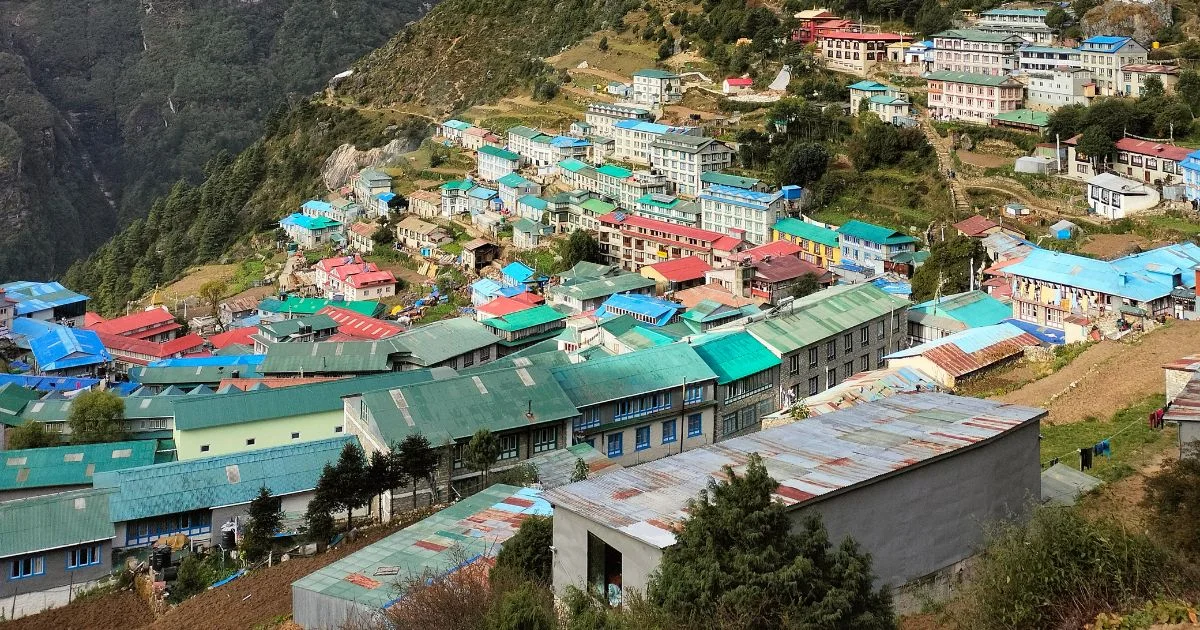
Namche Bazzar
Namche to Thame via Gokyo and Renjo La Route
Trekkers following the Gokyo Renjo La Pass Trek leave Namche Bazaar for Gokyo Lakes, cross Renjo La Pass (5,360 m), descend to Thame Village, and return to Namche Bazaar. Thame is also an important stop on the Everest Three Passes Trek, where the route continues from Everest Base Camp over Cho La Pass to Gokyo, crosses Renjo La Pass, and passes through Thame before rejoining the main trail at Namche. Both routes offer a rewarding circuit with fewer crowds, outstanding Himalayan views, and a deeper look into traditional Sherpa culture in the upper Khumbu region.
Walking Conditions and Trail Experience
The trail from Namche to Thame is well-marked and not technically difficult
Some sections involve short climbs and rocky footing
The suspension bridge crossings are standard Khumbu infrastructure
No ropes, crampons, or specialist gear are needed for the main trail
The path is used by local yak trains, so step aside and let them pass
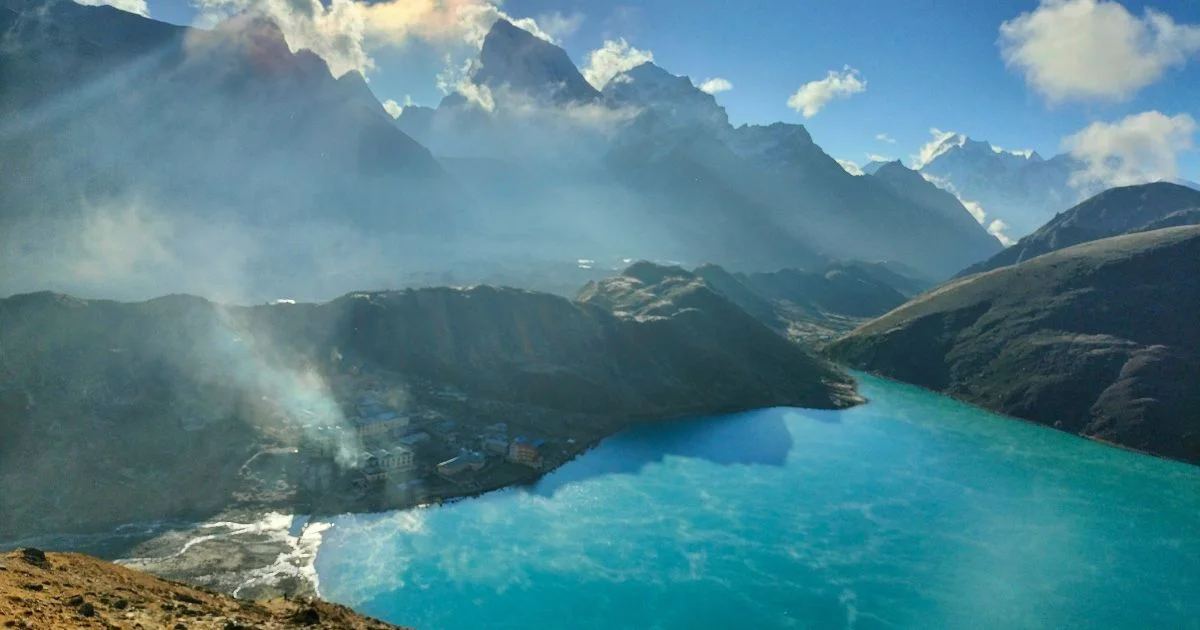
view of gokyo lake from gokyo ri
Transportation and Travel Logistics
There is no road to Thame. All access is on foot. Porters and pack animals carry supplies and luggage between Namche and the village. If you are carrying a heavy pack, hiring a porter in Namche is a sensible option. Trekking permits for Sagarmatha National Park must be obtained before leaving Namche. Acclimatisation at Namche for at least two nights before walking to Thame is strongly recommended.
11. Nature and Environment Around Thame
Sagarmatha National Park Setting
Thame sits inside Sagarmatha National Park, a UNESCO World Heritage Site that covers the entire upper Khumbu Valley system. The park protects the landscape, wildlife, and cultural sites of the region. Trekker access requires a valid national park permit. Regulations inside the park cover waste disposal, open fires, and the removal of any natural material from the environment.
Alpine Forests and High Himalayan Terrain
Below the village, the trail passes through blue-pine and juniper forest. These trees thin out quickly as you climb toward Thame and disappear entirely above the settlement. The terrain above the village is open alpine meadow in summer and wind-scoured rock in winter. The visual shift from forested valley to open mountain landscape happens fast, which is part of what makes this corner of the Khumbu feel so dramatic.
Wildlife Found Near Thame
The area around Thame supports wildlife that is rarely seen on the busier Everest Base Camp corridor. Higher up, snow leopards patrol the rocky terrain above the tree line, though sightings are uncommon. Himalayan tahr are more visible, often seen on the open slopes above the village. In the forest below, musk deer move quietly through the undergrowth.
Rivers, Glaciers, and Mountain Ecology
The Bhote Koshi River drains the glaciers above Thame and the high passes near Tibet. The glacial lake systems above the valley feed this river system directly. In 1985, a glacial lake outburst flood from the Dig Tsho lake caused significant destruction downstream. The outburst reshaped parts of the valley and remains a reference point in discussions about climate risk in the region. The ecology here is fragile, and the effects of warming temperatures are visible in the retreat of glaciers above the settlement.
12. Thame Village Compared to Other Khumbu Villages
Thame vs Namche Bazaar
Namche Bazaar is the commercial hub of the Everest region. It has bakeries, gear shops, wi-fi cafes, and a Saturday market. It is also the main acclimatisation stop for anyone heading toward Everest Base Camp. Thame, by contrast, has none of that infrastructure. What it has instead is quiet, space, and a version of Sherpa life that has not been reshaped by high-volume tourism.
Feature
Namche Bazaar
Thame
Teahouses
30+
5–8
Shops and gear stores
Many
Few
Wi-Fi
Widely available
Limited
Crowds
High in season
Low year-round
Cultural atmosphere
Commercial Sherpa town
Traditional village
Walking time from Namche
0
3–4 hours
Thame vs Khumjung
Khumjung sits above Namche on the hillside and is known for its school, built with the support of Sir Edmund Hillary, and its monastery. It is a pleasant village and quieter than Namche, but it still sits close enough to the main trail to receive regular foot traffic. Thame requires a deliberate detour to reach, which filters out casual visitors and keeps the pace slower.
Why Thame Feels More Traditional and Peaceful
The crucial element is the distance from the main route to Everest Base Camp. Small Sherpa villages in Namche's orbit tend to absorb some of the commercial energy of the main trail. Thame sits far enough away that it has been able to maintain a different character. The tranquillity here is not an accident. It is the result of geography.
Differences in Tourism and Local Lifestyle
In Namche, many residents earn their income primarily through tourism. Tourism is one of various sources of income in Thame. Families here still farm, still herd animals, and still maintain the Sherpa heritage practices that defined the community before expeditions began arriving in the 1950s. That balance gives the village a different energy. It feels inhabited rather than managed.
13. Challenges Facing Thame Village
Migration and Changing Village Life
Young people from Thame, like those from small Sherpa villages in Namche and across the Khumbu, increasingly move to Kathmandu or abroad for education and work. The permanent population of the village has declined over the past few decades. Seasonal residents return for festivals and the trekking season, but year-round community life is thinner than it used to be.
Climate and Environmental Pressures
The glacial lake systems above Thame are changing. Glaciers are retreating, and the risk of outburst flooding has not diminished since the 1985 Dig Tsho event. Warmer temperatures are altering the growing season, affecting the crops that families have relied on for generations. These are Nepal's most visible climate consequences in mountain communities.
Tourism Growth and Cultural Preservation
More visitors are discovering Thame each year. That brings income but also pressure. The risk is not immediate, but it is real. When a village becomes a stopover on a popular circuit rather than a destination in itself, the dynamic changes. The community has so far managed this well, but the balance requires ongoing attention.
Balancing Tradition With Modern Change
The cultural richness of Thame comes from the fact that tradition and modern life have not yet fully separated here. The monastery still functions as a centre of community life. The festivals are still observed. The old trade routes still carry some traffic. Keeping that balance is the central challenge facing Thame over the next generation.
14. Travel Tips for Visiting Thame
Altitude and Acclimatization Considerations
Thame sits at around 3,800 metres. At that elevation, your body is working harder than it does at sea level. Spend at least two nights in Namche Bazaar before walking to Thame. Drink plenty of water. Walk slowly. If you develop a persistent headache, nausea, or loss of appetite, do not push on. Descend to a lower altitude and allow your body to recover before trying again.
Respecting Local Culture and Monastery Etiquette
Remove shoes before entering any monastery or shrine
Walk clockwise around chortens, mani walls, and prayer wheels
Ask before photographing people, especially monks and elders
Dress modestly when visiting religious sites
Keep noise low near the monastery, particularly during prayer times
Packing Essentials for the Khumbu Region
Item
Why You Need It
Sleeping bag liner
Teahouse blankets are thin
Trekking poles
Useful on uneven rocky trails
Warm layers
Temperatures drop sharply at night
Blister plasters
Long trail days take their toll
Water purification
Tap water is not safe to drink
Small torch
Power cuts happen in the evening
Cash (Nepali rupees)
Card payments are not available
Connectivity, Electricity, and Basic Facilities
Wi-Fi in Thame is slow and unreliable. Electricity is available through solar and micro-hydro systems but may cut out in the evening. Charging devices usually costs a small fee. Mobile data from Nepali SIM cards can work on the trail but is intermittent. Plan to be largely off-grid during your time here.
15. Why Thame Village Still Feels Authentic
Less Crowded Than Main Everest Trails
The main trek to Everest Base Camp carries tens of thousands of visitors each year. The trail from Lukla to Base Camp is busy from September through November and again in spring. Thame sits off that corridor entirely. You will share the trail with locals, yak trains, and a handful of other trekkers alike who have made the same deliberate decision to come here.
Deep Connection Between Culture and Landscape
What makes Thame work as a destination is the relationship between the people and the place. The monastery exists because the landscape inspired it. The farming patterns follow the seasons of this particular valley. The architecture uses the local stone. Everything here grew from this specific environment, and that coherence is visible in a way it is not in places that developed faster or more commercially.
The Quiet Side of the Everest Region
Thame offers something the main Everest trail cannot. Quiet mornings without the sound of a hundred boot soles on a packed trail. Evenings where the only lights are the village lamps and the stars above the ridge. This is the soul of the Khumbu region in its most undiluted form. The mountains are the same. The culture is older. And the experience stays with you longer.
Why Many Visitors Remember Thame Most
Ask trekkers who have done the Everest Base Camp circuit and also spent time in Thame which place they think about most. A surprising number say Thame. Not because it is more dramatic or more famous, but because it is more real. The picturesque village does not perform for visitors. It simply continues being what it has always been, which turns out to be exactly what most travellers are looking for.
Thame Village: Cultural Legacy
Thame Village is the heart of the Himalayas in a sense that the main trekking corridors rarely are. It holds some of the most significant Sherpa history in the region, from ancient trade routes to record-breaking Everest ascents. Its monastery is among the oldest still functioning in the Khumbu, and its community has preserved a way of life that is increasingly rare at this elevation.
Thame offers the kind of cultural richness that takes time to appreciate. The natural beauty is real, and the mountains are as large here as anywhere else in the region. But what sets it apart is the daily life that continues around you as you walk its lanes: monks heading to morning prayer, farmers tending stone-walled fields, children playing in the narrow paths between old houses. These are not performances arranged for visitors. They are just life, going on as it always has.
If you are planning time in Nepal's Khumbu region, consider building Thame Village into your itinerary. Come for the Thame Monastery, the breathtaking Himalayan views, the rich Sherpa culture, and the remarkable mountaineering history. Stay for the quiet. Leave with the understanding that the most memorable places in the mountains are rarely the ones on every map. They are the ones you have to make a small detour to find. If you are ready to experience this hidden gem, Nepal Everest Base Camp Pvt. Ltd is here to help. Contact us to plan your journey with experienced local guides and personalised trekking services.
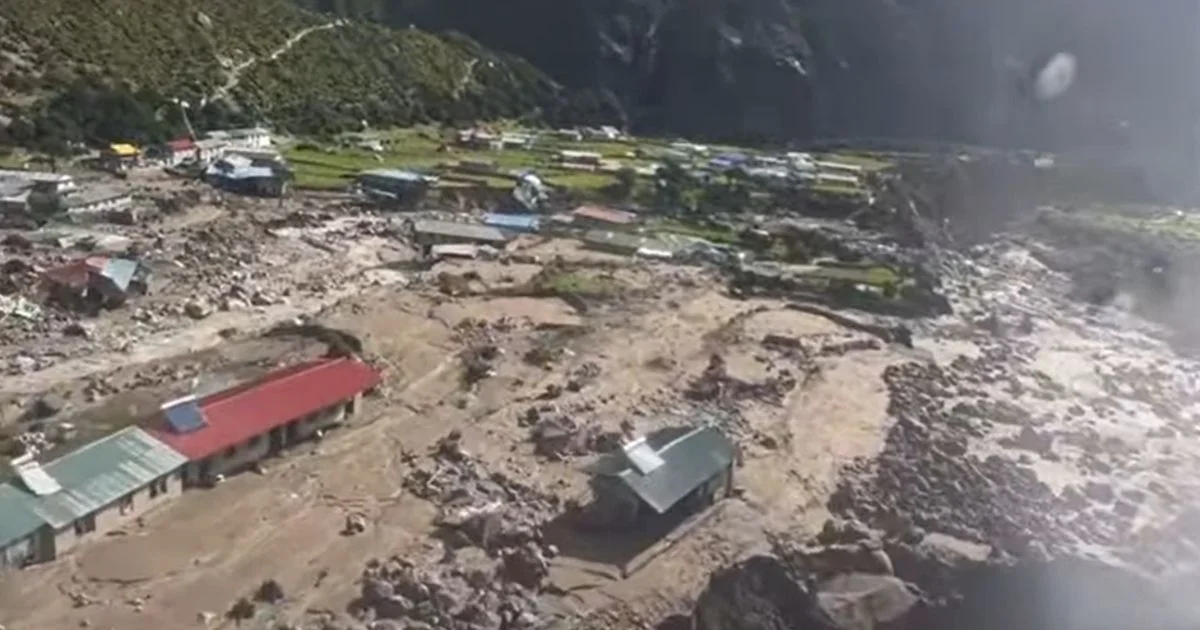
Flooding effected thame village
FAQs About Thame Village
What Is Thame Village Famous For?
Thame Village is famous as the birthplace and home of legendary Sherpa climbers, including Tenzing Norgay, Apa Sherpa, and Ang Rita Sherpa. It is also known for Thame Monastery. one of the oldest active monasteries in the Khumbu, and for the annual Mani Rimdu festival celebrated there each May.
How Far Is Thame From Namche Bazaar?
Thame is about 10 kilometres from Namche Bazaar, which takes three to four hours to walk at a steady pace. The trail follows the Bhote Koshi river upstream through forest and open valley, crossing a suspension bridge before climbing into the village.
Who Was Born in Thame Village?
Growing up in Thame, Tenzing Norgay, who climbed Mount Everest for the first time with Sir Edmund Hillary in 1953, views it as his childhood home. Apa Sherpa, who summited Everest a record 21 times, and Ang Rita Sherpa, who climbed Everest ten times without supplemental oxygen, also came from this village.
Is Thame Village Inside Sagarmatha National Park?
Yes, Thame sits within the boundaries of Sagarmatha National Park, which is a UNESCO World Heritage Site. Trekkers visiting Thame need a valid national park entry permit, which can be obtained in Namche Bazaar before continuing west.
What Is the Altitude of Thame Village?
Thame sits at an elevation of approximately 3,800 metres (12,467 feet) above sea level. At this altitude, proper acclimatisation is important. Most trekkers spend at least two nights in Namche Bazaar, which sits at around 3,440 metres, before walking the additional three to four hours to Thame. This is in Solukhumbu District, in the heart of the Everest region.
Blending digital strategy with mountain passion, I help adventurers find their way to the Himalayas online. With hands-on experience in Nepal’s trekking trails and a role at Nepal Everest Base Camp Trekking Co., Thamel, I combine SEO expertise with true trail insight.